Ferrari F40: Why Collectors Are Abandoning Hybrid Supercars for Analog Icons
 Julian Hayes
3 minutes read
Julian Hayes
3 minutes read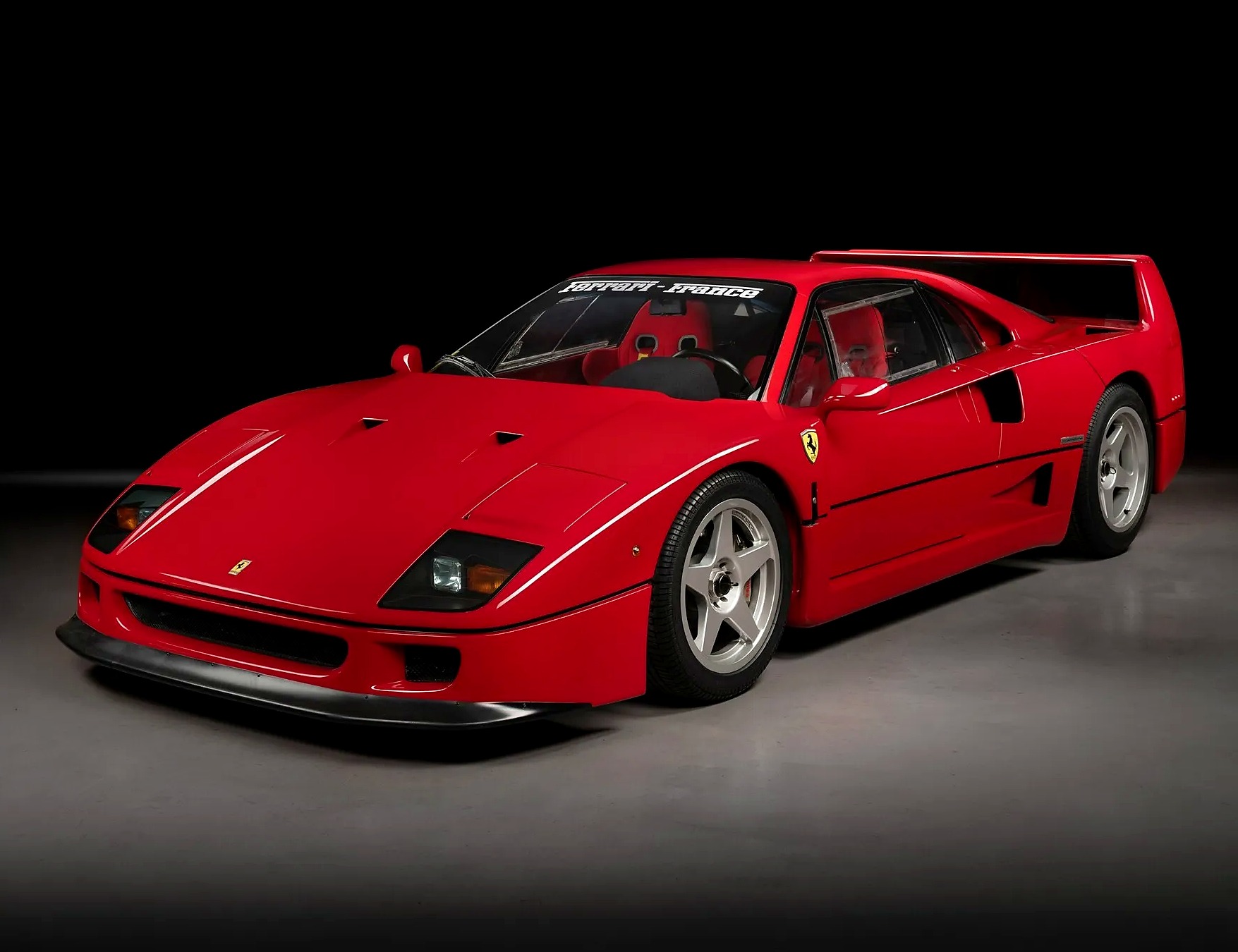
| 🚀 Key Takeaways: • A pristine Ferrari F40 recently shattered expectations, fetching $8.365 million at auction. • This figure sits 66% above the standard $5.05 million Condition #1 valuation. • The market is pivoting toward analog engineering over the complex hybrid powertrains of modern supercars. |
As the automotive world pivots toward electrified architectures, a fascinating divergence has emerged in the collector-car market. Specifically, the Ferrari F40 has become the ultimate antithesis to the sterile, algorithm-driven performance of today’s hybrid supercars. Enthusiasts are now paying historic premiums for this 2.9-liter twin-turbocharged V8 legend.


The Mechanical Purity of the Ferrari F40
Engineered during a period defined by raw mechanical feedback, the Ferrari F40 lacks the intrusive software layers found in modern mobility. Furthermore, its torsional rigidity and lack of driver aids create an uncompromising connection between the tarmac and the pilot. Such tactile intensity is increasingly viewed as an irreplaceable asset in the age of digital automation.
Considering the shift toward silicon-carbide inverters and battery-heavy platforms, the Ferrari F40 represents a finite chapter in automotive history. In fact, many collectors argue that this machine offers a more authentic experience than the current crop of hyper-hybrids. Consequently, values for low-mileage examples are decoupling from standard market trajectories.
| ⚙️Engine / Powertrain | 2.9-liter Twin-Turbo V8 |
| 🐎Power Output | 471 hp |
| ⚡Peak Torque | 426 lb-ft |
| ⏱️0-60 mph (0-100 km/h) | 0-60 mph in 4.1s |
| 🚀Top Speed | 201 mph |
| 🔄Drivetrain / Gearbox | 5-Speed Manual / RWD |
| 💰Starting Price / Est. | $8,365,000 (Recent Auction High) |
The Divergent Market: Ferrari F40 vs. The Hybrid Competition
Comparing the Ferrari F40 to modern rivals like the LaFerrari or SF90 Stradale reveals a stark generational gap. While modern hypercars boast superior computational horsepower and sophisticated thermal cooling loops, they often suffer from the sensory disconnect inherent in complex regenerative braking transitions. Ultimately, the Ferrari F40 remains the benchmark for analog, naturally-boosted performance.
However, the modern competitors are marvels of thermodynamic efficiency. The SF90 Stradale utilizes a tri-motor hybrid system to achieve blistering acceleration, yet it lacks the F40‘s storied provenance. For the serious collector, the lack of an over-the-air architecture in the F40 is a feature, not a bug, ensuring the vehicle remains a timeless mechanical artifact.
Pricing, Available Trims, and Ownership Value
Acquiring a Ferrari F40 in the current market requires significant capital and a long-term outlook. Starting MSRP in 1987 was roughly $400,000, but current values for a Condition #1 example now reach $5,000,000 to $8,000,000. Meanwhile, standard maintenance costs are astronomical, with Ferrari Classiche certification often adding $20,000+ to the cost of ownership.
Specifically, insurance considerations for such a high-value asset are complex, often requiring specialized Agreed Value policies. Furthermore, owners must account for the high cost of rubber and fuel system refreshes. Despite these expenses, most analysts view the Ferrari F40 as a tier-one collector asset with significant long-term appreciation potential.
Future Speculation: The Analog Hedge
Predicting the future of the classic supercar market, it is clear that the Ferrari F40 will remain a blue-chip hedge against automotive homogenization. As software-defined vehicles become the standard, the scarcity of true analog experiences will only grow. Therefore, expect values to decouple even further from general inflation and traditional investment cycles.
Ultimately, the Ferrari F40 is more than a car; it is a mechanical sanctuary. According to Ferrari, this car remains a pinnacle of their non-hybrid engineering development. Thus, its status as a collector’s cornerstone seems cemented for decades to come.
Julian Hayes
Future Mobility & Technology Editor at Auto News Magazine. Covering the next frontier of electric powertrains, 800V architectures, solid-state battery chemistry, and autonomous vehicle platforms.
View all articles by Julian Hayes →