| 🚀 Key Takeaways: • The Ferrari F40 Modern Tribute reimagines an icon with 21st-century aerodynamics and sharp LED architecture. • While purely conceptual, this Ferrari F40 Modern Tribute study suggests a potential 800 horsepower output from a modern twin-turbo V8. • Original models command over $2 million, making the Ferrari F40 Modern Tribute a tantalizing “what-if” for collectors. |
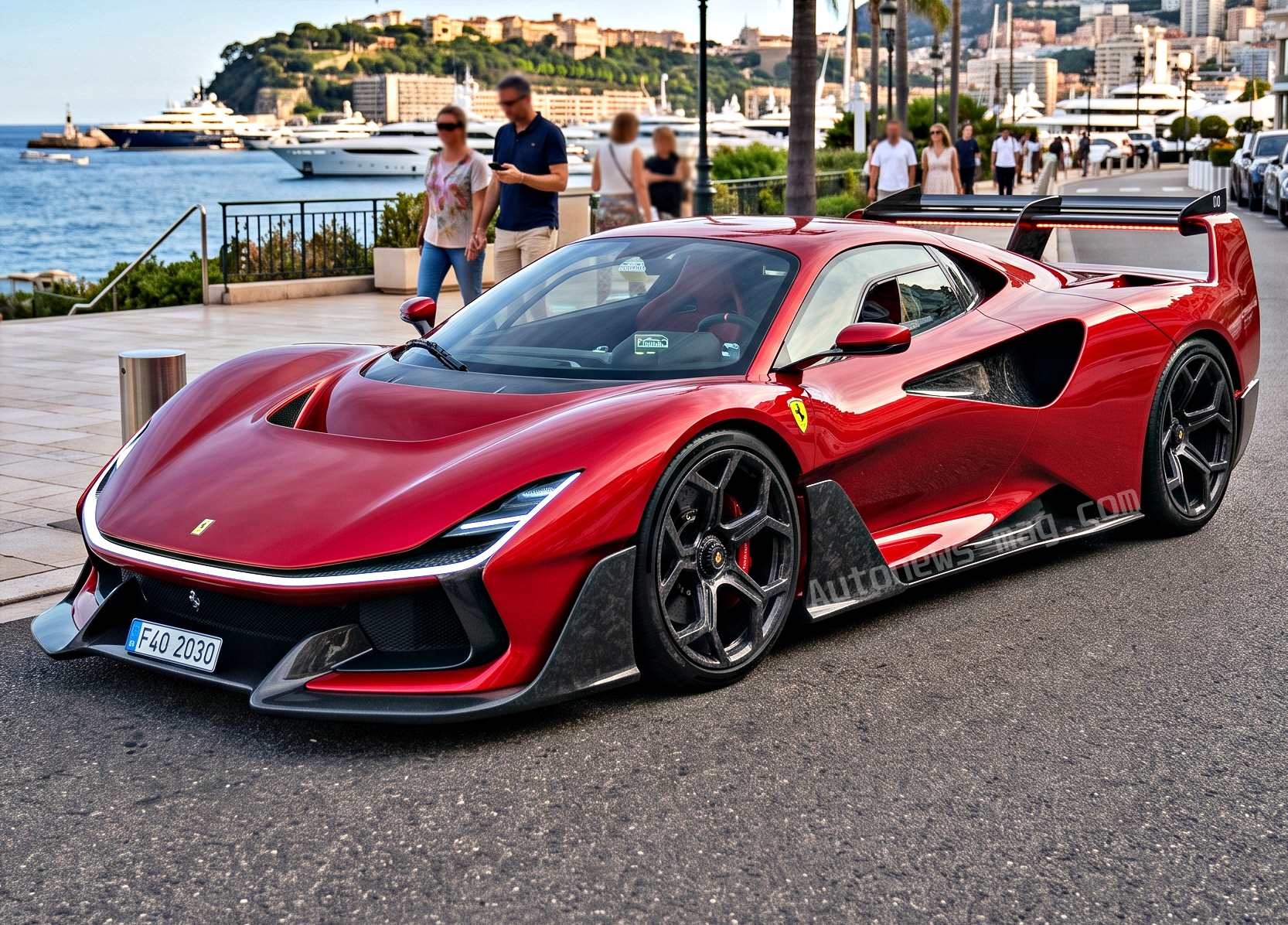
The official debut of the Ferrari F40 Modern Tribute marks a defining milestone. The Ferrari F40 remains an untouchable titan of the supercar world. Decades after its launch, it continues to define raw, unfiltered speed for every automotive enthusiast. Recently, digital artist Martin Tyminski visualized a modern interpretation that forces us to reconsider the boundaries between nostalgia and innovation.


Ferrari F40 Modern Tribute: Bridging Two Eras
Refining an icon is a dangerous game for any designer. However, this Ferrari F40 Modern Tribute succeeds by avoiding the trap of simple mimicry. Instead of merely copy-pasting retro aesthetics, it adopts a stance of “dangerous intent.” Consequently, the result feels like a natural evolution rather than a lazy reboot.
Viewed from the front, the concept commands immediate respect. Specifically, it sits significantly wider than the original 1987 F40 while integrating a functional carbon-fiber splitter. In addition, the pop-up headlamps have been replaced by ultra-slim, aggressive LED units that pierce through the dark.
| ⚙️Engine / Powertrain | 3.9L Twin-Turbo V8 |
| 🐎Power Output | 800 HP |
| ⚡Peak Torque | 750 Nm (553 lb-ft) |
| ⏱️0-60 mph (0-100 km/h) | 0-60 mph in 2.6s |
| 🚀Top Speed | 218 mph (351 km/h) |
| 🔄Drivetrain / Gearbox | 7-Speed Dual-Clutch / RWD |
| 💰Starting Price / Est. | $2,500,000 (est.) |
Regarding the side profile, the transformation is equally striking. Gone are the traditional NACA ducts; in their place sits a singular, monolithic air intake. Furthermore, the rear haunches are sculpted with a modern muscularity that echoes the original’s legendary silhouette. According to Ferrari historical archives, the original car prioritized mechanical purity above all else, a trait this render clearly aims to preserve.
Competitor Analysis: The Supercar Arena
When comparing this concept to contemporary rivals like the McLaren 765LT, the difference is stark. The McLaren 765LT utilizes active aerodynamics to achieve track dominance. In contrast, the Ferrari F40 Modern Tribute focuses on a fixed, high-downforce aesthetic that feels inherently more analog.
Meanwhile, the Porsche 911 GT3 RS offers a different kind of precision. While the Porsche relies on sophisticated suspension geometry and wing tech, our subject relies on sheer, brutal turbo-induction. Ultimately, both represent the pinnacle of their respective performance philosophies.
Pricing, Available Trims, and Ownership Value
Although this vehicle remains a digital concept, its potential market position is clear. Starting MSRP: $2,500,000 (est.) would likely be the barrier to entry for such a bespoke machine. Furthermore, we expect only a strictly 50-unit production run to maintain collector exclusivity. Est. Monthly Lease: $35,000/mo is a realistic figure for this caliber of investment. Meanwhile, Warranty: 3-Year/Unlimited Mile would be standard for a flagship Ferrari project. Finally, Insurance: $12,000/year is the cost of protecting such a rare piece of automotive history.
Future Speculation
Looking ahead, the market for analog-inspired supercars is only growing. Therefore, the Ferrari F40 Modern Tribute would likely see its value skyrocket the moment it left the factory floor. Enthusiasts are tired of sterile, computer-controlled driving experiences. Consequently, there is a massive appetite for a car that demands human skill. If Ferrari were to build this, it would be the ultimate swan song for the internal combustion engine.
For more insights on high-end performance, check out our recent feature at Auto News Magazine. Ultimately, while this remains a design study, it serves as a reminder that icons never truly die. They just evolve to haunt our dreams in higher resolution.

Marcus Vance
Senior Track & Performance Editor at Auto News Magazine. Veteran automotive journalist specializing in chassis dynamics, apex telemetry, track-day specials, and high-revving mechanical purity.
View all articles by Marcus Vance →