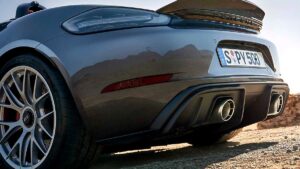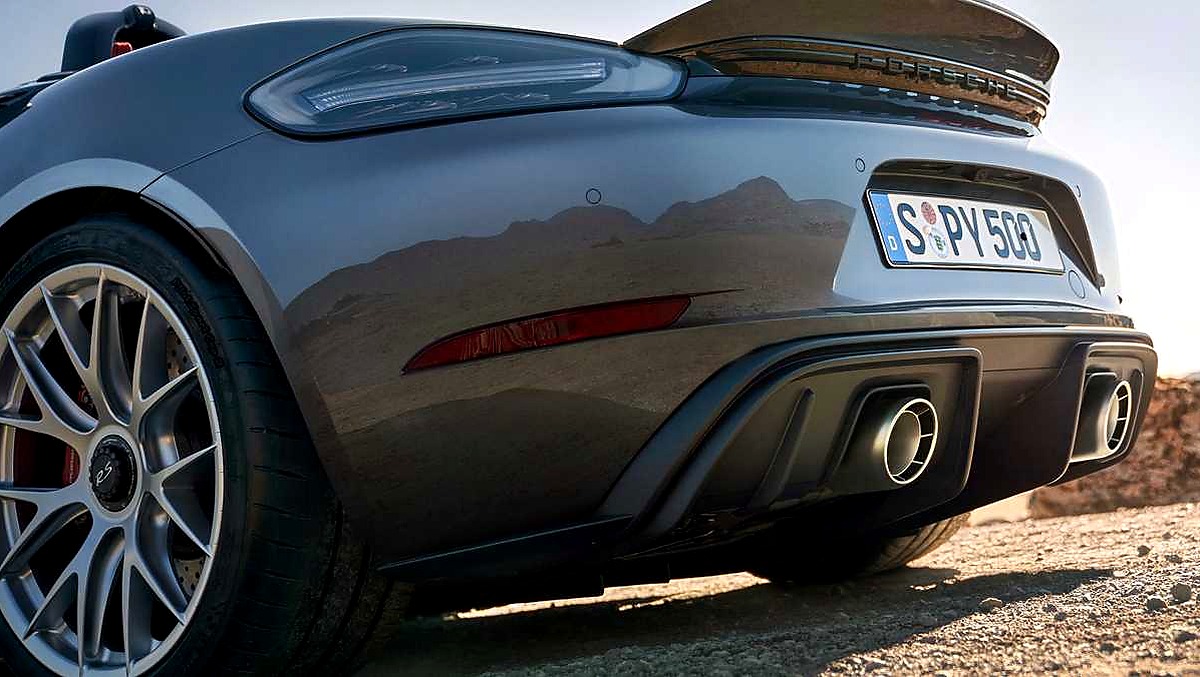
The Porsche Boxster is dead. After 28 years of relentless market dominance, Porsche has officially ended production on the best-selling mid-engine car in automotive history. This isn’t a quiet retirement. It’s a seismic shift in how the Stuttgart automaker views affordable sports cars, and it signals something far larger brewing in the industry.


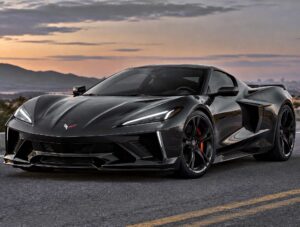
Here’s the brutal reality: no other mid-engine production car came anywhere close to the Boxster’s sales figures. The combined Boxster and Cayman production run exceeded 1 million units globally. Compare that to the Chevrolet Corvette C8 (still climbing), the Ferrari 355 (11,273 built), or the Lamborghini Gallardo (14,022 built). The Boxster lapped them all. Twice. The 914 before it, the Smart Roadster, the Honda Beat, the Pontiac Fiero, none of these mid-engine experiments achieved even a fraction of the Boxster’s commercial success. This wasn’t luck. It was engineering, timing, and relentless product refinement across four generations.
When the 986 Boxster launched in 1996, Porsche faced a genuine crisis. The company was hemorrhaging cash. The rear-engined 911 was aging, and the market demanded something fresh. Enter the mid-engine roadster, developed in tandem with the water-cooled 996 platform. It arrived precisely when the Mazda MX-5 roadster craze was peaking. Porsche’s engineers delivered what the MX-5 couldn’t: genuine handling purity. The 201-horsepower 2.5-liter flat-six wasn’t thrilling, but the chassis was surgical. Sales exploded. Within years, the Boxster and later the hardtop Cayman (introduced 2005) became Porsche’s financial lifeline, alongside the Cayenne SUV.
| ⚙️Engine / Powertrain | 2.0L Turbocharged Flat-Six (base) / 4.0L Naturally Aspirated Flat-Six (top) |
| 🐎Power Output | 300 HP (base) / 414 HP (GTS) |
| ⚡Peak Torque | 280 lb-ft (base) / 309 lb-ft (GTS) |
| ⏱️0-60 mph (0-100 km/h) | 0-60 mph in 5.1s (base) / 3.8s (GTS) |
| 🚀Top Speed | 170 mph (base) / 188 mph (GTS) |
| 🔄Drivetrain / Gearbox | 7-Speed Manual / 8-Speed PDK Automatic, RWD |
| 💰Starting Price / Est. | $65,000 – $95,000 (final generation) |
Each generation refined the formula. The 987 arrived in 2004 with better proportions. The 981 (2012) finally received a proper 911 engine, the 3.8-liter flat-six from the Carrera S. The 718 (2016) sparked controversy by ditching the six-cylinder for turbocharged four-cylinder engines in base models, though the 4.0-liter naturally aspirated flat-six returned in top-spec variants. Still, the Boxster remained the handling benchmark in its class. Even as the Porsche Mission S hypercar development accelerated, the Boxster kept selling.
Now Porsche is walking away. The strategic calculus is clear: electric vehicles demand platform consolidation, and hypercar prestige matters more than volume. The Boxster’s death reflects a broader industry contraction. Mid-engine sports cars are expensive to engineer, they cannibalize 911 sales, and they don’t fit the EV transition narrative. Porsche would rather build the Mission S and chase the hypercar market than defend a segment it invented.
For enthusiasts, this is a gut punch. The Boxster proved that mid-engine handling didn’t require a supercar price tag. It democratized a layout that engineers consider near-perfect. Now that door is closing. According to Porsche’s official statement, the brand is “focusing resources on electrification and next-generation platforms.” Translation: the affordable mid-engine sports car era is over. The Corvette C8 will inherit the Boxster’s legacy by default, not by merit. That’s not a victory for the industry. It’s a loss.

Liam Campbell
Industry Intelligence & News Editor at Auto News Magazine. Tracking prototype spy shots, Nürburgring development mules, automaker corporate moves, and breaking global automotive scoops.
View all articles by Liam Campbell →