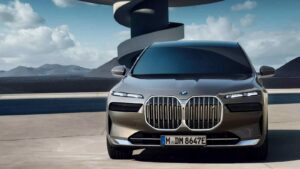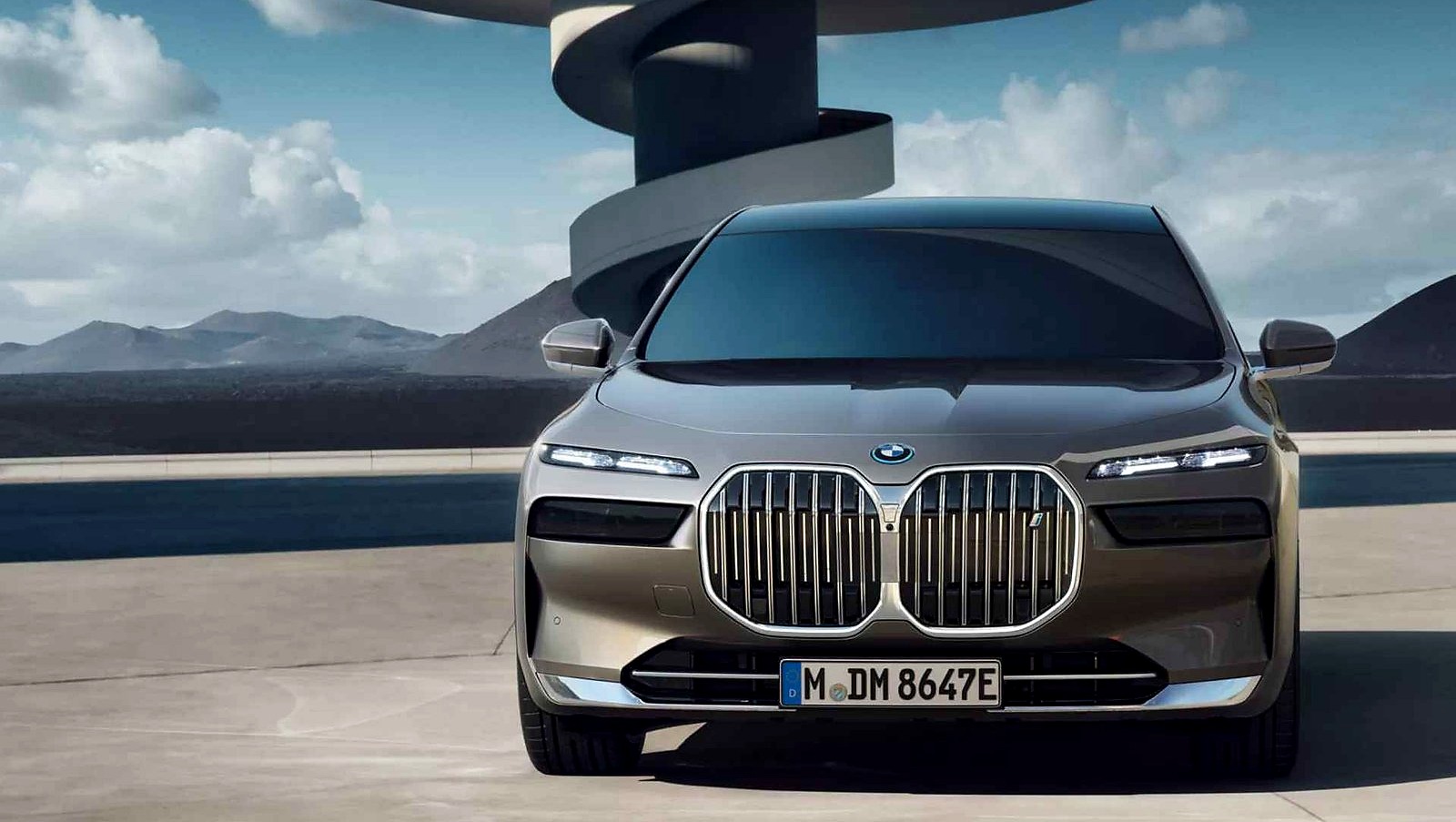
Capturing the attention of motoring enthusiasts worldwide, the BMW i7 makes headlines with significant updates across the board. BMW’s updated i7 represents a paradigm shift in how luxury automakers approach electrification. Rather than chasing headline-grabbing kilowatt-hour figures, Munich’s engineers have weaponized software and thermal architecture to extract measurable efficiency gains from an unchanged battery pack. The result is a 452-mile WLTP range that rewrites the conversation around computational horsepower in the premium sedan segment.
Efficiency Over Capacity: The Silicon-Carbide Advantage
The i7 50 xDrive produces 449 horsepower and 487 lb-ft of torque from its dual-motor architecture. What matters more is how BMW extracts those figures. The 112 kWh battery pack remains identical to its predecessor, yet delivers 12 additional miles of range. This isn’t marketing sleight-of-hand. It’s thermodynamic precision.
Silicon-carbide inverters minimize switching losses during peak charging plateaus. Refined thermal cooling loops maintain optimal cell temperature across the discharge curve. Over-the-air software refinements optimize regenerative braking transitions, blending friction and regen seamlessly to maximize energy recovery. These aren’t flashy features. They’re the unglamorous engineering that separates competent EVs from genuinely efficient ones.
| ⚙️Engine / Powertrain | Electric Motor (i7 50 xDrive) |
| 🐎Power Output | 449 HP (335 kW) |
| ⚡Peak Torque | 487 lb-ft (660 Nm) |
| ⏱️0-60 mph (0-100 km/h) | 0-60 mph in 5.2s (est.) |
| 🚀Top Speed | 130 mph (210 km/h, est.) |
| 🔄Drivetrain / Gearbox | Dual-Motor AWD |
| 💰Starting Price / Est. | $709,888 SGD |
Charging Architecture: 800V Unlocks Real-World Utility
A 10-minute high-power charging stop now adds 195-235 miles of range. That’s not theoretical. That’s the 800V architecture delivering genuine peak charging performance without thermal degradation. For luxury sedan buyers, this translates to genuine usability. A quick coffee stop genuinely restores meaningful range.
Inside, the updated cabin features BMW’s Panoramic iDrive system with a 17.9-inch central display and passenger screen. The interface feels responsive, free from the latency that plagues many EV infotainment systems. Meanwhile, the 2023 BMW 7 Series design language carries forward with refined proportions and aerodynamic slipstream optimization.
The M70 Question: Performance Deferred
BMW’s hotter i7 M70 xDrive packs 671 horsepower and 811 lb-ft torque, reaching 62 mph in 3.8 seconds. Still, this variant remains unavailable in Singapore. The standard i7 50 xDrive, priced at $709,888 SGD, positions itself against the petrol 735 M Sport at $684,888 SGD. Both figures include Certificate of Entitlement costs.
On paper, the petrol sedan costs less. In reality, the i7’s operational efficiency, rapid charging capability, and software-driven refinement justify the premium for buyers prioritizing long-term ownership economics and grid-independent mobility.
The Verdict: Efficiency Is The New Horsepower
BMW’s approach to the refreshed i7 signals a maturation in EV engineering philosophy. Manufacturers chasing 1,000-mile ranges via 200 kWh batteries are missing the point. Extracting measurable efficiency gains from existing architecture proves engineering sophistication. The i7’s 452-mile range from an unchanged 112 kWh pack is a masterclass in thermal management, software optimization, and computational horsepower. This is how future mobility actually works.
For more details, visit BMW’s official site.

Julian Hayes
Future Mobility & Technology Editor at Auto News Magazine. Covering the next frontier of electric powertrains, 800V architectures, solid-state battery chemistry, and autonomous vehicle platforms.
View all articles by Julian Hayes →