Porsche Supercar: Mission S Concept Signals Mid-Engine Flat-Eight Revolution
 Marcus Vance
3 minutes read
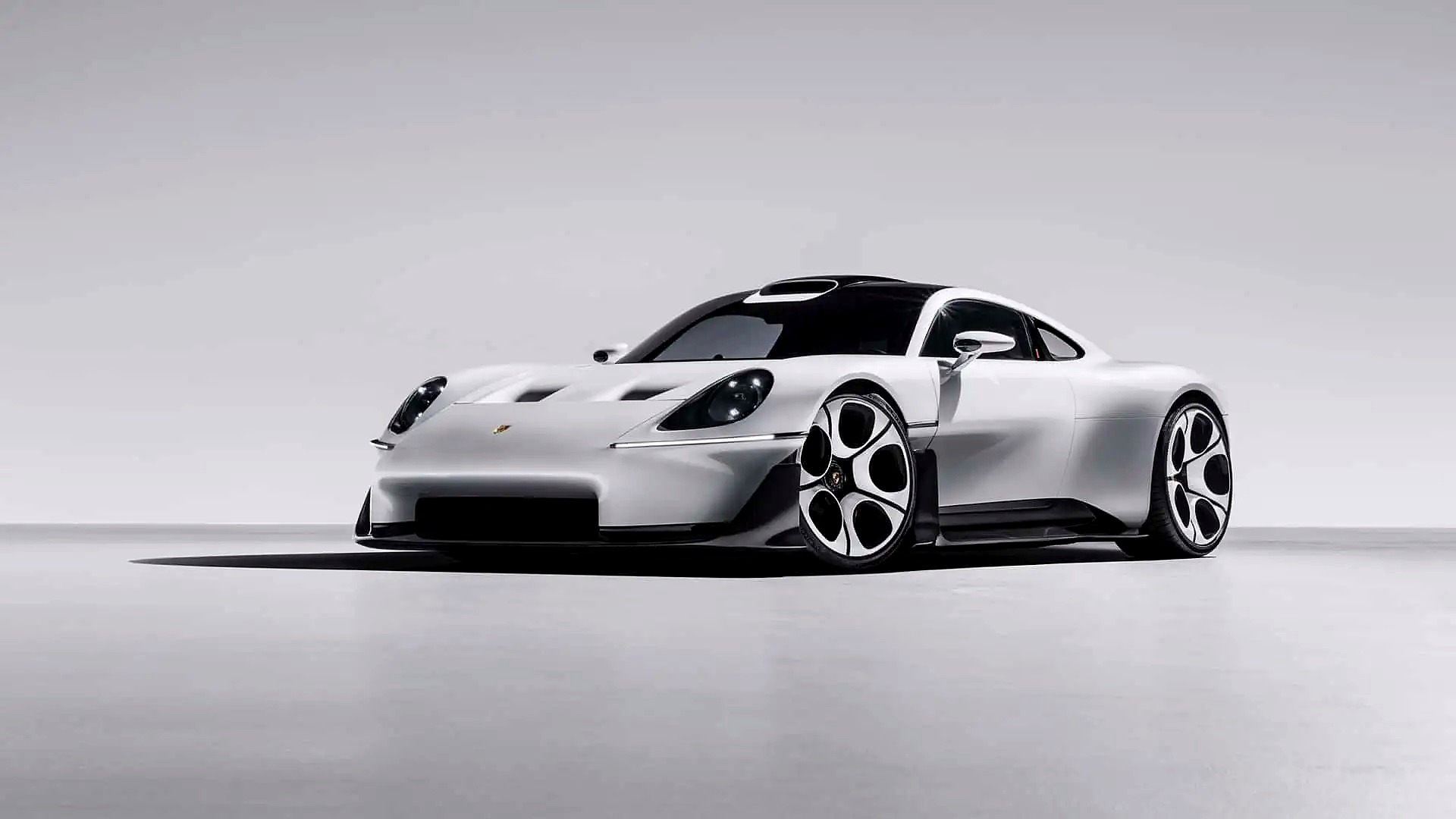
The Porsche Supercar has finally arrived, and it’s a masterclass in restrained aggression. Unveiled Thursday afternoon in New York City, the Mission S concept signals Porsche’s return to what matters most: mechanical soul, steering feedback, and the kind of visceral driver engagement that modern supercars have abandoned in pursuit of software complexity. This isn’t just another concept car destined for a museum vault. Porsche has confirmed it will become a permanent production model positioned squarely above the 911, redefining what a supercar should be in an era obsessed with electrification and autonomous systems.
Design Language Rooted in Porsche DNA
Tobias Sühlmann, Porsche’s new head of design, has crafted something genuinely special with the Mission S. The concept wears round headlights borrowed from the 911, a flat front echoing the GT1, and a roofline that channels the 959. Still, it feels entirely contemporary. Clean lines wrap around the front and rear light clusters with surgical precision, while an all-new set of lightweight wheels inspired by the 928’s “dial design” rims complete the package.
CEO Michael Leiters nailed it in his statement: “A Porsche must be recognizable as a Porsche at first glance.” The Mission S achieves this without resorting to retro pastiche or heavy-handed nostalgia. It’s a design that respects the past while charging boldly into the future.
| ⚙️Engine / Powertrain | Flat-Eight (est.) / Mid-Engine Configuration |
| 🐎Power Output | TBD (est. 700+ HP) |
| ⚡Peak Torque | TBD (est.) |
| ⏱️0-60 mph (0-100 km/h) | TBD (est.) |
| 🚀Top Speed | TBD (est.) |
| 🔄Drivetrain / Gearbox | Mid-Engine / Rear-Wheel Drive (est.) |
| 💰Starting Price / Est. | TBD (Production Model, est. $500,000+) |
Analog Cockpit Philosophy Returns
Inside, the Porsche Supercar embraces minimalism with the intensity of a race engineer stripping weight from a prototype. The cabin draws inspiration from the 550 Spyder and 356, creating a sense of being “deep within the car” for the driver. Digital displays exist, yes, but they’re deliberately small and accompanied by physical buttons and switches. This is a deliberate rejection of the touchscreen-dominated cabins plaguing modern supercars.
Meanwhile, the mid-engine configuration is locked in. Porsche confirmed this at its Capital Markets Day event, following the lineage of the legendary Carrera GT and 918 Spyder. The platform will be entirely new, but here’s where it gets interesting: German automotive publication Handelsblatt reported last month that the production version will feature a flat-eight engine, marking the first road-going Porsche to employ this configuration. Porsche’s official response? “We can’t speculate or comment on potential future product.” Translation: they’re not denying it.
Positioning Above the 911
This is the critical detail. The Porsche Supercar won’t be a limited-run special edition or a one-off vanity project. Porsche has explicitly stated it will be a “permanent” addition to the lineup, positioned above the 911. That’s a seismic shift in brand hierarchy. For decades, the 911 has been Porsche’s flagship, the car that defines the brand. Now, there’s something above it.
Production timing remains unconfirmed, but the commitment is real. This isn’t vaporware. This is Porsche signaling that in an industry racing toward autonomous driving and full electrification, there’s still room for a supercar built on the principles of mechanical purity, analog engagement, and unfiltered driver feedback. The Mission S concept is the opening salvo in what could be the most important supercar launch of the decade.
Marcus Vance
Senior Track & Performance Editor at Auto News Magazine. Veteran automotive journalist specializing in chassis dynamics, apex telemetry, track-day specials, and high-revving mechanical purity.
View all articles by Marcus Vance →