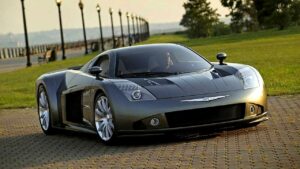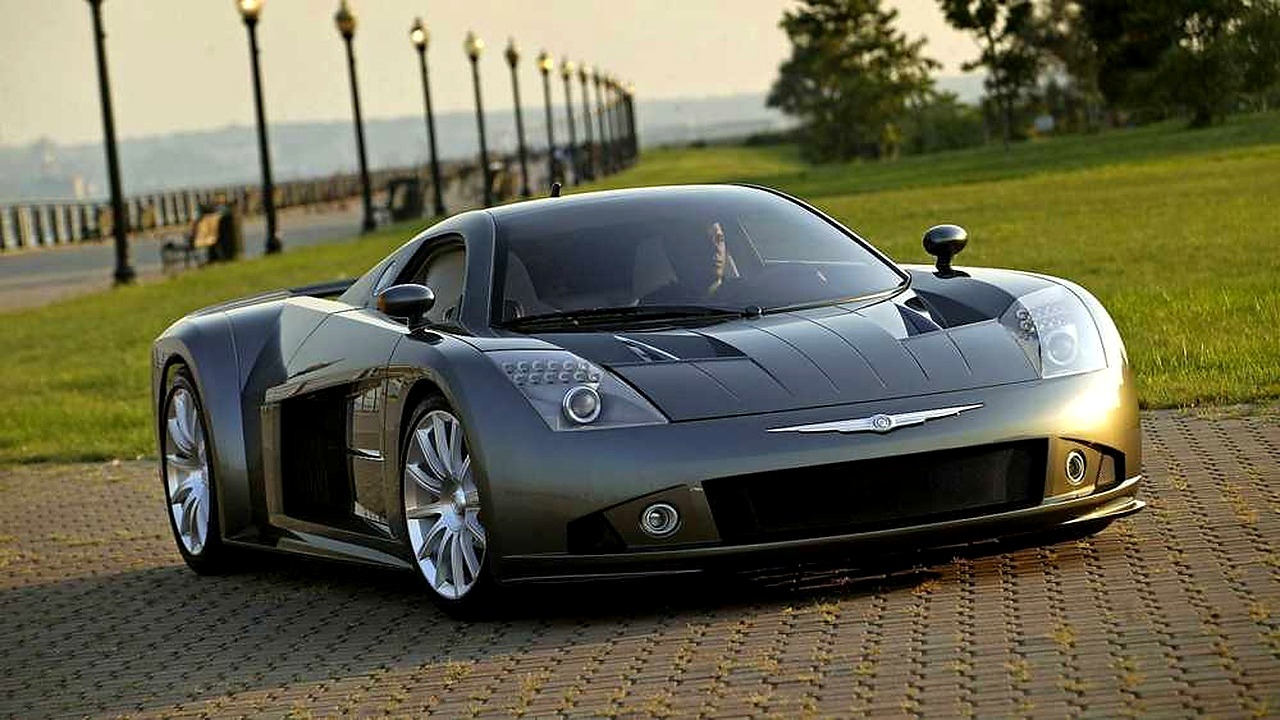
In the early 2000s, Chrysler attempted something audacious: building a world-class supercar to challenge Ferrari, Porsche, and Mercedes-Benz. The Chrysler V12, officially badged the ME Four-Twelve, represented a brief moment when Detroit dared to compete at the highest echelon of performance engineering. What makes this story remarkable isn’t just the car’s staggering specifications, but the fact that Chrysler’s engineers transformed a show car into a functioning prototype in less than a year, proving the brand could engineer genuine exotic machinery.
The DaimlerChrysler Advantage
The 1998 merger between Daimler-Benz and Chrysler created a unique opportunity. Suddenly, Chrysler had access to Mercedes-Benz’s AMG performance division and advanced powertrains. Executives Dieter Zetsche and Wolfgang Bernhard saw a chance to transform Chrysler’s image from minivan manufacturer to supercar builder. The timing aligned perfectly with the early 2000s supercar boom, when Ferrari unveiled the 651-hp Enzo, Porsche launched the V10 Carrera GT, and Mercedes partnered with McLaren on the SLR.
Under SRT chief Dan Knott, a small engineering team tackled the impossible: designing and building a mid-engine supercar on an accelerated timeline. Unlike established exotic manufacturers with decades of heritage, Chrysler had to prove itself through sheer engineering competence. The team drew inspiration from the mid-engine platform philosophy that had proven successful in performance vehicles, but scaled it to supercar extremes.
| ⚙️Engine / Powertrain | 6.0L AMG-Derived Twin-Turbocharged V12 |
| 🐎Power Output | 850 HP |
| ⚡Peak Torque | 850 lb-ft (limited to 553 lb-ft in prototype) |
| ⏱️0-60 mph (0-100 km/h) | 0-60 mph in 2.9s (est.) |
| 🚀Top Speed | 248 mph (est.) |
| 🔄Drivetrain / Gearbox | Mid-Engine, Rear-Wheel Drive, 6-Speed Dual-Clutch (7-speed planned) |
| 💰Starting Price / Est. | $250,000 – $750,000 (est.) |
850 Horses, Four Turbos, One Chassis
Beneath the ME Four-Twelve’s low, aggressive bodywork sat an AMG-derived 6.0-liter V12 engine with four turbochargers producing 850 horsepower and 850 lb-ft of torque. That output eclipsed the contemporary Enzo’s 651 horses. The engine mounted behind the cabin, feeding power through a Ricardo-developed dual-clutch transmission to the rear wheels. In 2004, dual-clutch gearboxes were exotic rarities in road cars, making Chrysler’s choice particularly forward-thinking.
Weight discipline defined the engineering philosophy. Carbon-fiber body panels combined with a carbon-fiber and aluminum-honeycomb chassis targeted a curb weight of just 2,880 pounds. Racing-inspired pushrod suspension, carbon-ceramic brakes, and advanced aerodynamics completed the package. Chrysler claimed 0-60 mph in 2.9 seconds, a quarter-mile in 10.6 seconds, and a theoretical 248 mph top speed. Those figures would have made the ME Four-Twelve faster than the Enzo, the Carrera GT, and the SLR McLaren combined.
The Prototype That Proved It
Chrysler unveiled the ME Four-Twelve at the 2004 Detroit Auto Show. Within months, engineers had a matte-black development prototype testing at Laguna Seca. MotorTrend journalists praised its acceleration and braking dynamics, though they noted the suspension calibration needed refinement. The prototype weighed closer to 3,200 pounds than the target, and engineers limited torque to 553 lb-ft to protect the transmission during testing. Still, the car demonstrated genuine supercar credentials.
Production, however, demanded far greater investment. Bespoke chassis construction, exotic materials, and complicated drivetrains couldn’t roll off existing assembly lines. Reliability, cooling, crash safety, and emissions compliance all required extensive development. Pricing estimates spiraled from $150,000 to between $250,000 and $750,000, putting Chrysler directly against Ferrari and Lamborghini. At those prices, buyers demanded brand prestige and racing heritage, not just horsepower. Chrysler had the engineering but lacked the mystique.
The ME Four-Twelve remains a tantalizing what-if in automotive history. It proved Chrysler could engineer genuine performance machinery, yet corporate realities killed it before production. Sometimes, raw speed and engineering brilliance aren’t enough.

Marcus Vance
Senior Track & Performance Editor at Auto News Magazine. Veteran automotive journalist specializing in chassis dynamics, apex telemetry, track-day specials, and high-revving mechanical purity.
View all articles by Marcus Vance →