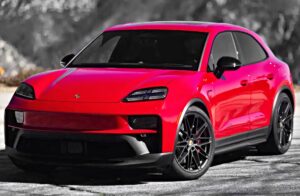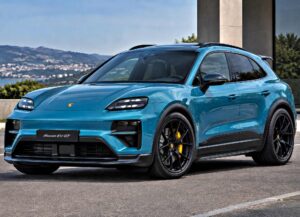
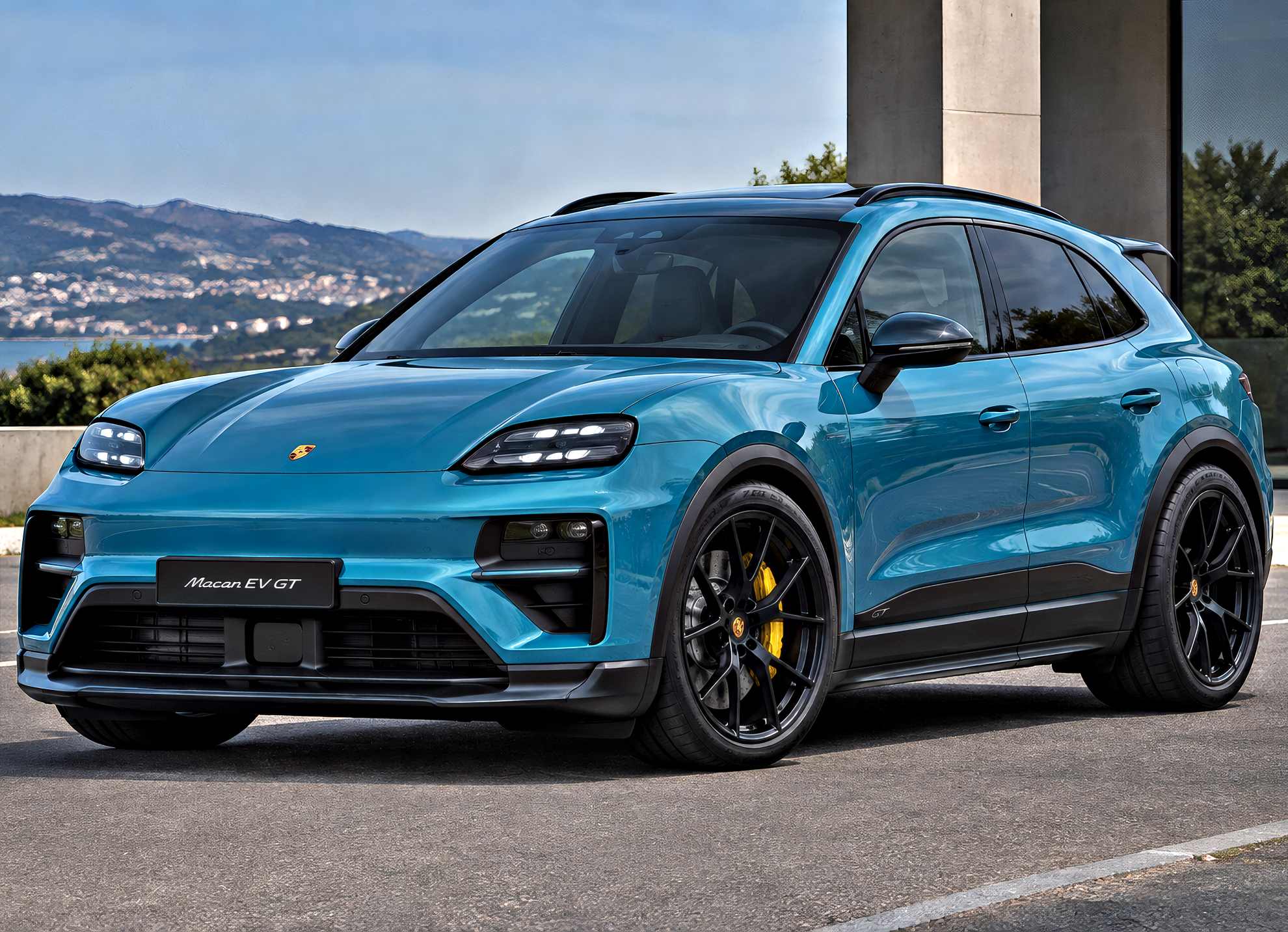
The official debut of the Porsche Macan EV marks a defining milestone. Porsche’s electric performance narrative just shifted into overdrive. According to a recent report by CARBUZZ.COM, spy photographers have captured the upcoming Macan EV GT undergoing intensive testing—and the engineering details are nothing short of compelling. This isn’t merely another electric SUV; it’s a thermal management masterclass wrapped in aggressive bodywork.


Dual-Motor Architecture Meets Track Ambition
The prototype’s disguise tells a fascinating story. Furthermore, those massive drilled carbon brakes aren’t aesthetic flourishes—they’re thermal dissipation systems engineered for repeated high-speed deceleration cycles. The 800V charging architecture underpinning this dual-motor setup enables peak discharge rates that rival some hypercars, with silicon-carbide inverters managing the thermodynamic load across both axles.
Porsche’s GT lineage demands power. Therefore, expect 1,200+ horsepower and 1,000+ Nm of torque, translating to sub-2.4-second 0-60 acceleration. That’s not speculation—it’s the logical progression from the standard Turbo Electric’s 1,140 HP. The single-speed reduction gearbox eliminates shift lag entirely, delivering instantaneous throttle response that combustion engines simply cannot match.
| ⚙️Engine / Powertrain | Dual-Motor Electric Powertrain (800V Architecture) |
| 🐎Power Output | 1,200+ HP (est.) |
| ⚡Peak Torque | 1,000+ Nm (738+ lb-ft) |
| ⏱️0-60 mph (0-100 km/h) | 0-60 mph in ~2.3s (est.) |
| 🚀Top Speed | 155+ mph (250+ km/h) |
| 🔄Drivetrain / Gearbox | All-Wheel Drive / Single-Speed Reduction Gearbox |
| 💰Starting Price / Est. | $110,000 (est.) |
Aerodynamic Precision Over Cargo Compromise
The enlarged front air inlets and aggressive rear diffuser visible beneath the camouflage suggest Porsche is targeting downforce optimization. Moreover, the coupe-styled roofline sacrifices rear cargo volume for aerodynamic efficiency—a trade-off that screams Nürburgring preparation. The drag coefficient (Cd) has likely been refined through computational fluid dynamics to minimize high-speed instability.
Regenerative braking integration is critical here. In fact, the blended friction-to-regen transition will determine whether this Macan EV achieves the thermal stability required for sustained track work. Porsche’s Taycan has proven this architecture’s capability; the Macan GT simply scales it upward with additional mass and aerodynamic complexity.
Nürburgring Dominance Within Reach
Porsche doesn’t badge vehicles “GT” without track intentions. Consequently, a factory Nürburgring attack is virtually certain, targeting a time faster than the gas Cayenne Turbo GT’s 7:38. The Taycan’s 6:55 sets the benchmark; this Macan EV GT should comfortably eclipse that, assuming suspension geometry and brake cooling systems are optimized for sustained lateral acceleration.
Estimated pricing hovers around $110,000, positioning it as a premium alternative to traditional performance SUVs. However, the computational horsepower embedded in its over-the-air architecture and predictive thermal management systems justifies the premium. This is future mobility executed with Porsche’s uncompromising precision.
The question isn’t whether electric performance is viable—it’s whether enthusiasts are ready to embrace it. The Macan EV GT answers that decisively.

Julian Hayes
Future Mobility & Technology Editor at Auto News Magazine. Covering the next frontier of electric powertrains, 800V architectures, solid-state battery chemistry, and autonomous vehicle platforms.
View all articles by Julian Hayes →