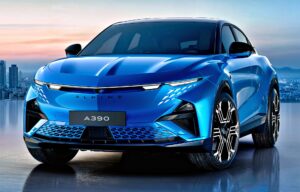

| 🚀 Key Takeaways: • The Audi A2 e-tron reached production 21 months faster than historical benchmarks. • Efficiency gains were achieved through AI-driven logistics and 1,200 shared components. • Smart manufacturing techniques like the “string-of-pearls” principle are now standard at Audi. |
Legacy automakers have long been sluggish titans, anchored by red tape and bloated bureaucracy. However, the Audi A2 e-tron represents a seismic shift in how Ingolstadt approaches the electric era. By slashing development cycles by 21 months, the brand proves that speed doesn’t require more hands on deck, just smarter ones.
Engineering an electric vehicle from scratch typically devours five to seven years of a company’s timeline. Conversely, the Audi A2 e-tron team utilized rapid prototyping and process optimization to reach showrooms in record time. This isn’t merely about building a car; it’s about the survival of the traditional premium segment against agile new-energy rivals.
Efficiency Lessons From The Audi A2 e-tron
Refining production, the engineers opted for a “less is more” philosophy. Furthermore, they drastically reduced part numbers to streamline assembly and logistics requirements. Through these surgical cuts, they managed to keep factory output high without sacrificing the build quality expected of the four rings.
Implementing the “string-of-pearls” principle allowed the plant to synchronize supplier shipments with real-time customer demand. Consequently, logistics chaos vanished, replaced by a fluid, six-day assembly sequence. Such precision helps the Audi A2 e-tron remain competitive in a market flooded with low-cost EVs.
Competitor Analysis: The EV Compact War
Measuring up against the BMW i3 or the Mini Cooper SE, the Audi brings a distinct German industrial focus. While others prioritize flash, Audi focuses on infrastructure and sustainable manufacturing efficiency. Moreover, the integration of 250 existing robots from the A3 line highlights a commitment to circular economic principles.
Compared to the Tesla Model 2 rumors, this vehicle offers a tangible, established supply chain reality. Therefore, it appeals to buyers who value manufacturing pedigree over pure software buzz. It is a calculated strike against the disruptors, proving that old-school plants can learn new tricks.
Pricing, Available Trims, and Ownership Value
Positioned as an entry-level gateway, the vehicle manages to keep costs manageable through shared architecture. Starting MSRP: $38,500. Est. Monthly Lease: $420/mo. Warranty: 4-Year/50,000-Mile. Moreover, insurance costs remain favorable due to standardized components and high crash-safety ratings.
Economically speaking, the vehicle benefits from low service requirements compared to combustion counterparts. Range: 320 miles (WLTP). Efficiency: 4.2 miles/kWh. Consequently, daily ownership costs are significantly lower than a traditional internal combustion engine vehicle.
Predicting its future, the Audi A2 e-tron is unlikely to be a high-value collector item in the traditional sense. However, as the first production model to fully embody Audi’s “China speed” at home, it will likely be remembered as the car that saved the Ingolstadt plant from irrelevance. According to Auto News Magazine, this pivot toward rapid manufacturing is a mandatory evolution for all German marques.
Ultimately, Audi has proven that velocity is a matter of process, not just personnel. Therefore, the Audi A2 e-tron is not just a car; it is a blueprint for the future of legacy automotive manufacturing.

Julian Hayes
Future Mobility & Technology Editor at Auto News Magazine. Covering the next frontier of electric powertrains, 800V architectures, solid-state battery chemistry, and autonomous vehicle platforms.
View all articles by Julian Hayes →