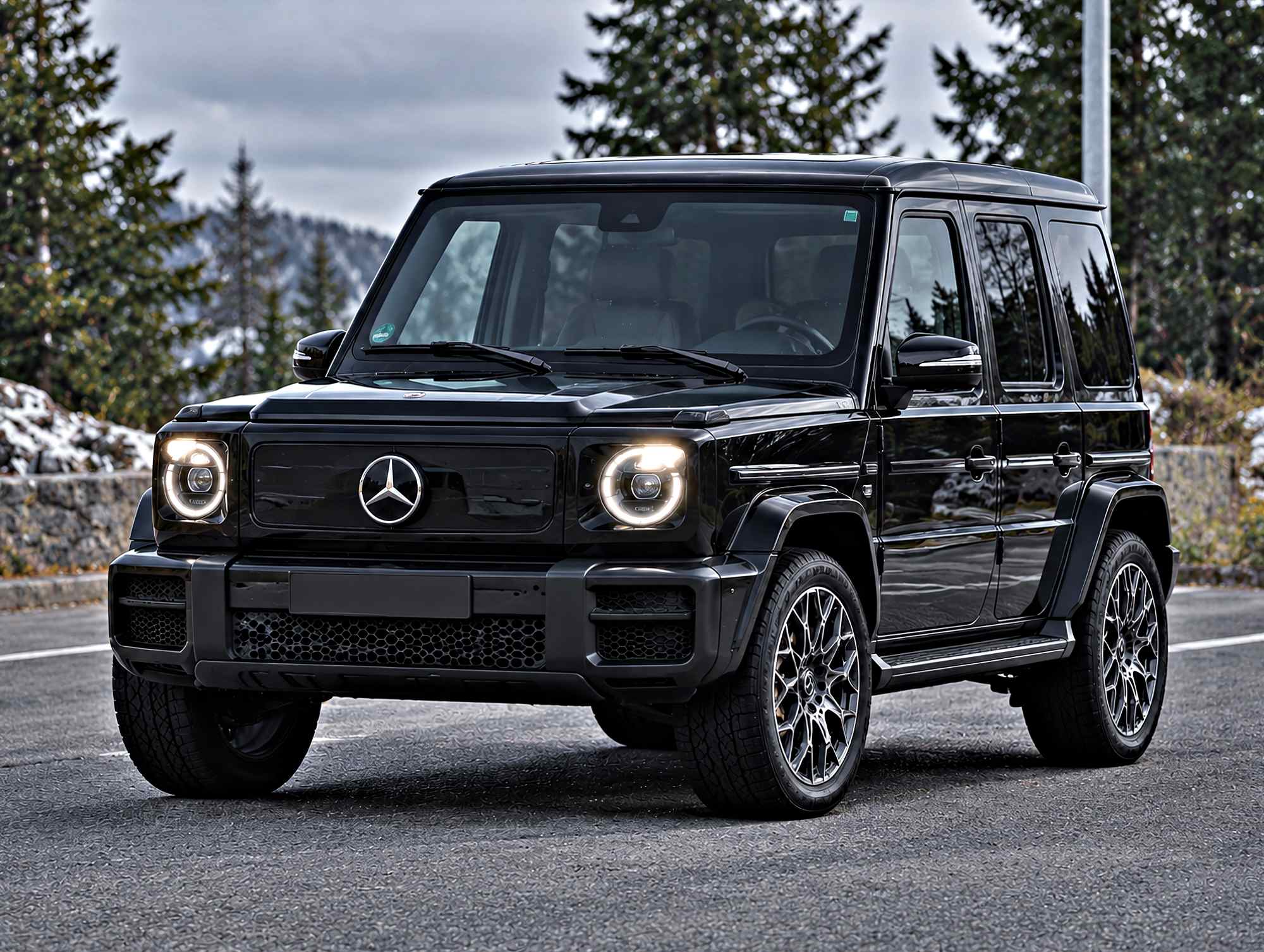
The Mercedes Baby G is not a shrunken G-Class. That’s the message Mercedes-Benz just hammered home at Stuttgart’s 140 Festival, and it’s a critical distinction that reshapes how we should think about this incoming compact off-roader. Speaking to media, Mercedes-AMG CEO Stefan Weckbach made the positioning crystal clear: this vehicle will target “a different segment” and “won’t target the real G customer.” Translation? Mercedes is building something entirely new, not a budget-friendly replica of its most iconic SUV.
A Fresh Segment, Not A Shrink Job
Weckbach’s language matters here. In the automotive industry, segment positioning determines everything, pricing strategy, feature sets, competitive benchmarks, and long-term resale value. By explicitly stating the Baby G will avoid cannibalizing G-Class sales, Mercedes is signaling a deliberate market separation. Still, the company isn’t abandoning the DNA that made the G-Class legendary. Weckbach confirmed the compact SUV will retain “very good off-road capability,” meaning this isn’t some soft-roading crossover masquerading as a proper off-roader.
Prototypes have already been spotted testing across Europe, revealing a boxy silhouette that echoes G-Class proportions but with its own visual language. The familiar three-box shape is there, but the execution will be distinctly different. Meanwhile, Mercedes appears intent on giving this model genuine character rather than simply scaling down the existing formula. That’s a smart move in a market flooded with generic compact SUVs.
| ⚙️Engine / Powertrain | 2.0L Turbo 4-Cylinder / Electric Motor (est.) |
| 🐎Power Output | 255 HP (ICE) / 300+ HP (EV est.) |
| ⚡Peak Torque | 295 Nm (217 lb-ft) / 400+ Nm (EV est.) |
| ⏱️0-60 mph (0-100 km/h) | 0-60 mph in 7.2s (est.) / 6.5s (EV est.) |
| 🚀Top Speed | 130 mph (est.) |
| 🔄Drivetrain / Gearbox | All-Wheel Drive / Electric AWD |
| 💰Starting Price / Est. | $48,000 – $62,000 (est.) |
Powertrains: Hybrid And Electric Locked In
Here’s where the Baby G gets interesting. Mercedes has confirmed both combustion-powered and fully electric versions are planned, a broader powertrain strategy than the traditional G-Class approach. On paper, this makes commercial sense, it hedges against regulatory uncertainty while appealing to both traditional buyers and EV-curious customers. In reality, it signals Mercedes’ confidence in the segment’s growth potential. The electric variant will likely draw engineering inspiration from the Mercedes-AMG GT SUV’s tri-motor architecture, though with more modest performance targets suited to the compact segment.
Estimated specifications suggest a 2.0-liter turbocharged four-cylinder for the combustion model, producing around 255 horsepower, while the electric variant could deliver 300+ horsepower with instant torque delivery. Pricing is expected to land between $48,000 and $62,000, positioning it well below the G-Class but above mainstream compact SUVs like the BMW X3 or Audi Q5.
Market Timing And Competitive Reality
The compact luxury off-roader segment is heating up. Range Rover’s Baby Defender proved there’s genuine appetite for smaller, more accessible versions of iconic nameplates. Mercedes is arriving to this party with serious intent, leveraging the G-Class badge while maintaining strategic distance. Ultimately, the Baby G’s success hinges on execution, whether it delivers authentic off-road credibility without feeling like a compromised downsizing exercise. If Mercedes nails that balance, this could become a segment-defining vehicle.
Prototypes are already in the wild, and a market debut is expected in 2026-2027. This is a vehicle worth watching closely.

Liam Campbell
Industry Intelligence & News Editor at Auto News Magazine. Tracking prototype spy shots, Nürburgring development mules, automaker corporate moves, and breaking global automotive scoops.
View all articles by Liam Campbell →