| 🚀 Key Takeaways: • Porsche’s Next Supercar Could pack a 5.0-liter twin-turbo flat-eight engine with 750+ horsepower. • The engine revs to 9,000 rpm and channels power through a manual transmission—a rarity in modern hypercars. • Expected launch window: 2028, with the 919 nameplate rumored to succeed the legendary 918 Spyder. • Porsche abandoned the fully electric Mission X concept in favor of analog, gas-powered performance. • Platform likely sourced from Audi Nuvolari architecture, shared with the Lamborghini Temerario. |
The official debut of the Porsche’s Next Supercar Could marks a defining milestone. Porsche just threw a curveball at the EV revolution. After teasing us with the stunning, all-electric Mission X concept in 2023, the company has quietly pivoted. The German marque is now developing a gas-powered supercar—and the specs are absolutely intoxicating. This isn’t some half-hearted compromise; it’s a full-blooded return to mechanical purity.


The Flat-Eight Gambit: Raw Mechanical Soul
Here’s where it gets spicy. Porsche’s Next Supercar Could feature a 5.0-liter twin-turbocharged flat-eight engine producing 750+ horsepower and 738 lb-ft of torque. Furthermore, this isn’t theoretical—Porsche built a concept version in 2023 that proved the flat-eight formula works. The engine screams to 9,000 rpm and sends power through a manual transmission. In an era of dual-clutch automatics and paddle shifters, that’s a radical statement.
However, this flat-eight would be Porsche’s first production example. The company previously dismissed the concept as “not the right car for that moment in time.” Clearly, the moment has arrived. According to Porsche, the shift reflects changing market dynamics and enthusiast demand for visceral, driver-focused machines.
| ⚙️Engine / Powertrain | 5.0L Twin-Turbo Flat-Eight (est.) |
| 🐎Power Output | 750+ HP (est.) |
| ⚡Peak Torque | 738+ lb-ft (est.) |
| ⏱️0-60 mph (0-100 km/h) | 0-60 mph in 2.8s (est.) |
| 🚀Top Speed | 220+ mph (est.) |
| 🔄Drivetrain / Gearbox | Mid-Engine / Manual Transmission (est.) |
| 💰Starting Price / Est. | $950,000 (est.) |
The 919 Returns: Le Mans DNA Reborn
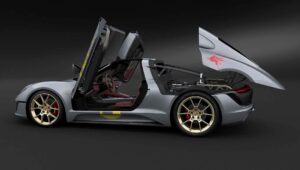
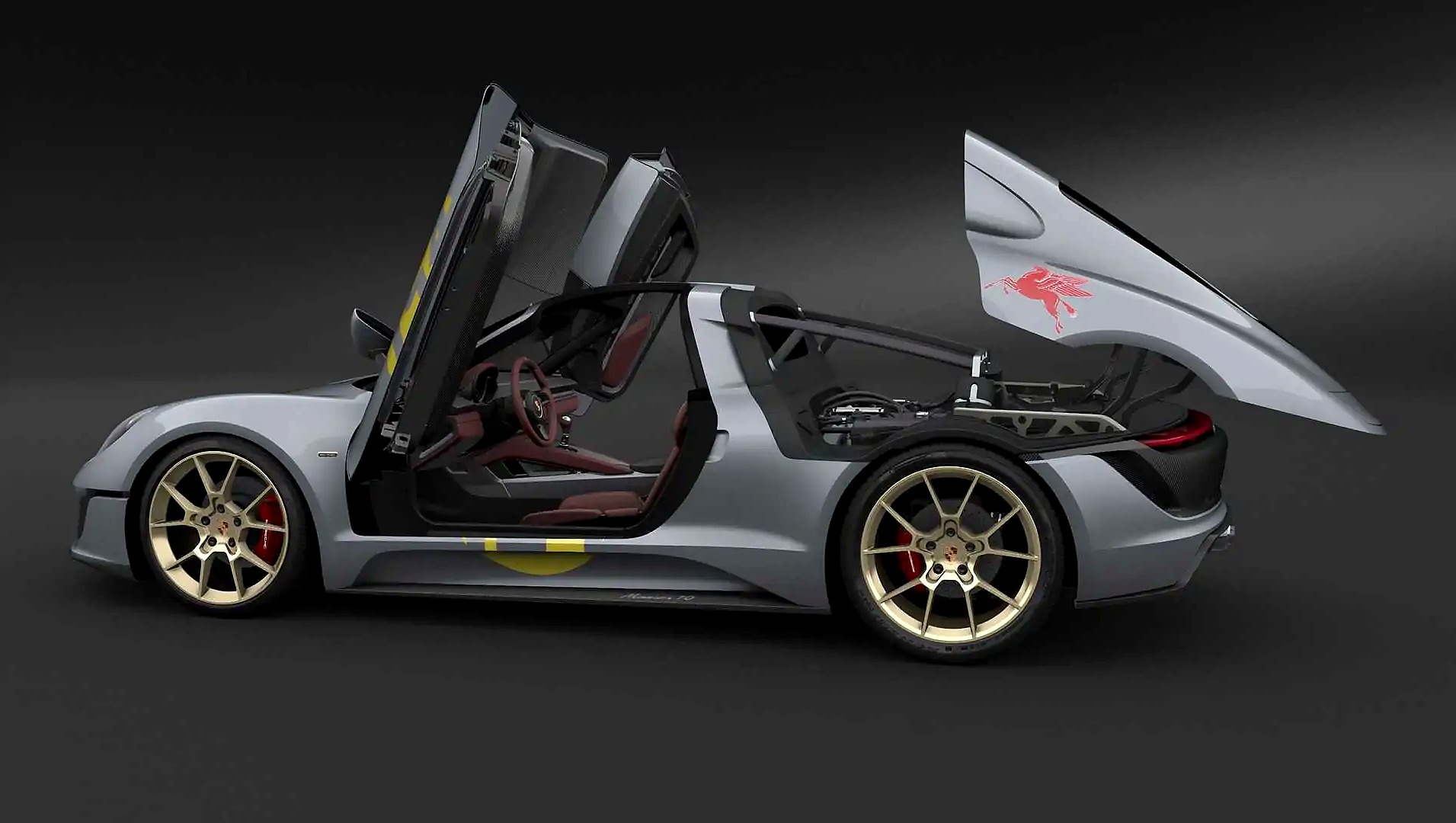
Internally, Porsche calls this project “S1,” but don’t expect that name on the production car. Instead, the 919 nameplate could make a triumphant comeback—a direct successor to the legendary 918 Spyder hypercar. The connection to Porsche’s Le Mans racing program is unmistakable. The Mission X concept drew inspiration from the 919 Hybrid prototype; the production car will likely follow suit.
Therefore, expect a mid-engine layout with aggressive aerodynamics, forward-opening doors, and vertical headlights reminiscent of Le Mans prototypes. The chassis? Porsche may leverage the new Audi Nuvolari platform, essentially a reworked version of the architecture underpinning the Lamborghini Temerario. This pragmatic approach allows Porsche to focus engineering resources on what matters: that flat-eight engine and the driving experience.
2028: The Year Analog Roars Back
Launch timing remains fluid, but 2028 is the working estimate. Consequently, we’re looking at a 3-4 year development window—plenty of time for Porsche to refine the chassis dynamics and extract maximum performance from that turbocharged flat-eight. With an estimated price tag around $950,000, this hypercar will compete directly with the Ferrari LaFerrari successor and McLaren Speedtail.
Ultimately, Porsche’s Next Supercar Could become the most coveted analog machine of the decade. In a world drowning in electric monotony, a 750-hp flat-eight with a manual gearbox isn’t just a car—it’s a manifesto. Porsche is betting that enthusiasts still crave the mechanical symphony, the throttle modulation, the unfiltered connection between driver and machine. Based on everything we know, that bet is going to pay off spectacularly.

Marcus Vance
Senior Track & Performance Editor at Auto News Magazine. Veteran automotive journalist specializing in chassis dynamics, apex telemetry, track-day specials, and high-revving mechanical purity.
View all articles by Marcus Vance →