| 🔌 Key Takeaways: • 2027 Mercedes-Benz G 580 Electric now features dual-port NACS and J1772 charging architecture. • DC fast charging accelerates to 10-80% in 29 minutes (down from 32 minutes) at 200 kW peak power. • EPA range climbs to 249 miles with 71 MPGe efficiency; quad-motor output remains 579 horsepower and 858 lb-ft torque. • Base MSRP: $165,200 (up $650 from prior year); direct Tesla Supercharger compatibility requires no adapter. • Sales lag behind gas G-Class (1,450 units vs. 9,700 combustion models through April 2025). |
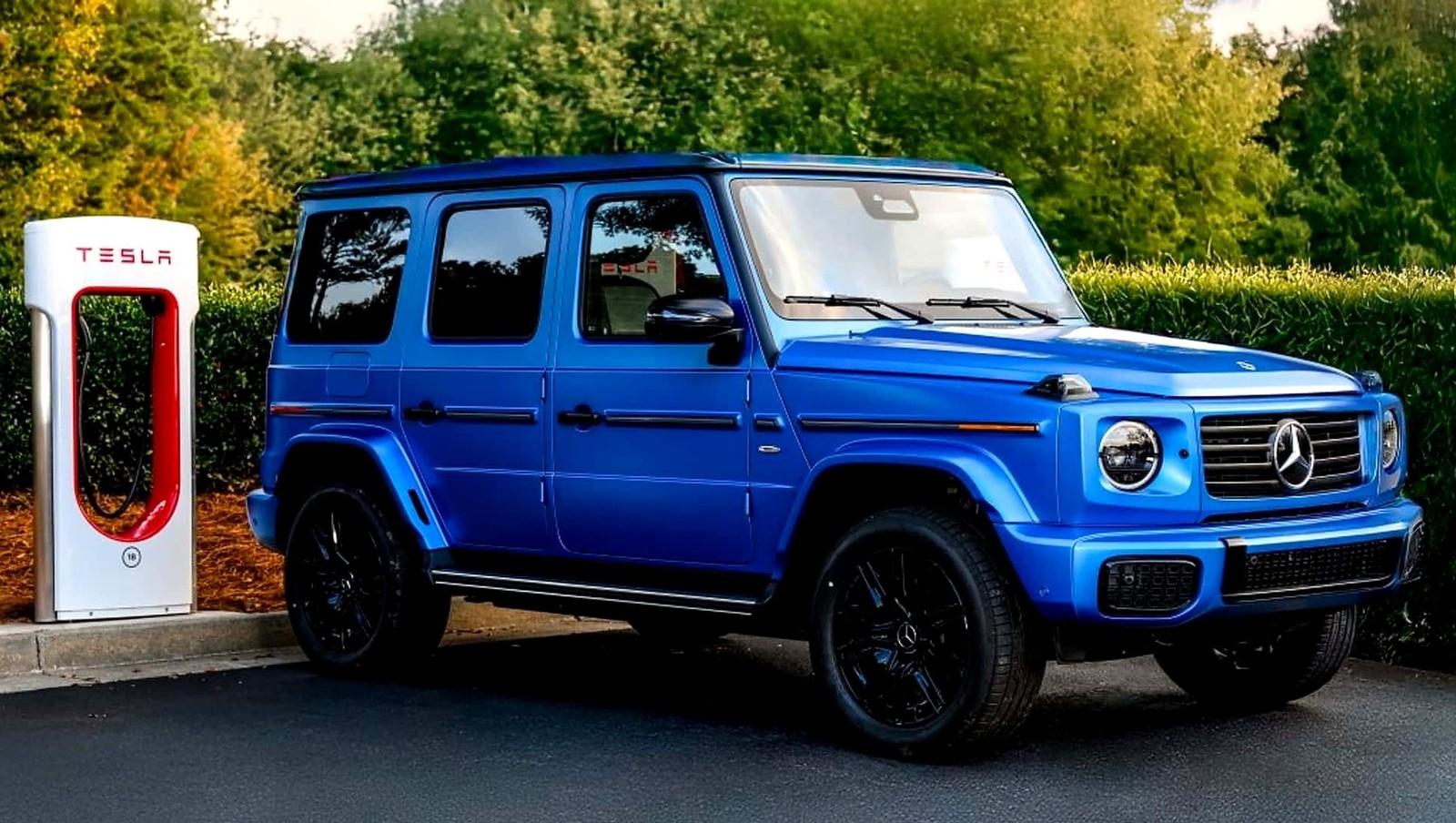
Mercedes-Benz has quietly engineered one of the most pragmatic EV infrastructure pivots in the luxury segment. The 2027 Mercedes-Benz G 580 Electric ditches its aging CCS1 inlet for a dual-port charging architecture that finally grants direct access to Tesla’s Supercharger network. No adapters. No friction. Just plug-and-charge efficiency that mirrors the automotive industry’s seismic shift toward NACS standardization.
Dual-Port Architecture Reshapes Charging Reality
The charging door now conceals two separate connectors: a NACS port for DC fast charging and a dedicated J1772 inlet for Level 2 AC charging. Therefore, owners gain seamless Supercharger access while maintaining home-charging flexibility. This architectural shift represents more than cosmetic refinement—it’s a thermodynamic and logistical recalibration.
Mercedes has compressed the 10-to-80% DC charging window to 29 minutes, down from 32 minutes on the outgoing model. Peak DC power remains capped at 200 kW, yet the improved charging curve suggests optimized silicon-carbide inverter tuning and refined battery thermal management. Furthermore, the 9.6 kW onboard AC charger delivers full-charge home replenishment in 13.6 hours at 240 volts—respectable for a 117 kWh battery pack.
| ⚙️Engine / Powertrain | Four electric motors |
| 🐎Power Output | 579 hp |
| ⚡Peak Torque | 858 lb-ft |
| ⏱️0-60 mph (0-100 km/h) | 4.6 seconds (0-60 mph) |
| 🚀Top Speed | 112 mph |
| 🔄Drivetrain / Gearbox | All-Wheel Drive (quad-motor electric) |
| 💰Starting Price / Est. | $165,200 |
Range Gains & Efficiency Metrics Climb
The EPA now rates the 2027 G 580 Electric at 71 MPGe combined efficiency, up from 62 MPGe. Combined range stretches to 249 miles, a nine-mile improvement over the prior generation. However, these gains stem from refined aerodynamic drag coefficients and regenerative braking calibration rather than battery capacity expansion—the 117 kWh pack remains unchanged.
Powertrain specifications hold steady: four electric motors deliver 579 horsepower and 858 lb-ft of torque, maintaining 0-60 mph acceleration in 4.6 seconds and a 112 mph top speed. Consequently, the Mercedes-Benz G 580 Electric trades raw performance for infrastructure pragmatism and charging convenience.
Pricing Strategy Reflects Functional Upgrades
The 2027 model year base price climbs to $165,200 (including $1,450 destination), a modest $650 increase from the prior generation. This pricing discipline signals Mercedes’ confidence in the charging architecture overhaul rather than another desperate discount. In fact, the brand doubled customer incentives from 5% to 10% last November, yet sales remain sluggish—roughly 1,450 electric G 580s globally versus 9,700 combustion models through April 2025.
Configured examples already exceed $187,650 once options accumulate. Therefore, the Mercedes-Benz G 580 Electric competes directly against the gas-powered Mercedes-Benz G-Class and the incoming 2027 Maybach GLS 680 within the luxury SUV hierarchy.
The Verdict: Substance Over Discounting
Mercedes refuses to slash prices on the electric G-Class. Instead, it’s engineering real functional upgrades: dual-port charging, faster DC curves, and Supercharger compatibility. This strategy targets discerning buyers who prioritize infrastructure convenience and zero-emission capability over raw performance metrics. The iconic boxy silhouette now whispers rather than roars—and that’s precisely the point.
For deeper insights into EV charging architecture and luxury electric SUV trends, explore Auto News Magazine‘s comprehensive coverage of the evolving EV landscape.

Julian Hayes
Future Mobility & Technology Editor at Auto News Magazine. Covering the next frontier of electric powertrains, 800V architectures, solid-state battery chemistry, and autonomous vehicle platforms.
View all articles by Julian Hayes →