
Tesla Semi: The Disruptive Big Rig Finally Hits The Road Amid Diesel Chaos
 Liam Campbell
3 minutes read
Liam Campbell
3 minutes read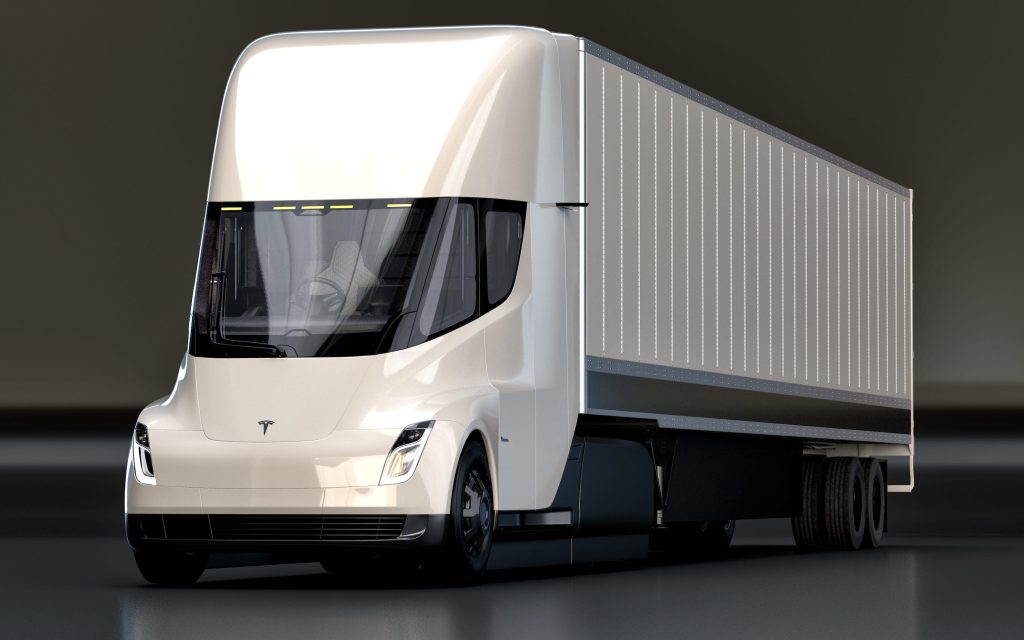
| 🚀 Key Takeaways: • The Tesla Semi has officially entered volume production with initial fleet deliveries underway. • Utilizing advanced 4680 battery cells, the platform targets 500 miles of range at a 82,000-pound total gross weight. • Charging performance peaks at 1.2 megawatts, recovering 60% capacity in just 30 minutes. |
After a decade of gestation, the Tesla Semi has finally transitioned from a silicon-valley fever dream to a genuine commercial asset. Following a protracted development cycle that saw the original 2017 reveal fade into skepticism, Tesla has finally commenced volume production at its Nevada Gigafactory.
Tesla Production and Market Positioning
Strategically, this launch arrives at a critical juncture for the logistics industry. With diesel prices hovering near record highs due to global geopolitical volatility, fleet operators are desperate for an alternative. Consequently, the business case for an electric heavy-duty truck has never been more compelling. Furthermore, the operational cost-per-mile gap between electricity and fossil fuels is widening rapidly, creating a massive opportunity for the Tesla Semi to capture market share.
Moreover, the logistics behind this rollout are as impressive as the machine itself. Tesla aims for an annual capacity of 50,000 units, a bold target that will force traditional OEMs to accelerate their own modular platform economics. While legacy manufacturers struggle with the complexity of transitioning heavy freight to batteries, Tesla is betting on its proprietary 4680 battery cells. In fact, these batteries represent the backbone of the truck’s capability, promising 1.7 miles per kWh of efficiency.


Fast Specs
| ⚙️Engine / Powertrain | Tri-Motor Electric Drive |
| 🐎Power Output | Estimated 1,000+ HP |
| ⚡Peak Torque | N/A (Instant Torque) |
| ⏱️0-60 mph (0-100 km/h) | 0-60 mph in 20s (fully loaded) |
| 🚀Top Speed | 65 mph (governed) |
| 🔄Drivetrain / Gearbox | RWD |
| 💰Starting Price / Est. | $150,000 – $180,000 (est.) |
Competitor Analysis: Tesla vs. Legacy Freight
Comparing the Tesla Semi to the Volvo VNR Electric or the Freightliner eCascadia reveals a distinct philosophical split in engineering. While the European and American incumbents focus on incremental improvements to existing chassis architectures, the Tesla Semi utilizes a clean-sheet approach. Specifically, Tesla’s integration of the Megawatt Charging Standard (MCS) allows for a 1.2-megawatt peak charge rate. In contrast, most current commercial rivals rely on lower-voltage hardware that simply cannot match this turnover speed.
However, legacy brands possess a massive advantage in service infrastructure. Trucking is a business defined by uptime; a broken truck is a liability that costs thousands per hour. Therefore, Tesla’s plan to roll out 30 Megacharger locations with 200 charging posts by year-end is not merely a feature—it is a survival requirement. If they cannot guarantee 24/7 reliability, operators will return to the familiar, if pricey, comfort of diesel engines. Check out our latest analysis on logistics trends at Auto News Magazine for more on the shifting landscape of commercial transport.
Pricing, Available Trims, and Ownership Value
Regarding the financials, transparency remains somewhat opaque as Tesla manages production scaling. While official MSRP figures for fleet contracts are often negotiated privately, industry estimates for the Long Range variant hover around $180,000. Meanwhile, the Standard Range trim is expected to debut at a lower price point, potentially near $150,000. Insurance considerations for these high-voltage assets remain complex, often requiring specialized coverage for the proprietary 4680 battery arrays.
Furthermore, maintenance costs are forecasted to be significantly lower than ICE counterparts, largely due to fewer moving parts. Operators should anticipate a Warranty: 5-Year/100,000-Mile powertrain coverage, though this may fluctuate depending on the service agreement. Ultimately, the total cost of ownership will hinge on energy pricing and the success of the Megacharger network. Consequently, savvy fleet managers are treating these first units as high-stakes pilot programs rather than standard fleet replacements.
Future Speculation and Conclusion
Looking ahead, the Tesla Semi will likely dictate the pace of electrification for the entire Class 8 segment. Given the current trajectory of battery technology, I predict these trucks will become highly liquid assets on the used market if they prove their longevity. Nevertheless, the true test will be the integration of Full Self-Driving (Supervised) technology for highway hauling. If Tesla succeeds in perfecting this, they will disrupt the freight industry’s most significant cost center: the driver. Ultimately, this isn’t just a truck; it is the first real shot across the bow of the global diesel shipping hegemony.
Liam Campbell
Industry Intelligence & News Editor at Auto News Magazine. Tracking prototype spy shots, Nürburgring development mules, automaker corporate moves, and breaking global automotive scoops.
View all articles by Liam Campbell →