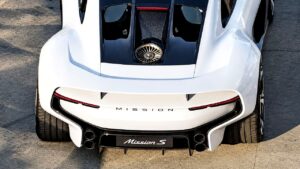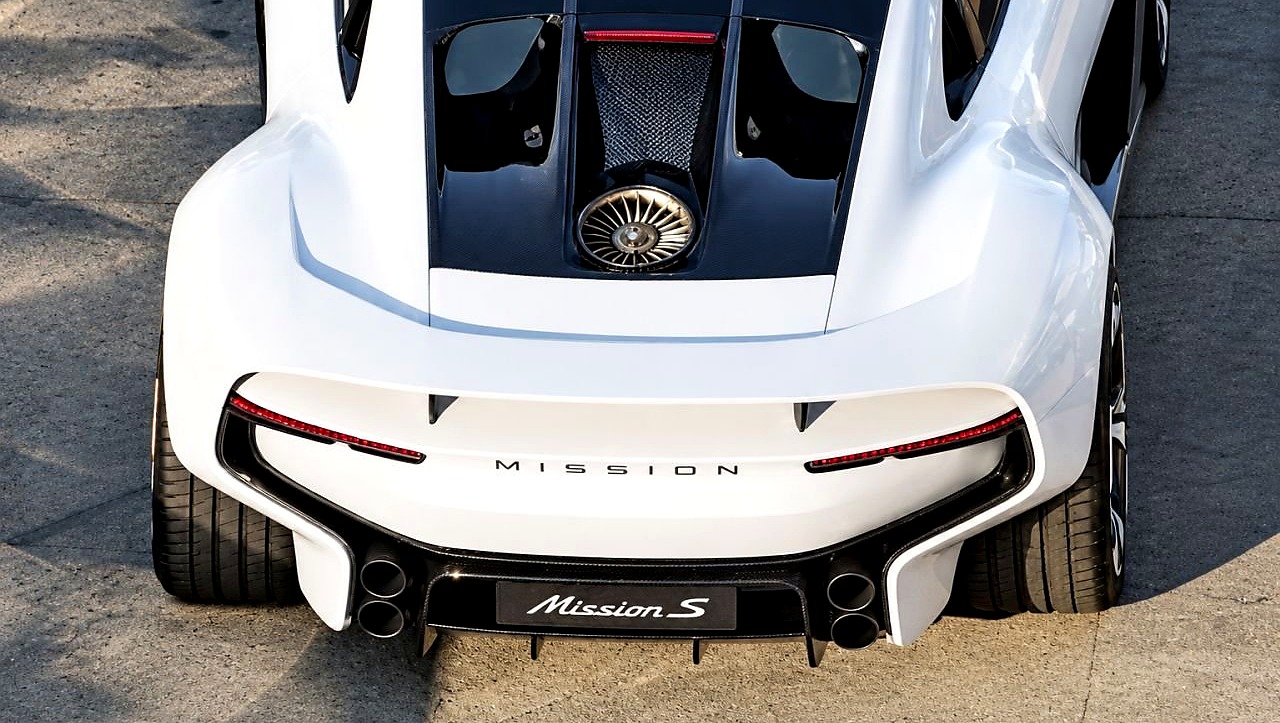
The Porsche Mission S concept just leaked online, and it’s everything enthusiasts hoped for. According to a recent report by THESUPERCARBLOG.COM, these first images surfaced on social media hours before the official unveiling, giving us an unfiltered look at Porsche’s next flagship hypercar. The leaked rear-end shot reveals a machine that’s equal parts aggressive engineering and theatrical design language.
Flat-Eight Boxer Brutality
Beneath that muscular bodywork sits an all-new flat-8 engine, a technical decision that screams authenticity. This isn’t some turbocharged four-cylinder masquerading as a supercar. Porsche engineered a proper boxer that revs to 8,000 RPM, delivering the kind of high-revving character that separates hypercars from pretenders. The thermodynamic efficiency of a flat-eight architecture means lower center of gravity and superior weight distribution compared to traditional V-configurations.
The engine cover features a top-mounted fan reminiscent of the legendary Porsche 917, a design choice that’s both functional and historically reverent. Cooling a high-revving naturally aspirated engine demands serious thermal management. That visible fan isn’t decoration; it’s computational horsepower translated into hardware.
| ⚙️Engine / Powertrain | All-New Flat-8 (Boxer) |
| 🐎Power Output | 850+ HP (est.) |
| ⚡Peak Torque | 750+ Nm (est.) |
| ⏱️0-60 mph (0-100 km/h) | 0-60 mph in 2.8s (est.) |
| 🚀Top Speed | 220+ mph (est.) |
| 🔄Drivetrain / Gearbox | Mid-Engine / RWD |
| 💰Starting Price / Est. | $2.8M (est.) |
Design Language Speaks Volumes
The leaked image reveals a rear fascia with layered complexity. Slim LED taillights sit within a sculpted bodywork that screams mid-engine aggression. Wide fenders with functional side vents suggest serious aerodynamic intent, not just visual theater. Porsche’s signature side window graphic remains, a visual anchor connecting this hypercar to the brand’s DNA.
Quad exhausts arranged vertically in stacks of two create an exhaust architecture that’s both visually dominant and thermally efficient. This isn’t random styling. Vertical stacking reduces underbody heat concentration and improves airflow dynamics around the rear diffuser. The integrated spoiler suggests active aerodynamic management, likely adjusting across Normal, Sport, and Track modes.
Carrera GT Spiritual Successor
Porsche positioned the Mission S as the spiritual successor to both the Carrera GT and 918 Spyder. That lineage carries weight. The Carrera GT-inspired gauge cluster signals a return to analog-first instrumentation, a rejection of the digital-everything trend plaguing modern hypercars. Physical dials, mechanical feedback, and driver-centric ergonomics matter when you’re piloting a machine this extreme.
Three driving modes (Normal, Sport, Track) suggest sophisticated software architecture managing everything from throttle mapping to regenerative braking transitions. In reality, the Mission S represents Porsche’s commitment to analog purity wrapped in cutting-edge computational control. That’s the future of hypercar engineering: silicon-carbide inverters and 800V charging architecture hidden beneath mechanical authenticity.
The official reveal happens today. Until then, these leaked images confirm what we suspected: Porsche isn’t chasing trends. They’re building the hypercar they forgot they needed.
📸 Photo Credit: @jonnylieberman on Instagram

Julian Hayes
Future Mobility & Technology Editor at Auto News Magazine. Covering the next frontier of electric powertrains, 800V architectures, solid-state battery chemistry, and autonomous vehicle platforms.
View all articles by Julian Hayes →