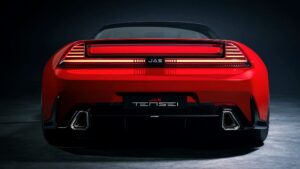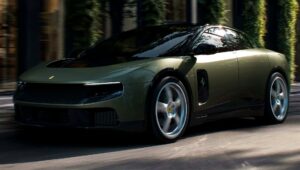
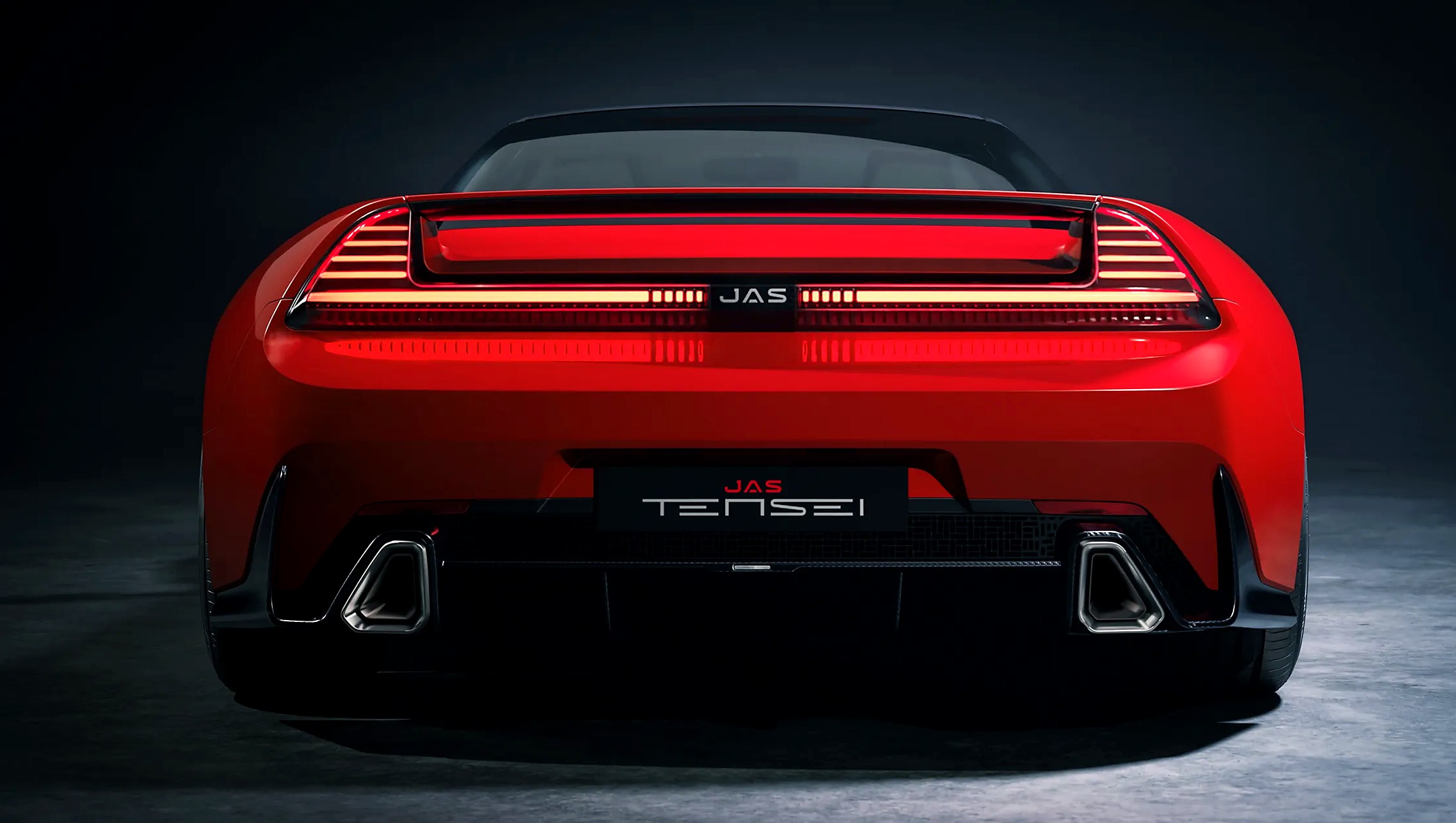
The official debut of the Pininfarina JAS Tensei marks a defining milestone. Pininfarina has committed an act of automotive heresy—and we mean that as the highest compliment. The JAS Tensei takes one of the most recognizable silhouettes of the 1990s and doesn’t merely restore it; it obliterates the line between heritage and hypermodernity. This isn’t a museum piece wrapped in carbon fiber. This is a restomod with genuine track credentials, engineered for drivers who refuse to accept numb steering and artificial engagement as the price of modernity.


The NSX Reborn: Engineering Purity
However, what makes the Pininfarina JAS Tensei genuinely compelling isn’t nostalgia—it’s the engineering philosophy underpinning every decision. The mid-engine architecture remains sacrosanct, preserving the NSX’s legendary 50/50 weight distribution and mechanical balance. Furthermore, the chassis has been surgically upgraded with contemporary suspension geometry, carbon-fiber reinforcement, and brake technology that would shame most modern supercars.
The estimated 650+ horsepower from the 3.5L twin-turbo V6 translates to visceral throttle response and unflinching lateral grip. Therefore, expect 0-60 mph in approximately 2.8 seconds and a top speed exceeding 200 mph. More importantly, the manual transmission ensures every apex entry demands genuine driver input—no paddle-shifter mediocrity here.
| ⚙️Engine / Powertrain | 3.5L Twin-Turbo V6 (est.) |
| 🐎Power Output | 650+ HP (est.) |
| ⚡Peak Torque | 580 Nm (428 lb-ft) (est.) |
| ⏱️0-60 mph (0-100 km/h) | 0-60 mph in 2.8s (est.) |
| 🚀Top Speed | 200+ mph (est.) |
| 🔄Drivetrain / Gearbox | Mid-Engine RWD / 7-Speed Manual (est.) |
| 💰Starting Price / Est. | $2.8M (est.) |
Aerodynamics Meet Analog Soul
In addition to raw performance, Pininfarina’s design language wraps the JAS Tensei in modern aerodynamic sophistication. The reshaped bodywork incorporates active downforce elements, functional air intakes, and a rear wing that generates genuine mechanical grip rather than serving as visual theater. Consequently, this machine corners with the composure of a contemporary race car while maintaining the NSX’s unmistakable visual DNA.
The interior philosophy mirrors the chassis: purposeful, uncluttered, and obsessively focused on driver feedback. Analog gauges dominate the dashboard. The steering wheel feels alive. Every control demands engagement. According to Pininfarina, this bespoke collaboration represents the pinnacle of restomod engineering.
The Collector’s Dilemma
Ultimately, the Pininfarina JAS Tensei occupies a rarefied space: it’s a modern supercar masquerading as a 1990s legend. With pricing estimated around $2.8 million and production strictly limited, this machine will appreciate aggressively. Specifically, restomod values have skyrocketed as collectors recognize that analog performance is becoming extinct. The JAS Tensei isn’t just a car; it’s a statement that mechanical purity still matters.
For drivers who’ve grown weary of electric power steering and artificial engine sound, this is redemption. The Pininfarina JAS Tensei proves that heritage and performance aren’t mutually exclusive—they’re inevitable when engineered by obsessives who refuse compromise.

Marcus Vance
Senior Track & Performance Editor at Auto News Magazine. Veteran automotive journalist specializing in chassis dynamics, apex telemetry, track-day specials, and high-revving mechanical purity.
View all articles by Marcus Vance →