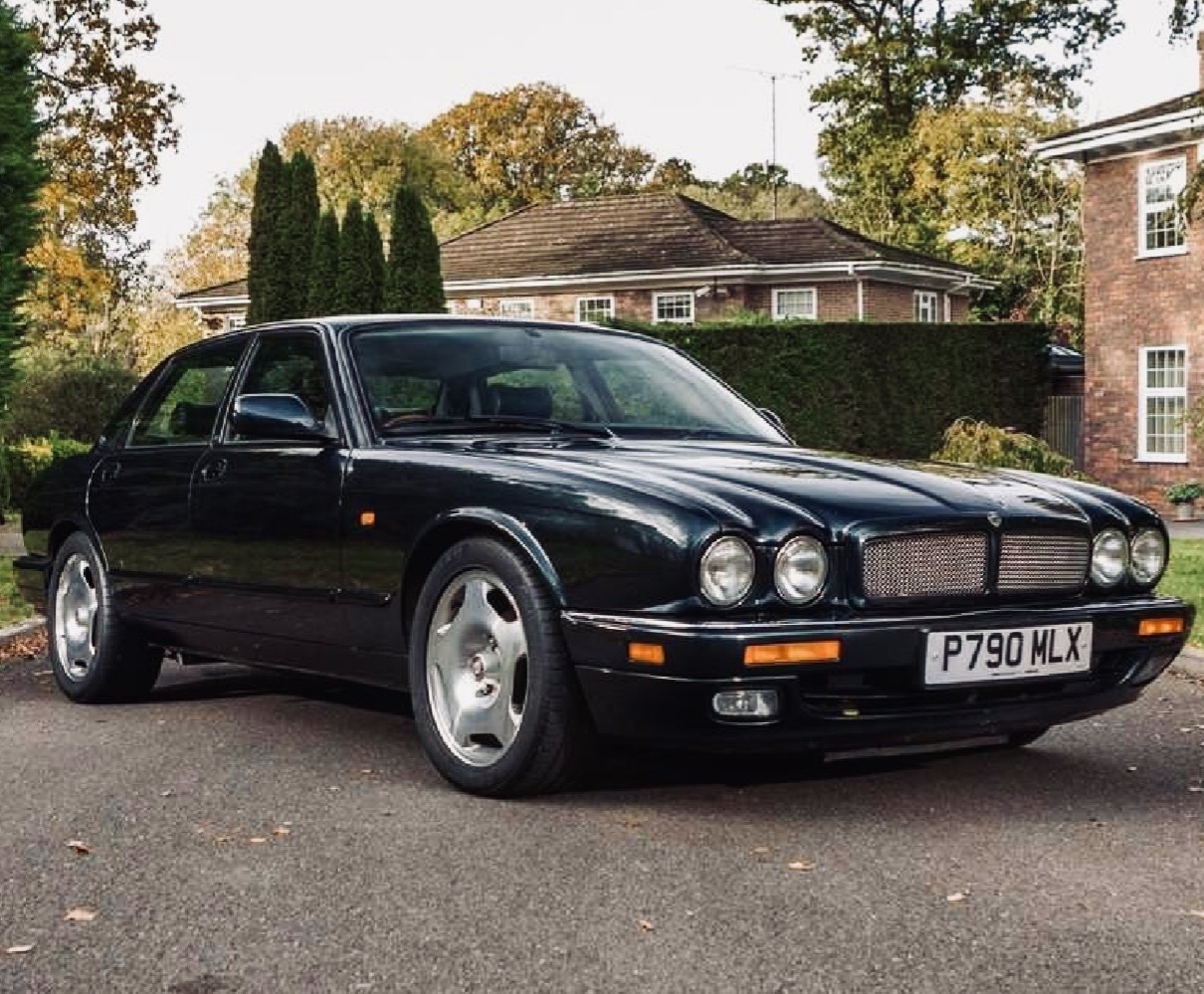
| 🚀 Key Takeaways: • This Jaguar XJR features a rare 5-speed manual transmission paired with a supercharged 4.0-liter straight-six. • Producing 322 horsepower and 378 lb-ft of torque, it remains a genuine driver-focused classic. • With only 102 right-hand-drive units ever produced, this 1995 Jaguar XJR currently commands £19,995. |
The official debut of the Jaguar XJR marks a defining milestone. The renaissance of the manual gearbox has officially arrived, catching even the most stubborn manufacturers off guard. Even performance titans like Ferrari have had to re-evaluate their stance on three pedals as enthusiast demand surges. Consequently, the industry is seeing a renewed hunger for tactile, analog engagement over sterile, automated speed.
The Jaguar XJR Business Case
Interestingly, the Jaguar XJR was never intended to be a track-day weapon. Designed as a luxury flagship, its mission was refinement, yet the engineers snuck a manual option into the lineup. In fact, this decision remains one of the most curious footnotes in the brand’s sporting history. By utilizing a Getrag 5-speed manual, the firm prioritized the driver’s connection in a way that modern executive saloons rarely dare.
Considering the raw statistics, the appeal is immediately obvious to any purist. Featuring a supercharged 3,980cc straight-six, this Jaguar XJR avoids the bloated complexity of modern systems. Furthermore, its kerbweight sits comfortably under 1,900kg, providing a nimble feel that defies its heavy-hitting executive dimensions. Without question, the combination of rear-wheel drive and a limited-slip differential makes this a rare gem.
| ⚙️Engine / Powertrain | 4.0L Supercharged Straight-Six |
| 🐎Power Output | 322 hp |
| ⚡Peak Torque | 378 lb-ft |
| ⏱️0-60 mph (0-100 km/h) | 0-60 mph in 6.5s (est) |
| 🚀Top Speed | 155 mph |
| 🔄Drivetrain / Gearbox | 5-Speed Manual, RWD |
| 💰Starting Price / Est. | £19,995 |
Competitor Analysis: A Different Era
Comparing the Jaguar XJR to its contemporary, the BMW M5 (E34), reveals two distinct philosophies. While the BMW M5 focused on clinical precision and high-revving naturally aspirated power, the Jaguar XJR banked on low-end punch. Specifically, the supercharger delivers 378 lb-ft of torque at a low 3,050 rpm, creating a sensation of effortless velocity that the German competition often lacked.
Alternatively, the Mercedes-Benz C36 AMG of the era relied on an automatic transmission, which limited its enthusiast appeal. Ultimately, the Jaguar XJR occupies a unique space in Auto News Magazine archives as a bridge between luxury and track-ready performance. It does not feel like a compromise; instead, it feels like a deliberate, sophisticated, and slightly rebellious product of the mid-90s.
Pricing, Available Trims, and Ownership Value
Assessing the market value for such a scarce vehicle requires a look at collector sentiment. With a Starting MSRP (1995): £45,450, the car was a premium investment at launch. Currently, this specific Jaguar XJR is listed for £19,995, representing a flat depreciation curve over the last four years. In addition, insurance premiums for such a classic are often lower than modern performance cars, provided you stick to a collector-grade policy.
Regarding fuel economy, expect an average of 21 mpg under spirited driving conditions. Maintenance is the primary ownership consideration; therefore, sourcing parts for the supercharged straight-six may require specialized knowledge. Fortunately, for those committed to the Jaguar XJR experience, the scarcity of 102 units suggests that future values are likely to remain stable rather than plummet.
Future Speculation
Predicting the future of internal combustion manuals is an exercise in optimism, yet this car remains a safe bet. Given the industry’s shift toward electrification, these analog machines are becoming cultural artifacts. Therefore, owning a Jaguar XJR with three pedals is effectively holding a slice of history. You should expect this vehicle to be a permanent fixture in the garages of those who value the mechanical soul of the 20th century.
Conclusion
Ultimately, the Jaguar XJR represents a period when car manufacturers dared to experiment with driver engagement. While the market did not embrace the manual transmission initially, history has been kinder to this brave configuration. Moreover, it stands as a testament to the fact that power alone is insufficient; true satisfaction stems from the bridge between the driver and the road.

Liam Campbell
Industry Intelligence & News Editor at Auto News Magazine. Tracking prototype spy shots, Nürburgring development mules, automaker corporate moves, and breaking global automotive scoops.
View all articles by Liam Campbell →