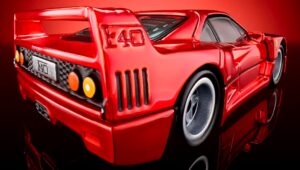
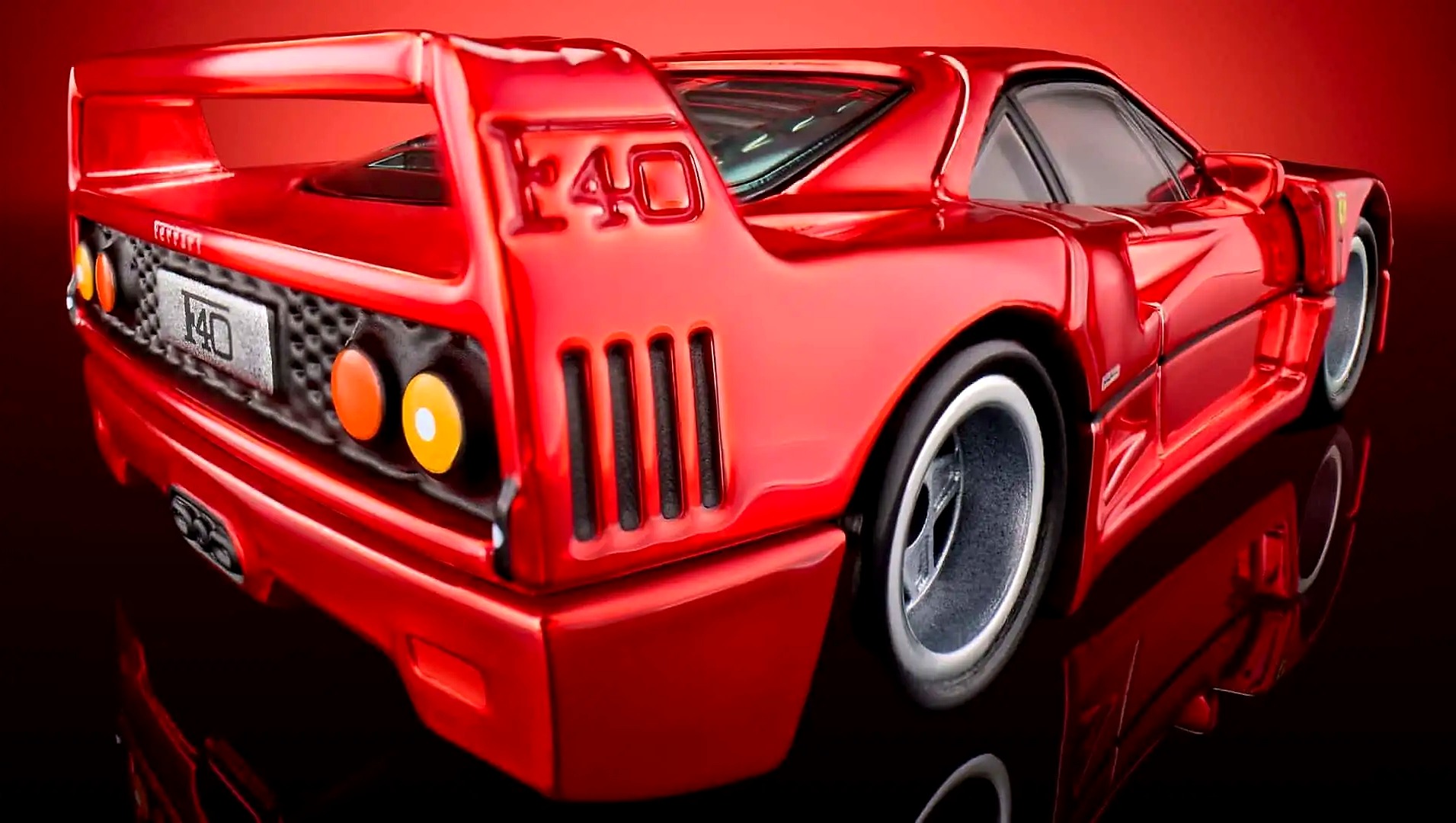
The official debut of the Ferrari F40 Restoration marks a defining milestone. When Lewis Hamilton joined Ferrari for the 2025 F1 season, his first photoshoot featured an iconic Ferrari F40. However, the seven-time World Champion didn’t just admire the machine from a distance—he hunted down his own low-mileage example. What he discovered during restoration would defy belief: engine number 44. That’s his racing number. That’s his charity. That’s destiny wrapped in Kevlar and carbon fiber.


The 43-Mile Miracle
Finding a 1991 Ferrari F40 with merely 43 miles (69 kilometers) on the odometer is like discovering a sealed time capsule. Furthermore, the original owner purchased it, parked it in a climate-controlled garage, and never started the engine again. For over three decades, this mechanical masterpiece sat dormant—a prisoner of its own perfection.
Therefore, when Ferrari’s restoration team cracked open the engine bay, they faced a genuine dilemma. Extended storage wreaks havoc on mechanical components. Oil drains from critical surfaces. Rubber gaskets calcify. Plastic seals become brittle. Simply turning the key could trigger catastrophic internal damage.
| ⚙️Engine / Powertrain | 2.9L Twin-Turbocharged V8 |
| 🐎Power Output | 471 HP |
| ⚡Peak Torque | 426 lb-ft (577 Nm) |
| ⏱️0-60 mph (0-100 km/h) | 0-62 mph in 4.1 seconds |
| 🚀Top Speed | 201 mph (324 km/h) |
| 🔄Drivetrain / Gearbox | 5-Speed Manual / Rear-Wheel Drive |
| 💰Starting Price / Est. | $3.4M – $8.4M (Market Dependent) |
Twin-Turbo Mechanical Symphony
Beneath the F40’s aggressive bodywork sits a 2.9-liter twin-turbocharged V8 producing 471 horsepower and 426 pound-feet of torque. In addition, a five-speed manual transmission routes power exclusively to the rear wheels—no electronic nannies, no traction control interference, just raw mechanical engagement. According to Ferrari, this powertrain achieves 0-62 mph in 4.1 seconds and a top speed of 201 mph (324 km/h).
Specifically, the F40 represents the last Ferrari unveiled before Enzo Ferrari’s death in 1988. It embodied analog purity at its zenith—before electronic assists neutered driver connection. The cabin remains spartan: a three-spoke steering wheel, four-dial gauge cluster, exposed raw materials, and zero carpeting. This is automotive asceticism at its finest.
The Engine Number 44 Revelation
Here’s where the narrative transcends mere automotive journalism. Upon inspection, Ferrari’s technicians discovered the engine bore the number 44. Hamilton has carried that number since his karting days. He named his social justice charity Mission 44. Coincidence? Statistically improbable. Spiritually inevitable? Absolutely.
Consequently, Hamilton remains hesitant to exploit the F40’s full potential. He wants to preserve the ultra-low mileage and collector provenance. In fact, during the restoration video, he never exceeds idle speed—a calculated restraint that speaks volumes about his respect for mechanical heritage.
Collector Market Trajectory
Market data tells a compelling story. In August 2026, RM Sotheby’s sold a comparable 1991 F40 for $8.365 million. Other recent transactions ranged from $3.41 million to $5.17 million. Hamilton’s example—factory-restored, ultra-low-mileage, and bearing his ownership provenance—will likely command premium positioning within that spectrum.
Moreover, the Ferrari F40 Restoration represents more than automotive preservation. It’s a convergence of mechanical purity, historical significance, and serendipitous destiny. Hamilton’s engine number 44 isn’t just a coincidence; it’s the universe’s way of confirming that some cars find their perfect custodians.

Marcus Vance
Senior Track & Performance Editor at Auto News Magazine. Veteran automotive journalist specializing in chassis dynamics, apex telemetry, track-day specials, and high-revving mechanical purity.
View all articles by Marcus Vance →