
BMW Regensburg Plant just crossed a milestone that separates industrial legends from ordinary factories. On Monday, Bavarian Minister-President Markus Söder and BMW production board member Raymond Wittmann marked 40 years of continuous series production at a facility that has become the Bavarian automaker’s highest-volume European manufacturing operation. The numbers tell the story: 9 million vehicles since the first E30 rolled off the line in October 1986, with 2025 delivering a record-shattering 356,901 X1 and X2 models across every powertrain configuration imaginable.


From E30 Promise To EV Reality
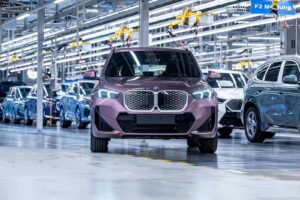
When BMW signed its original settlement agreement with Regensburg in 1984, the commitment was modest: 400 cars per day and 3,500 jobs. Today, the plant churns out 1,400 vehicles daily, more than three and a half times that pledge. The nine-millionth car, an iX1 finished in BMW Individual Velvet Orchid II Metallic, rolled out in mid-September bound for a customer in Sweden. That single detail encapsulates four decades of transformation: from boxy rear-drive sedans to electric crossovers in bespoke paint finishes.
The production cadence is relentless. A finished car leaves final assembly every 57 seconds. Three shifts run around the clock. Combustion, plug-in hybrid, and fully electric models share a single assembly line without missing a beat. This flexibility isn’t accidental, it’s the result of €6 billion in cumulative investment since the plant opened, with software and artificial intelligence handling everything from automated surface finishing in the paint shop to autonomous vehicle delivery from the line to the loading area.
The Neue Klasse Gambit Begins
Still, the real story isn’t what Regensburg builds today. It’s what comes next. BMW has committed €400 million since 2023 to equipment and production infrastructure for the Neue Klasse platform. According to the automaker’s official announcement, Neue Klasse production will commence in the second half of the decade, though BMW hasn’t yet disclosed which model will launch first at this facility. Meanwhile, cost reductions of more than 25 percent since 2019 have been achieved through software optimization and AI-driven quality control, positioning Regensburg as a cost-competitive manufacturing powerhouse even as it prepares for next-generation electric architecture.
Production board member Wittmann used the occasion to call for reliable, competitive manufacturing conditions in Germany. That’s industry-speak for regulatory certainty and energy cost stability. The broader context matters: Regensburg’s ability to run combustion, PHEV, and electric X1s on the same line gives BMW strategic flexibility as EU emissions rules continue to shift. Unlike competitors locked into single-powertrain facilities, this plant can follow market demand while the regulatory landscape settles. For a manufacturer navigating the energy transition, that’s not just operational efficiency, it’s survival strategy. As covered in BMW’s latest efficiency breakthroughs, the automaker is squeezing maximum range from existing battery architecture, a philosophy that extends to manufacturing optimization.
The Nine-Million-Car Verdict
In 2066, enthusiasts will restore E30s from Regensburg’s first production run. The iX1s rolling off the line today will be forgotten by then, replaced by whatever comes after Neue Klasse. But this plant’s real legacy isn’t any single model, it’s the industrial discipline required to build 9 million vehicles without losing focus. Regensburg proved that German manufacturing can scale, adapt, and innovate simultaneously. The next 40 years start now.

Liam Campbell
Industry Intelligence & News Editor at Auto News Magazine. Tracking prototype spy shots, Nürburgring development mules, automaker corporate moves, and breaking global automotive scoops.
View all articles by Liam Campbell →