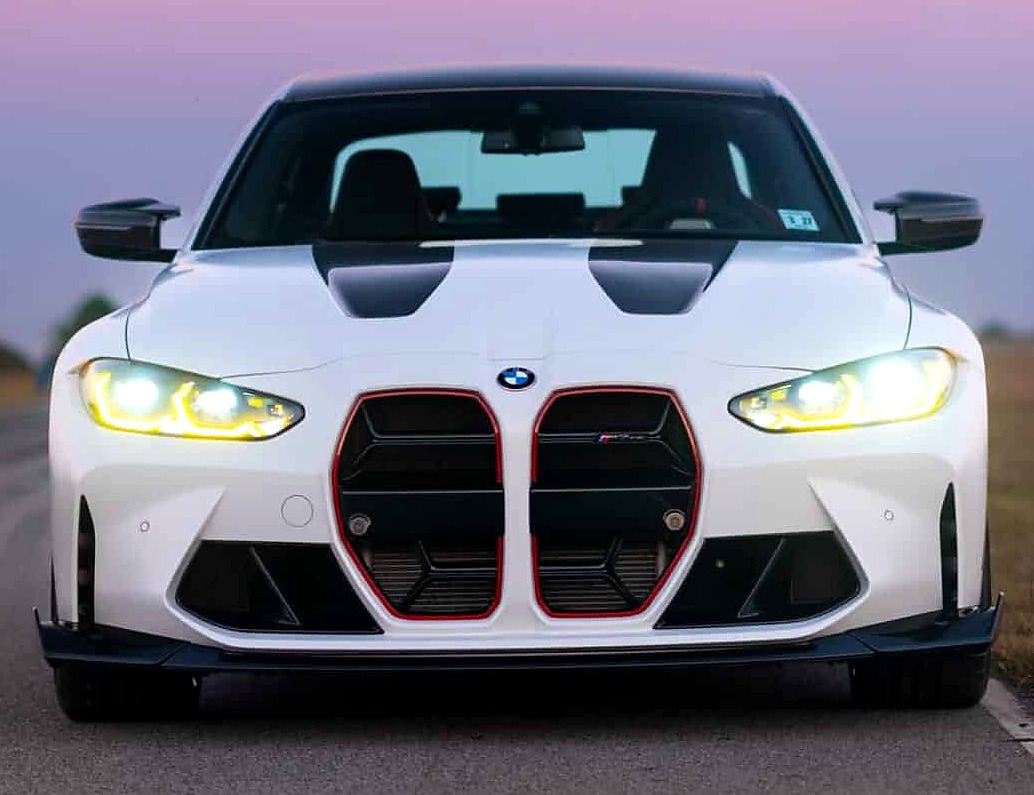
| 🚀 Key Takeaways: • Precisely 1,727 units of the automatic BMW M3 CS have been produced to date. • The Frozen Solid White finish proved most popular, accounting for 34.6% of total volume. • With 412 units, the US market secured nearly 24% of the global production run. |
Exclusivity in the performance segment is often a game of smoke and mirrors. However, new VIN-level data from independent trackers provides a rare, transparent glimpse into the BMW M3 CS production reality. Specifically, we now know exactly how many high-performance sedans have hit the road.
Decoding the BMW M3 CS Manufacturing Strategy
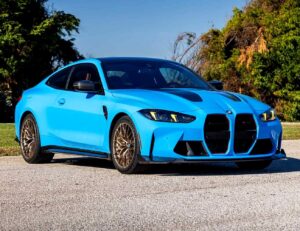
Industry insiders have long tracked the modular platform economics governing the G80 generation. Consequently, the reveal that 1,727 units of the automatic BMW M3 CS were built highlights a calculated approach to demand-supply balancing. Surprisingly, this figure excludes the ongoing Handschalter (manual) run, suggesting the final total will be even more exclusive.
Meanwhile, the color palette choices provide a fascinating psychological profile of the modern M-car collector. By opting for Frozen Solid White in 598 instances, buyers shifted away from the traditional Black Sapphire. Furthermore, the Signal Green paint choice captured 262 enthusiasts, illustrating a bold departure from conservative aesthetics.
| ⚙️Engine / Powertrain | 3.0L Twin-Turbo Inline-6 |
| 🐎Power Output | 543 hp |
| ⚡Peak Torque | 479 lb-ft |
| ⏱️0-60 mph (0-100 km/h) | 0-60 mph in 3.2s |
| 🚀Top Speed | 188 mph |
| 🔄Drivetrain / Gearbox | 8-Speed M Steptronic / AWD |
| 💰Starting Price / Est. | $118,700 |
Global Market Positioning and Competition
Examining the distribution map, the BMW M3 CS enjoyed significant penetration within North American borders. Specifically, the US accounted for 412 vehicles, proving that the appetite for track-focused hardware remains undiminished. In contrast, smaller markets like Poland matched Canada with 70 units, indicating a maturing performance sector in Eastern Europe. According to BMW M, these strategic allocations often mirror localized demand curves rather than arbitrary distribution.
Competition remains fierce in this rarified air. Primarily, the Mercedes-AMG C63 S E Performance battles for the same tech-savvy demographic, though its hybrid weight penalty is a stark contrast to the M-car’s weight-saving carbon components. Additionally, the Audi RS5 Competition challenges the BMW M3 CS on daily usability. However, the latter’s track-focused tuning creates a distinct, more aggressive segment benchmark that rivals struggle to replicate.
Pricing, Available Trims, and Ownership Value
Regarding financial commitment, the BMW M3 CS commands a premium that reflects its limited run. Typically, the Starting MSRP sits north of $118,700, depending on regional port-of-entry fees and taxes. Moreover, owners face high insurance premiums due to the car’s specialized carbon-fiber architecture. Currently, Est. Monthly Lease figures are rarely favorable for such limited editions; thus, most transactions favor direct capital investment.
Maintenance is equally demanding. Specifically, the Carbon-ceramic brakes, chosen by roughly 30% of US buyers, require disciplined fiscal oversight. Although the Warranty is a standard 4-Year/50,000-Mile coverage, the high-stress nature of the 543 horsepower engine implies higher wear-and-tear costs. Ultimately, owning a piece of this production run is less about utility and more about securing a future automotive icon.
Future Speculation
Looking ahead, the BMW M3 CS is poised for rapid appreciation. Given that less than 2,000 units will likely exist for the automatic variant, this model is a guaranteed future collector’s item. Therefore, expect values to hold firm against inflationary headwinds.
Conclusion: By blending precision engineering with high-stakes scarcity, BMW has created a modern masterpiece. While enthusiasts await the final manual production numbers, the current data confirms this vehicle is a defining benchmark for the internal combustion era.

Liam Campbell
Industry Intelligence & News Editor at Auto News Magazine. Tracking prototype spy shots, Nürburgring development mules, automaker corporate moves, and breaking global automotive scoops.
View all articles by Liam Campbell →