Porsche Technologies: Engineering And Digital Units Merge Into One Powerhouse
 Liam Campbell
2 minutes read
Porsche Technologies is the new face of Stuttgart’s engineering muscle. Porsche Engineering and Porsche Digital are joining forces under one banner, creating an integrated provider of end-to-end technology solutions. On paper, this looks like a tidy reorganization. In reality, it signals a sharper bid for the software-defined future.
Why Porsche Technologies Makes Business Sense
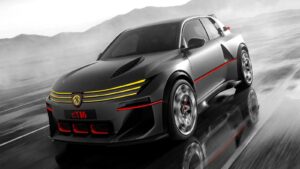
Engineering disciplines are colliding with software, digital services, and customer interfaces. Porsche Technologies responds by pairing Porsche Engineering’s vehicle, architecture, and systems know-how with Porsche Digital’s product and customer experience capabilities. As Porsche pushes into halo projects like the Porsche Mission S concept, the toolchain behind them matters as much as the metal. Even so, the business case depends on outside clients in defense, space, and medical technology actually signing on.
Dr. Michael Steiner, Porsche’s Research and Development chief, says the goal is to “combine, sharpen, and purposefully advance the best of two worlds.” Ultimately, that means Porsche Technologies will serve both the in-house pipeline and rival automakers. Meanwhile, the unit keeps its roots in the design office Ferdinand Porsche founded in 1931. The brand’s history is long, but its competitive test is current.
Engineering Meets Software in One Portfolio
Porsche Technologies promises coverage from the first sketch through hardware validation to the operation of live digital services. Data and AI sit at the center of that promise, optimizing development processes and engineering toolchains. Still, a single supplier controlling that full lifecycle raises questions about customer dependence and pricing power. Industry rivals will watch closely, since integrated engineering houses are becoming a strategic battleground.
Leadership, Locations and the Local-for-Local Play
Markus-Christian Eberl takes the CEO seat, with Stefan Zerweck as CTO and Dirk Philipp as CFO/COO. The network spans Germany, Spain, Italy, the Czech Republic, Croatia, Romania, Israel, the United States, and China. Its “local-for-local” approach pairs global scalability with regional customer understanding. On paper, that footprint is a strength. Execution, however, will decide whether the promise holds.
Porsche is also rebuilding its brand identity around a geometric square, symbolizing expanded solution space. For readers tracking the company’s wider direction, Auto News Magazine will follow the rollout closely. Launch timing sits at the beginning of Q2 2027, and the market will judge Porsche on delivery, not design language.
Liam Campbell
Industry Intelligence & News Editor at Auto News Magazine. Tracking prototype spy shots, Nürburgring development mules, automaker corporate moves, and breaking global automotive scoops.
View all articles by Liam Campbell →