Porsche Mission S Officially Revealed: 8,000-RPM Mid-Engine Halo Supercar Debuts in New York
 Liam Campbell
3 minutes read
Liam Campbell
3 minutes read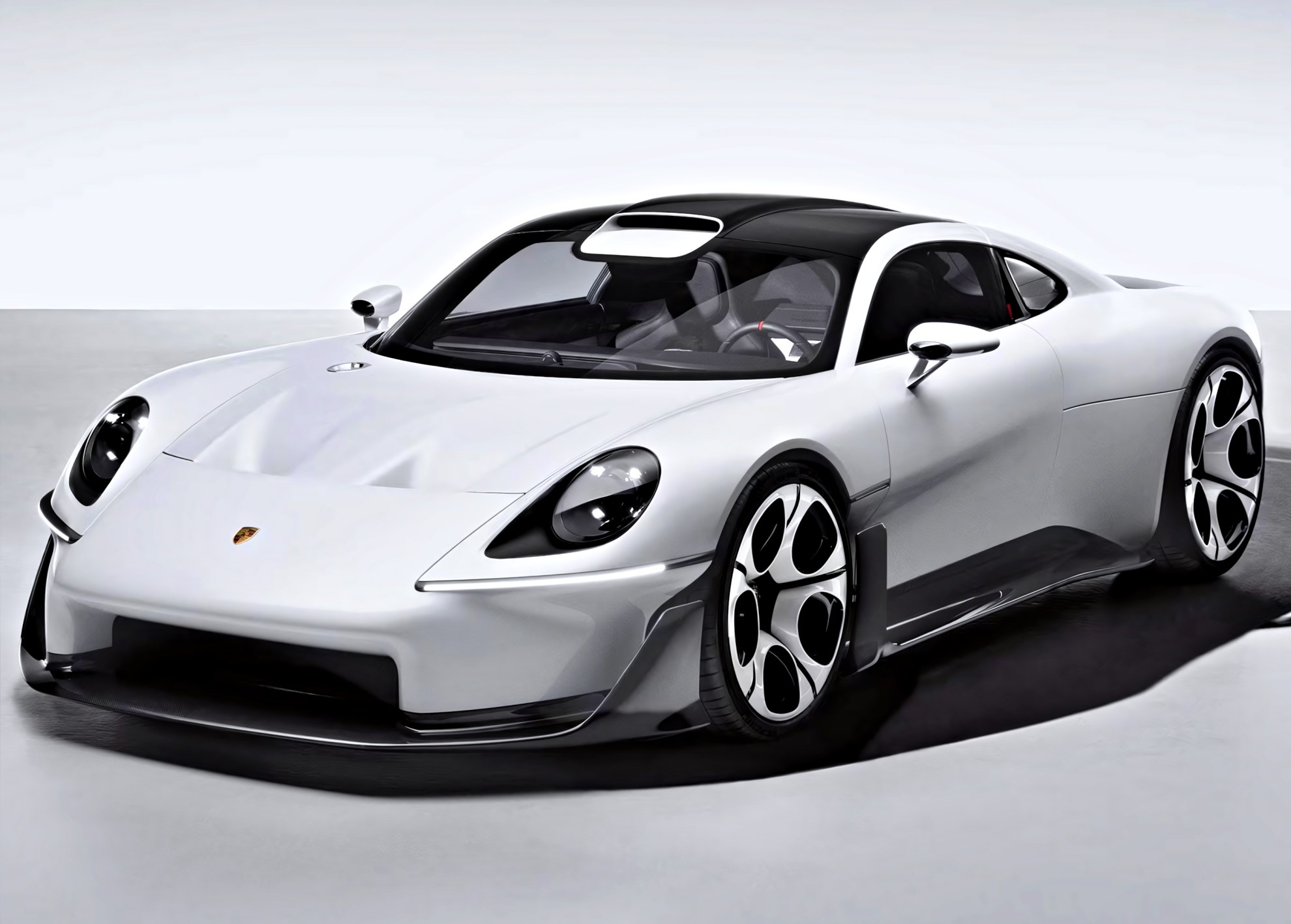
Fresh spy photography has surfaced showing the all-new Porsche Mission S undergoing engineering trials ahead of its scheduled arrival. Porsche just dropped a bombshell in New York. The Mission S world premiere unfolded at a historic pier in Queens overlooking Manhattan, the exact location where the mid-engined 550 Spyder was first photographed in 1953 to launch the brand in America. This isn’t a one-off concept or a limited hypercar destined for a handful of collectors. According to PORSCHE.COM, the Mission S officially previews a permanent, series-production mid-engined platform positioned squarely above the 911 to wage war against Ferrari and McLaren in the super sports car segment.


The Flat-Eight Hybrid Revolution
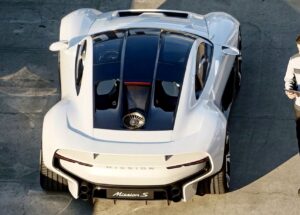
Beneath the sculpted bodywork sits Porsche’s in-house flat-8 boxer hybrid (S1 engine), a powerplant that revs to 8,000 RPM and delivers over 850 horsepower. This isn’t a turbocharged four-cylinder masquerading as performance. This is genuine mid-engine architecture with hybrid boost, active 917-style horizontal rear deck cooling fan, and vertically stacked quad exhausts that scream intent.
Still, the real story isn’t just raw power. It’s philosophy. Porsche engineered the Mission S around a single question: what does tomorrow’s sports car actually need? The answer strips away the digital bloat that’s infected modern performance cars.
| ⚙️Engine / Powertrain | Mid-mounted flat-8 boxer hybrid (S1 engine) |
| 🐎Power Output | 850+ HP (hybrid-boosted) |
| ⚡Peak Torque | TBD (est. 750+ Nm) |
| ⏱️0-60 mph (0-100 km/h) | 0-60 mph in ~2.8s (est.) |
| 🚀Top Speed | 190+ mph (est.) |
| 🔄Drivetrain / Gearbox | Mid-engine, rear-wheel drive |
| 💰Starting Price / Est. | TBD (Production series positioning above 911) |
Purist Cockpit Rejects Touchscreen Tyranny
Inside, the Mission S deliberately abandons large, distracting infotainment touchscreens in favor of tactile physical switchgear and an analog central tachometer. Five round instruments with push-pull function controls dominate the driver’s view. A red button on the steering wheel activates “On your own” driving mode, deactivating driver assistance systems for pure, unfiltered connection to the machine.
The gear lever is height-adjustable and deliberately tactile. The seats combine motorsport DNA with precision craftsmanship. Even the aluminum key signals what’s coming: a car that demands engagement, not passive consumption. This design philosophy mirrors the purist approach reshaping modern sports car strategy across the industry.
Ferry Porsche’s Vision Reborn
The Mission S is Porsche’s official tribute to Ferry Porsche’s original mid-engine vision. The 1948 356/1 and the legendary 550 Spyder defined an era. Now, 72 years after that iconic 1953 photograph in Queens, Porsche is doubling down on mid-engine architecture as a permanent platform strategy, not a limited-edition novelty.
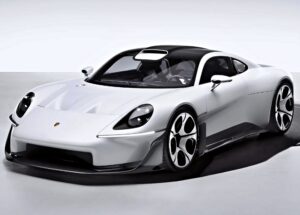
Torpedo-style fenders, a dynamic roofline, and a wraparound main line connect light signatures front to rear. The design language blends heritage with future-forward thinking. Dial-style wheels inspired by the 928 complete the package. Every detail serves a purpose. Nothing distracts the driver.
Market Positioning: The Real Gamble
Positioning the Mission S above the 911 is a bold strategic move. Porsche is betting that enthusiasts will embrace a permanent mid-engine alternative to the iconic rear-engine 911 lineage. Pricing remains unconfirmed, but expect positioning that undercuts Ferrari’s entry-level offerings while commanding premium over the 911 Turbo.
This is Porsche’s answer to market fragmentation. Unlike the limited Carrera GT or 918 Spyder, the Mission S signals a long-term commitment to mid-engine sports car production. For collectors and driving purists, that permanence matters. Resale values will likely hold strong, especially if Porsche limits annual production to maintain exclusivity within the series-production framework.
The Mission S isn’t just a car. It’s a manifesto. Porsche is declaring that sports cars don’t need massive screens, autonomous driving theater, or digital distraction. They need a flat-eight engine, a responsive chassis, and a driver who’s willing to pay attention. In 2025, that’s genuinely radical.
Liam Campbell
Industry Intelligence & News Editor at Auto News Magazine. Tracking prototype spy shots, Nürburgring development mules, automaker corporate moves, and breaking global automotive scoops.
View all articles by Liam Campbell →