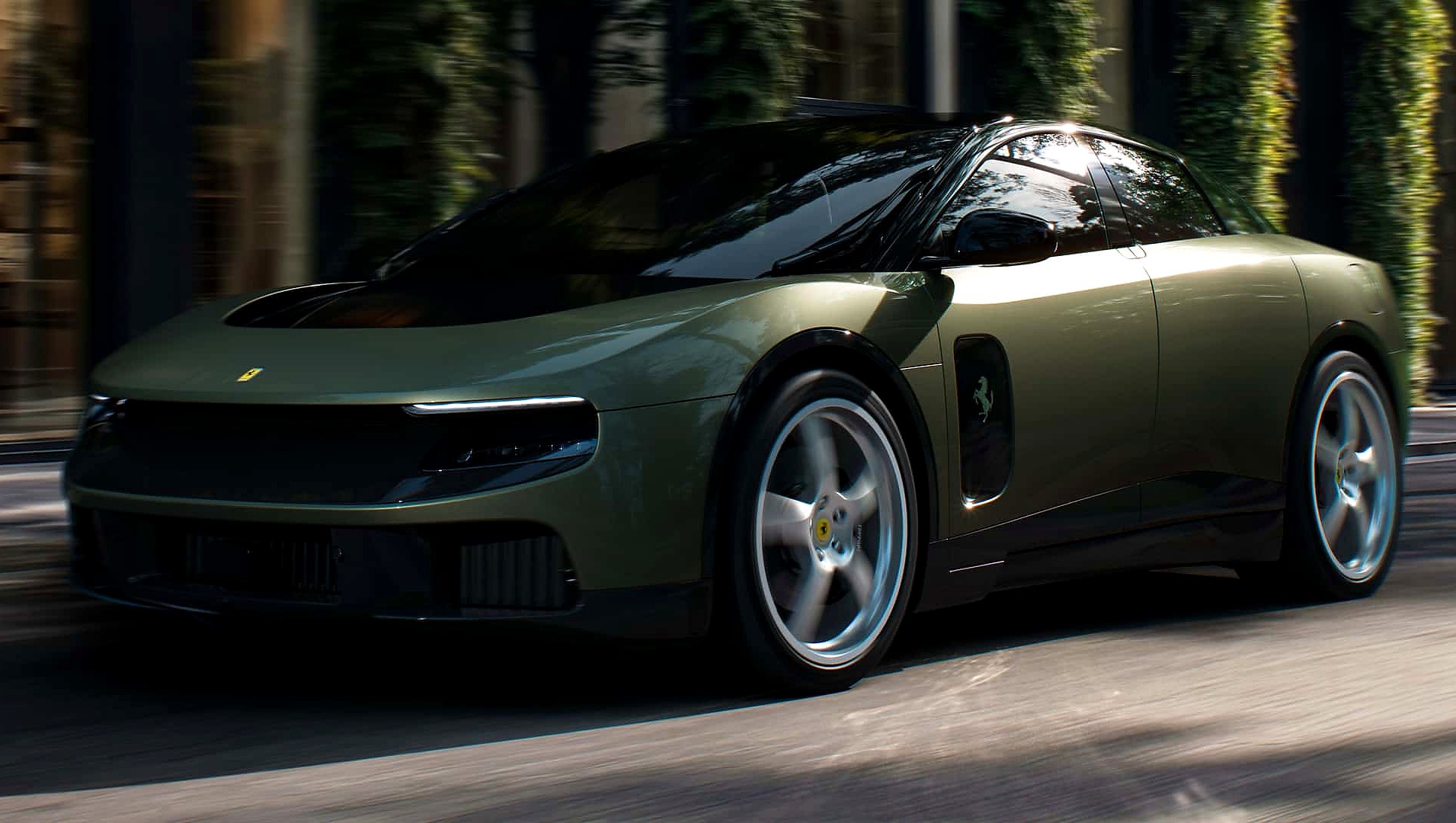
The official debut of the Ferrari Luce EV marks a defining milestone. Here’s the thing about automotive innovation: it rarely emerges from within the echo chamber. According to a recent report by MOTOR1.COM, Ferrari’s seismic shift into the electric era traces back to an unlikely source—a casual walk and a few words from Jeff Bezos. In July 2016, the Amazon founder casually told Chairman John Elkann something deceptively simple: “I don’t know anything about cars, but I really know a lot about innovation. I think you need to think seriously about building an electric Ferrari.” That comment, according to Italian news agency ANSA, became the inflection point for everything that followed.


When Billionaires Plant Seeds
Elkann admits this was the first moment he genuinely contemplated what an EV could represent for Maranello. However, the vision wasn’t about retrofitting an existing model with batteries and calling it progress. Instead, Ferrari committed to engineering a standalone platform—leveraging the rapid thermodynamic and architectural advances in electric propulsion. Therefore, the Ferrari Luce EV became a ground-up exercise in computational horsepower and silicon-carbide inverter sophistication.
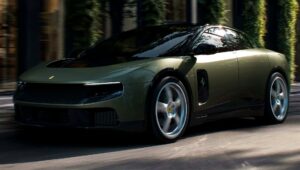
The company didn’t publicly announce EV intentions until June 2022. Consequently, it took another four years for the Luce to break cover on May 25, 2024. The moment it debuted, design became the obsession—overshadowing technical specifications entirely. The styling is undeniably radical, a departure so severe that it fractured the internet into passionate camps.
| ⚙️Engine / Powertrain | Dual Electric Motors (est.) |
| 🐎Power Output | 1,000+ HP (est.) |
| ⚡Peak Torque | 1,000+ Nm (est.) |
| ⏱️0-60 mph (0-100 km/h) | 0-60 mph in ~2.5s (est.) |
| 🚀Top Speed | 200+ mph (est.) |
| 🔄Drivetrain / Gearbox | All-Wheel Drive Electric |
| 💰Starting Price / Est. | $500,000+ (est.) |
Polarization as Proof of Concept
Remarkably, Ferrari’s leadership didn’t anticipate this level of controversy. Elkann stated: “We had absolutely no intention of creating a controversial Ferrari.” Yet here’s the paradox: 1.3 billion people have now witnessed the Luce EV. In addition, those who’ve seen it in the metal report dramatically more positive reactions than digital viewers. The car attracted substantial queues at Turin’s Wave technology conference, suggesting that physical presence translates the design intent far better than pixels.
Despite online backlash, Ferrari reports robust order flow and positive client feedback. Furthermore, the Luce doesn’t signal the end of internal combustion at Maranello. V6, V8, and V12 models will continue production—the Luce EV is additive, not substitutive. Deliveries commence this quarter, with the company already sold out through 2027.
The Bezos Effect: Eight Years Later
Ultimately, it’s remarkable that a billionaire’s casual observation—delivered during a walk by someone who openly admitted automotive ignorance—accelerated Ferrari’s entire EV timeline. The $500,000+ Ferrari Luce EV probably wouldn’t exist in 2026 without that nudge. Whether it becomes a commercial juggernaut remains uncertain, but its cultural impact is already undeniable. Logic suggests full market impact won’t materialize until 2028, when deliveries ramp beyond the initial allocation.
The Ferrari Luce EV represents something deeper than a car. It’s proof that innovation thrives at the intersection of industries, where outsider perspective challenges entrenched thinking. Bezos may not know cars, but he understood something Ferrari needed to hear: the future demands radical reimagining, not incremental evolution. For more on Ferrari’s electrification strategy, visit Ferrari’s official site.

Julian Hayes
Future Mobility & Technology Editor at Auto News Magazine. Covering the next frontier of electric powertrains, 800V architectures, solid-state battery chemistry, and autonomous vehicle platforms.
View all articles by Julian Hayes →