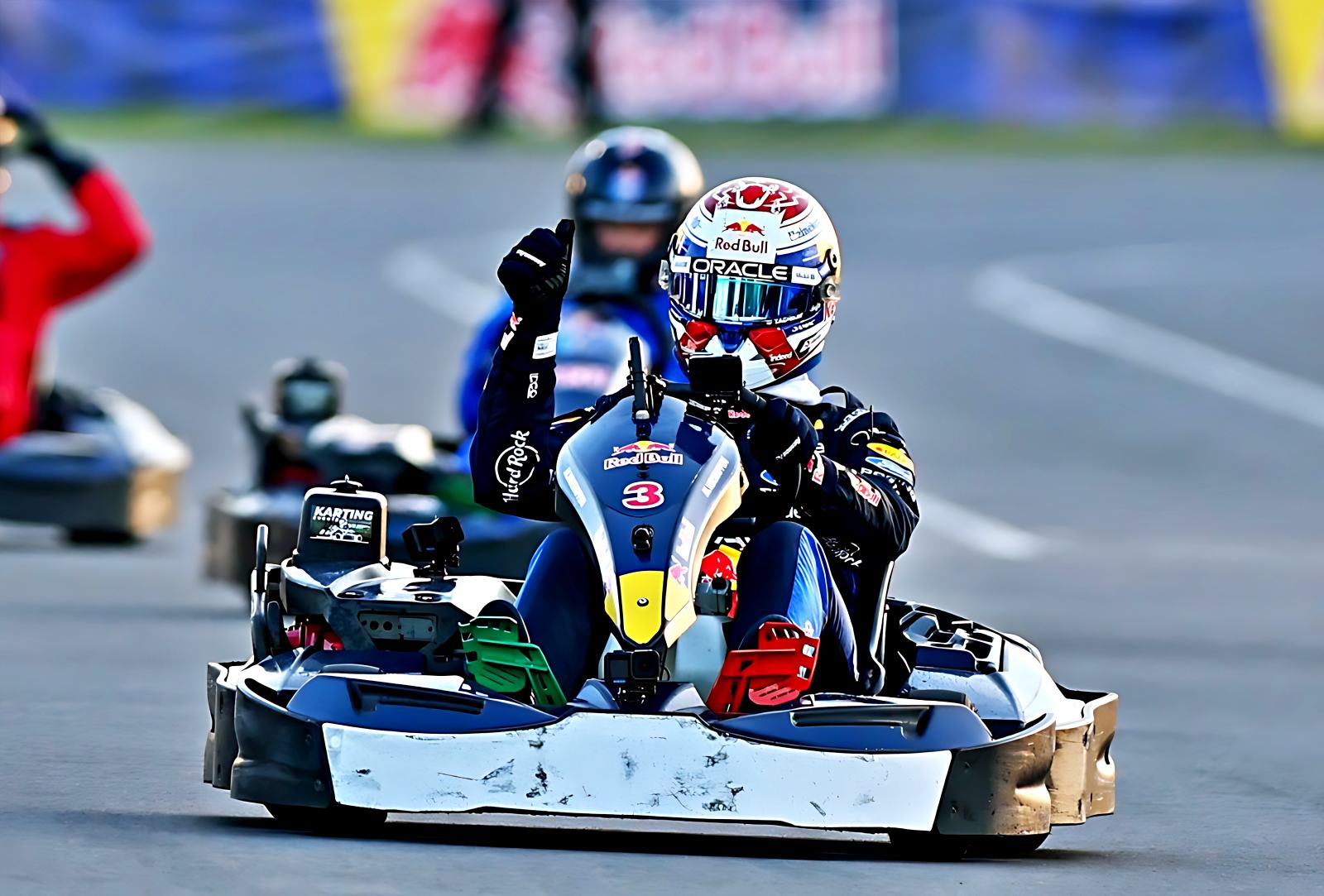
| 🚀 Key Takeaways: • The Max Verstappen Karting challenge saw the four-time F1 World Champion face 100 opponents. • Demonstrating clinical precision, he bypassed 64 drivers on the opening lap alone. • Finishing the 14-lap sprint in just 35 minutes, he cemented his status as the sport’s current benchmark. |
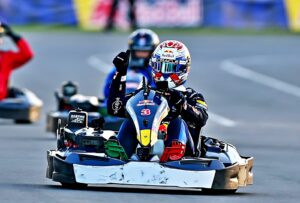
Dominating the asphalt, Max Verstappen Karting represents more than a viral stunt; it is a raw examination of elite racecraft. Furthermore, this Red Bull event at Silverstone stripped away the complex aerodynamics of Formula 1 to reveal pure driver capability.


📸 Photo Credit: @redbull on Instagram
Unpacking the Max Verstappen Karting Strategy
Strategically, this Max Verstappen Karting challenge mirrored the brutal nature of junior-level karting environments. Specifically, starting 101st on a grid of 101 karts requires an aggressive approach to track positioning. Consequently, his ability to carve through the field displayed a level of spatial awareness rarely seen outside the FIA World Championship paddocks.
| ⚙️Engine / Powertrain | 2-Stroke Racing Engine |
| 🐎Power Output | approx. 30-40 hp |
| ⚡Peak Torque | Variable |
| ⏱️0-60 mph (0-100 km/h) | 0-60 mph in approx. 3.5s |
| 🚀Top Speed | 85 mph (137 km/h) |
| 🔄Drivetrain / Gearbox | Rear-wheel drive / Chain drive |
| 💰Starting Price / Est. | $15,000 (est. competition spec) |
Because the competition included content creators and fans, the pace differential remained significant. However, his precision in traffic remains the true highlight for industry analysts. According to Red Bull Racing, such events serve as a critical reminder of the fundamental skills required for top-tier motorsport success.
Competitor Analysis: The Professional Edge
Comparing Max Verstappen Karting to standard racing scenarios highlights a stark contrast in preparation. Whereas a typical GT3 driver focuses on tire management and fuel saving, Verstappen utilized pure, unfiltered aggression here. In addition, rivals often buckle under pressure, but his Max Verstappen Karting performance remained surgically calm throughout the 14-lap sprint.
Ultimately, this isn’t just about winning a kart race. Rather, it serves as a masterclass for future talent studying his lines. While a Lewis Hamilton or Lando Norris approach might differ, the raw outcome remains undeniably impressive.
Pricing, Available Trims, and Ownership Value
Regarding accessibility, professional-grade karts like those used in this challenge demand significant investment. Starting MSRP: $15,000 for a competition-ready chassis is common. Furthermore, maintenance costs for high-output engines add up quickly. Est. Monthly Lease: N/A, as most owners purchase outright. Warranty: None, as competitive racing voids all manufacturer protections. Specifically, insurance is rarely applicable for track-day prototypes, placing the burden squarely on the owner.
Future Speculation: Resale and Legacy
Predictably, the chassis utilized by Max Verstappen will soon command astronomical prices. Given his four World Titles, collectors will view this as a primary asset. Therefore, expect this kart to become a cornerstone in any serious racing collection within the next decade. If you want more updates on high-stakes automotive industry news, head over to Auto News Magazine for our latest analysis.
Conclusion
Summarizing the event, the challenge was less about the machinery and more about the human element. Indeed, Max Verstappen Karting solidified his reputation as a generational talent. Regardless of the grid size, the result remains the same.

Liam Campbell
Industry Intelligence & News Editor at Auto News Magazine. Tracking prototype spy shots, Nürburgring development mules, automaker corporate moves, and breaking global automotive scoops.
View all articles by Liam Campbell →