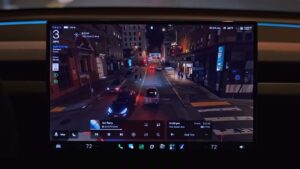
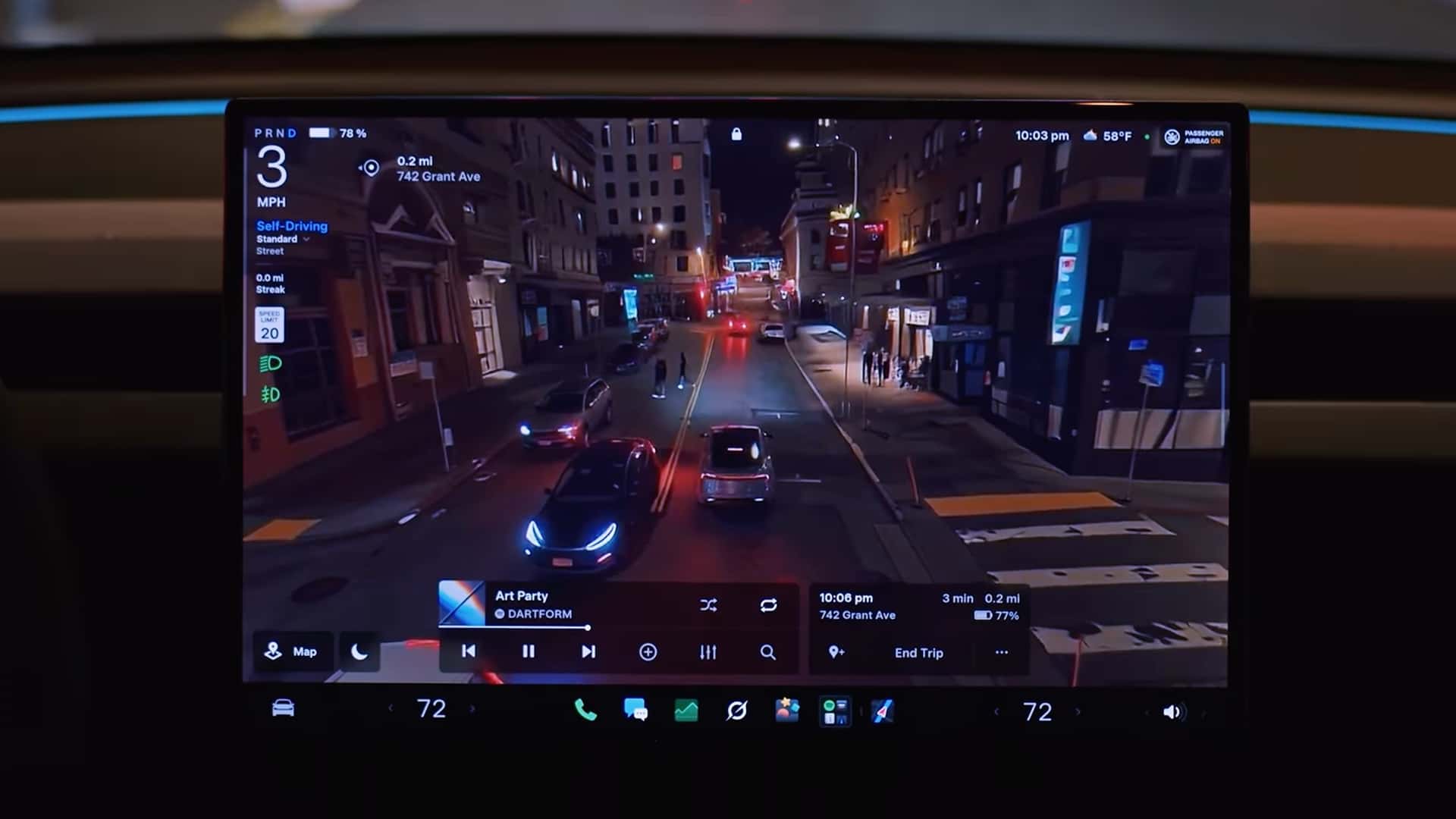
Tesla V15 is reaching early-access owners with a feature that turns the driving screen into a virtual camera rig. You can orbit the car through a street rebuilt in real time, much like a cutscene from Grand Theft Auto. Still, the spectacle sits on top of a far more consequential question: what does the safety data actually prove?


What Tesla V15 Changes Behind the Wheel
The new Reality View system goes well beyond the old parking display, which only drew outlines around nearby objects. It recreates the street in real time and previews where the software intends to turn, park or exit a roundabout. Because the scenery is generated on the fly, the computing load is substantial. On paper, that makes the system a showcase for Tesla’s vision-only approach.
Under the surface, the upgrade interprets camera images using a model trained on millions of internet videos. Tesla says the same learning stack feeds its Robotaxi and Optimus programs. That shared architecture makes sense economically, but it also means any regulatory headwind for one program could spill over into the others. The Cybercab project, for example, will live or die on the same perception software.
Tesla also says the system is better at spotting potholes, small animals, signs and debris, including chains. Those chains have drawn federal scrutiny after causing crashes, so the improvement matters. Even so, the company has not explained how it measured this progress.
The 25x Safety Claim Lacks a Baseline
Tesla says V15 is 25 times safer during critical interventions. The problem is the starting figure. Engineers need to know how many miles the previous version drove between interventions, and under which conditions. Tesla has not said.
Without that baseline, the number is a marketing headline rather than a verifiable benchmark. Ultimately, regulators and buyers will want a transparent methodology before trusting the claim. Until then, the figure deserves healthy skepticism.
Parking, Speed Cameras and Bike Racks
V15 can slow for speed cameras, and it remembers your preference after two overrides for the same camera. Bike Rack Mode allows FSD to operate with a rack on the tow hitch. However, it will not automatically reverse at the destination, and Autopark, Summon and backup warnings are disabled in that mode.
Sawyer Merritt’s 25-minute drive produced mixed results. He found the software more cautious around pedestrians than V14, and in one parking lot the car braked for someone running across its path. During a parking test, though, tapping another space did nothing. He had to switch to manual, select the spot and reengage FSD before the car parked where he wanted.
For more on Tesla’s software roadmap, visit the official Tesla site or browse the latest coverage at Auto News Magazine.
Where Tesla V15 Goes From Here
Tesla plans to extend fleet-learned navigation to the entire route, not just the start and end of a trip. Parking suggestions based on your history will probably feel smart within months. Ultimately, the software will be judged on how it handles the messy edge cases that no video can fully capture.
My prediction is simple: Reality View will be the feature owners show their friends, while the safety debate will decide whether V15 earns real trust.
Liam Campbell
Industry Intelligence & News Editor at Auto News Magazine. Tracking prototype spy shots, Nürburgring development mules, automaker corporate moves, and breaking global automotive scoops.
View all articles by Liam Campbell →