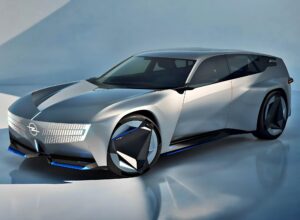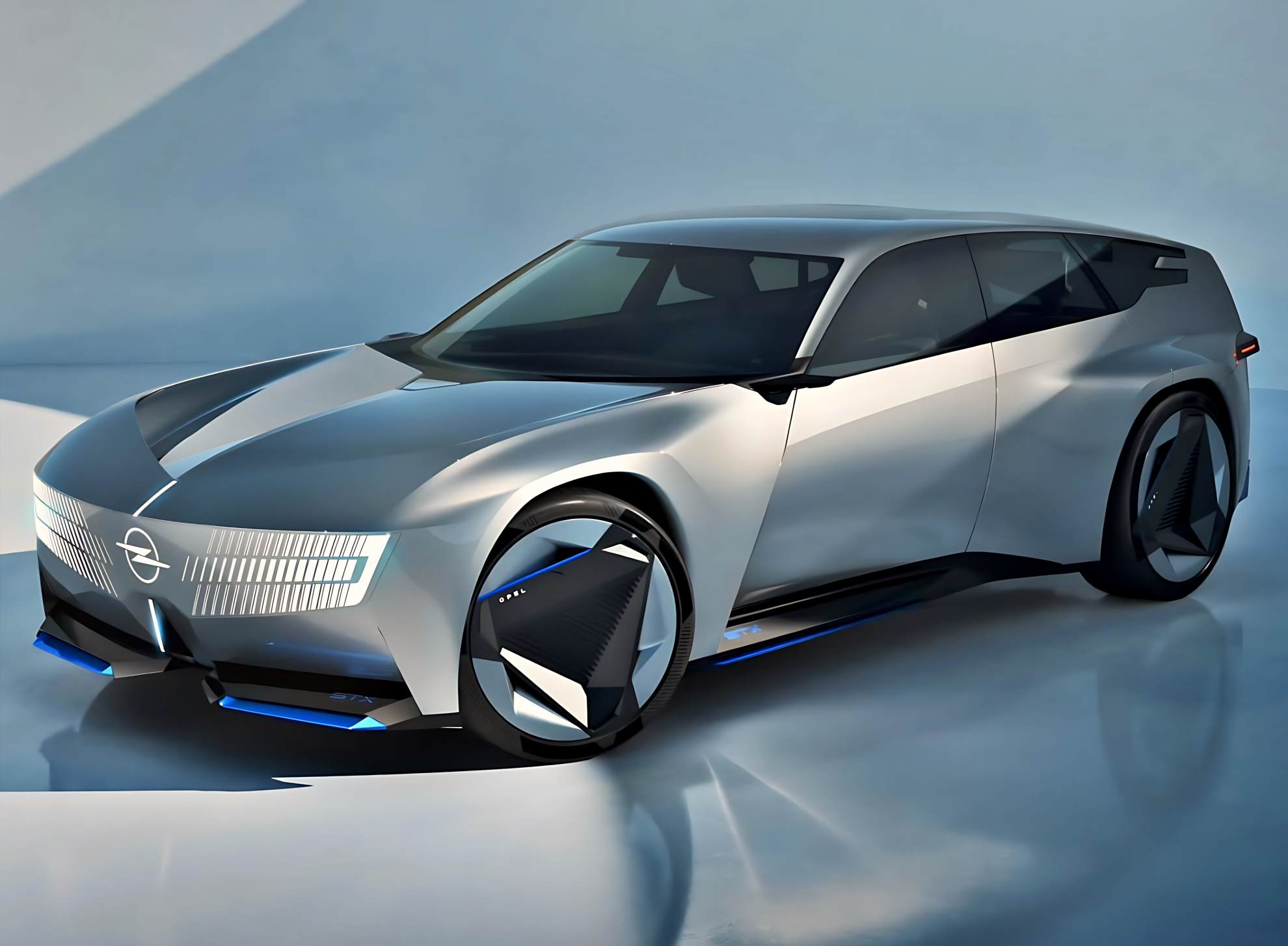
The Opel STX Concept just arrived at Paris with a radical proposition: what if the future of European station wagons wasn’t a wagon at all? Unveiled at the Paris Motor Show, this all-electric, all-wheel-drive shooting brake challenges every assumption about how an EV should look. Therefore, Opel isn’t simply electrifying its past—it’s architecting an entirely new vehicle category.


Electrified Shooting Brake Reimagined
The Opel STX Concept occupies a fascinating design intersection. Furthermore, it merges the sleek, coupe-like proportions of a shooting brake with the cargo versatility of a traditional station wagon. The result? Unprecedented vehicle volumes wrapped in a silhouette that defies conventional classification.
Visually, the concept commands attention through its elevated Vizor grille—a design language that now defines Opel’s electric identity. However, what truly distinguishes this vehicle are the vertical and oblique luminous slats that frame the grille, creating a dynamic, almost computational aesthetic. The rear section slopes cleanly, terminating in a sharp, architectural tail.
Performance Architecture & Design Details
Performance-oriented styling elements reinforce the STX’s intent. Specifically, dynamic blue diffusers emerge with purpose, while 22-inch wheels anchor the proportions with aggressive stance geometry. In addition, the all-wheel-drive architecture suggests genuine capability beyond show-car posturing.
According to Opel, this concept vehicle represents far more than a one-off Paris spectacle. Rather, it’s a strategic blueprint for upcoming production models. The company is leveraging this platform to signal its commitment to electrified practicality—a direct counter to the notion that EVs must sacrifice cargo space or design boldness.
Legacy Meets Tomorrow’s Mobility
Opel’s wagon heritage stretches back to 1953, making this announcement historically significant. Consequently, the Opel STX Concept doesn’t abandon that legacy; it accelerates it into the electric era. The elevated Vizor grille, luminous slat architecture, and shooting brake proportions all signal a brand confident enough to evolve without erasing its identity.
The all-electric, all-wheel-drive powertrain remains undisclosed in terms of specific kilowatt output and battery capacity. Nevertheless, the technical foundation is unmistakably forward-thinking. This is computational horsepower meeting European wagon DNA—a fusion that challenges both Tesla’s minimalist EV aesthetic and traditional German wagon conservatism.
Ultimately, the Opel STX Concept represents a pivotal moment. Opel is signaling that the future of electric mobility doesn’t require sacrificing practicality, heritage, or design courage. For enthusiasts tracking the evolution of EV architecture and software-driven design language, this Paris debut deserves serious attention.

Julian Hayes
Future Mobility & Technology Editor at Auto News Magazine. Covering the next frontier of electric powertrains, 800V architectures, solid-state battery chemistry, and autonomous vehicle platforms.
View all articles by Julian Hayes →