Nissan Skyline: Why the Radical AI-Driven 2026 Shift Changes Everything
 Liam Campbell
3 minutes read
Liam Campbell
3 minutes read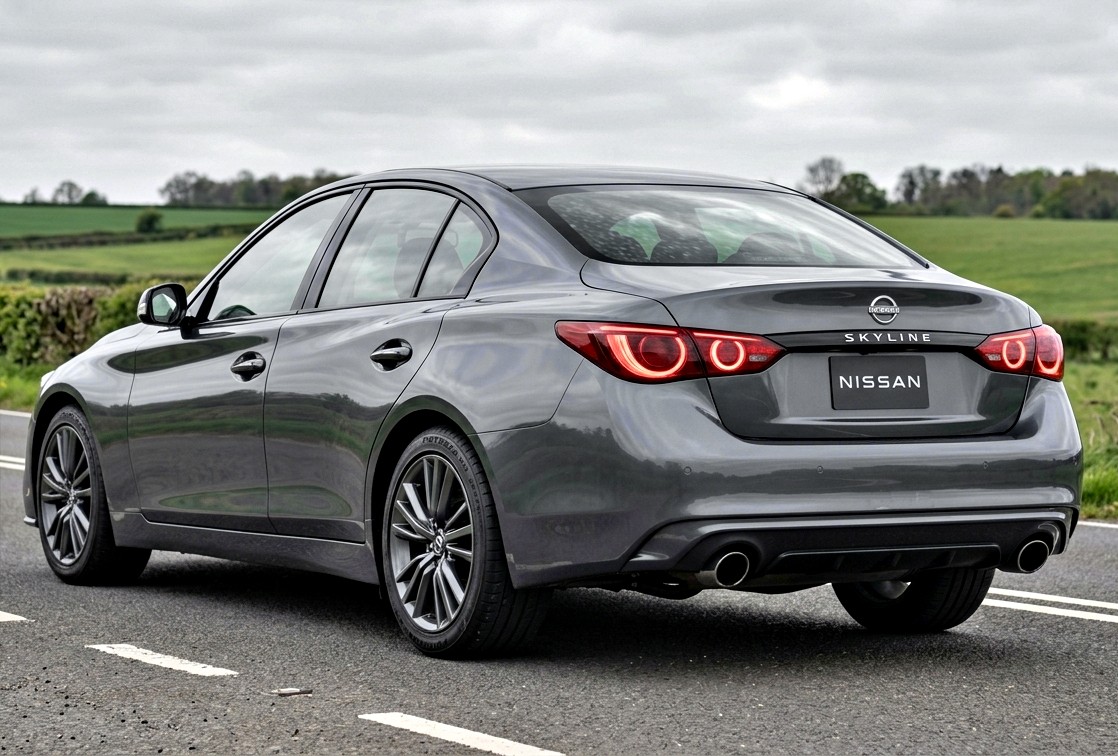
| 🚀 Key Takeaways: • The next-gen Nissan Skyline will officially debut in December 2026. • Development time was slashed to just 26 months using advanced generative AI. • Power originates from an e-POWER dual-motor system pushing 450 horsepower. |
Nissan has finally cracked the code on rapid-fire product cycles. By weaponizing generative AI, the engineering team has condensed the standard four-year development timeline for the Nissan Skyline into a blistering 26-month sprint, signaling a tectonic shift in how we approach the automotive sector.


Nissan Skyline: AI Disruption in the Segment
Historically, the Nissan Skyline remained a symbol of mechanical heritage and evolving performance. However, this new model moves beyond pure nostalgia by embracing a digital-first design philosophy. Specifically, Nissan has utilized predictive wind tunnel software to maximize drag coefficients without sacrificing the iconic sedan silhouette. Consequently, the car looks sharper and more aerodynamic than any predecessor in the lineage.
Refining the vehicle’s core, Nissan focused on modular platform economics. By utilizing digital twin modeling, the company identified weight-saving opportunities that traditional testing would have missed entirely. Moreover, the decision to produce this unit at the Tochigi plant confirms that Japan remains the heartbeat of their high-end manufacturing. According to Nissan, this move ensures unmatched build precision.
| ⚙️Engine / Powertrain | e-POWER Dual-Motor Hybrid |
| 🐎Power Output | 450 HP |
| ⚡Peak Torque | 580 Nm (427 lb-ft) |
| ⏱️0-60 mph (0-100 km/h) | 0-60 mph in 3.4s |
| 🚀Top Speed | 155 mph (250 km/h) |
| 🔄Drivetrain / Gearbox | e-4ORCE All-Wheel Drive |
| 💰Starting Price / Est. | $72,000 (est.) |
The Competitive Landscape
Positioning the Nissan Skyline within today’s market is a high-stakes chess game. For instance, compared to the BMW M3, the Nissan offers a vastly different value proposition centered on hybrid-electric efficiency. Furthermore, when pitted against the Audi RS5, the Nissan’s e-4ORCE all-wheel-drive system provides superior traction management. Ultimately, it challenges the status quo by blending daily luxury with track-bred electronic systems.
Pricing, Available Trims, and Ownership Value
Regarding market entry, industry analysts anticipate a Starting MSRP: $72,000 for the base variant. Furthermore, high-performance NISMO trims will likely push the barrier toward the $95,000 mark. Consequently, leasing options should settle around an Est. Monthly Lease: $1,100/mo depending on residual values.
Beyond the sticker price, owners can expect a robust Warranty: 5-Year/60,000-Mile powertrain coverage package. Interestingly, the integration of Level 3 ProPILOT capabilities may actually lower insurance premiums for tech-savvy buyers. In fact, this vehicle represents a bold attempt to dominate the executive sedan segment through sheer technological audacity.
Future Speculation: A Collector’s Mirage?
Will this digital-native sedan hold its value? Undoubtedly, the first-edition Nissan Skyline models produced via AI-optimization will become sought-after specimens. Because the industry is shifting toward full electrification, this might be the last truly visceral performance sedan from the brand. As a result, collectors should watch the initial production run with keen interest.
Ultimately, the 2026 debut proves that speed isn’t just about zero-to-sixty times. It is about how quickly a manufacturer can adapt to shifting regulatory headwinds. By successfully pivoting to virtual development, Nissan has set a new benchmark for the entire industry. I expect rivals will be scrambling to replicate this workflow by next quarter.
Liam Campbell
Industry Intelligence & News Editor at Auto News Magazine. Tracking prototype spy shots, Nürburgring development mules, automaker corporate moves, and breaking global automotive scoops.
View all articles by Liam Campbell →