
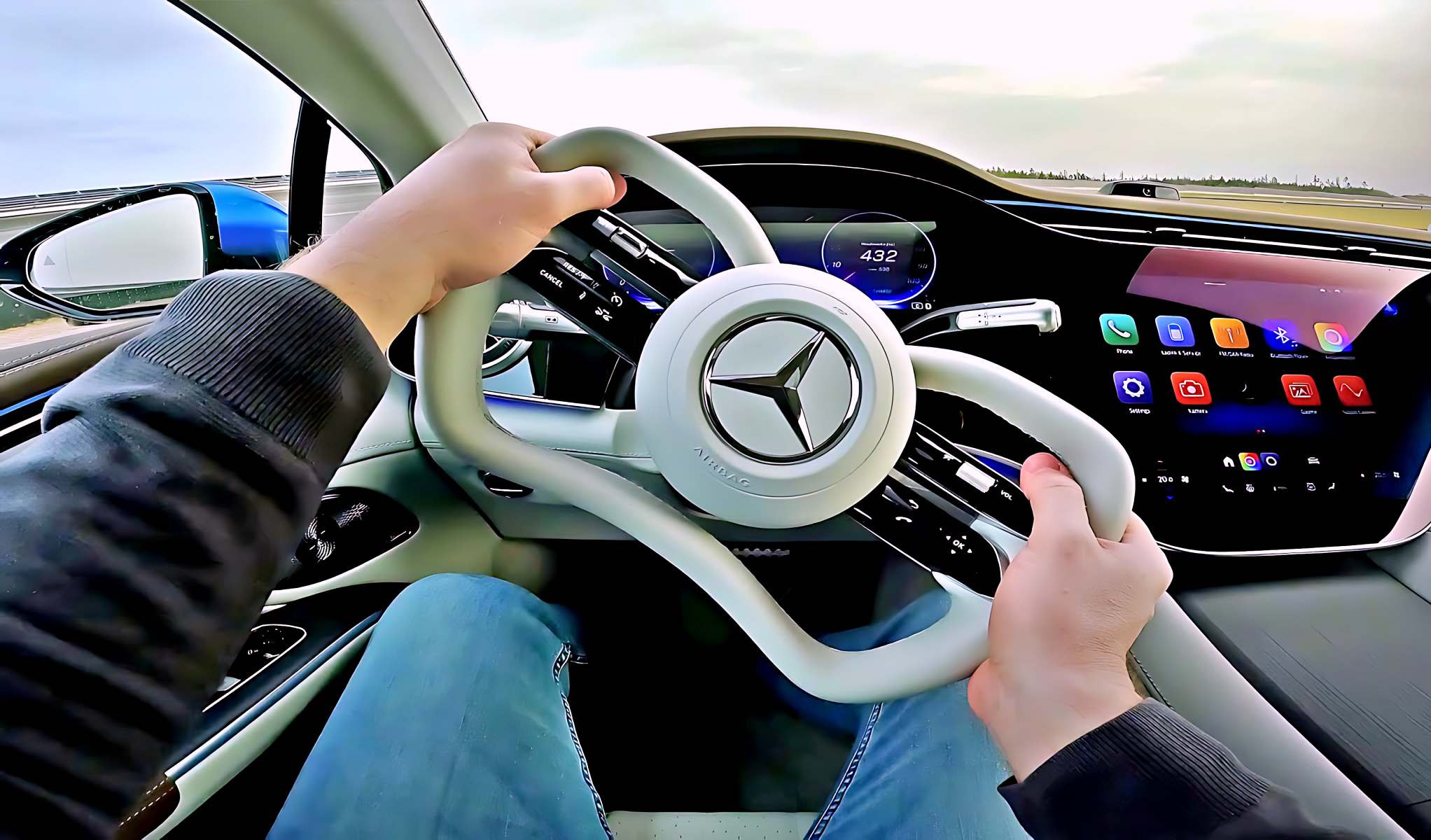
Mercedes-Benz is quietly reshaping the driver’s relationship with the steering column. A newly filed patent reveals that the Mercedes steering wheel could soon become a shape-shifting interface, adjusting its diameter on demand rather than remaining fixed throughout the vehicle’s lifespan. This isn’t mere speculation, the patent documentation describes a sophisticated system with at least three telescopic adjustment elements mounted on each side of the wheel rim.
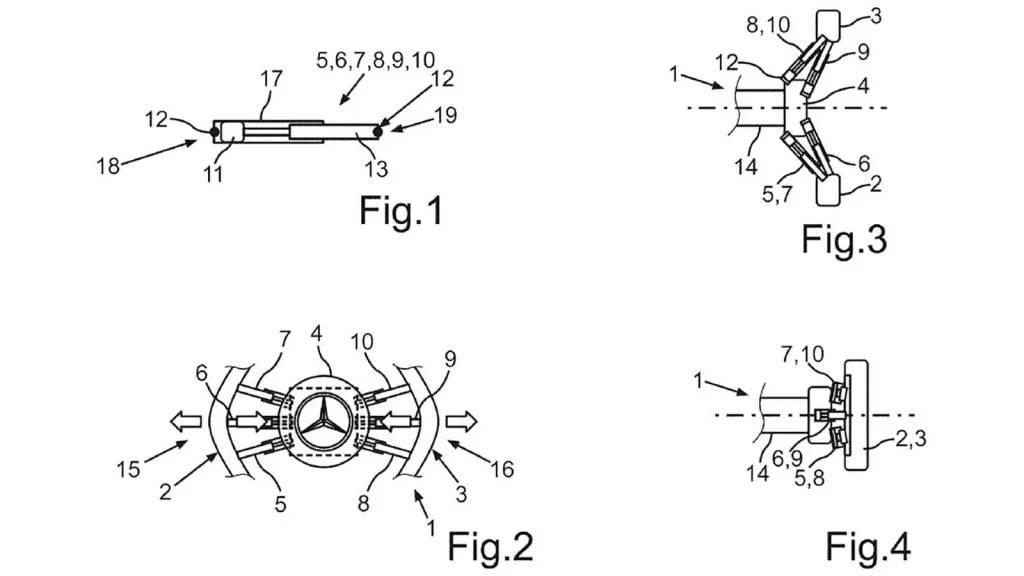
The engineering logic here is sound. A larger wheel suits drivers who prefer relaxed hand positioning or sit closer to the steering column, while a smaller diameter creates extra cabin space for taller occupants and simplifies entry and exit. Mercedes even suggests that a compact setting could deliver a more aggressive, race-car-like feel for performance-oriented drivers. It’s a clever solution to a problem that typically requires manual steering-column adjustment alone.
The patent drawings depict a split, yoke-like design rather than the traditional circular wheel most drivers expect. This departure from convention signals Mercedes’ willingness to rethink fundamental cabin architecture. Meanwhile, the wheel’s angle could adjust independently of the steering-column height mechanism, offering even greater customization. As Mercedes continues pushing performance and luxury boundaries, ergonomic innovations like this could differentiate its lineup in an increasingly crowded premium segment.
Power Assistance Meets Mechanical Precision
Mercedes envisions power-assisted electric motors controlling the telescopic mechanism, though the patent also mentions hydraulic and pneumatic systems as viable alternatives. This redundancy matters. Electric systems offer precision and integration with modern infotainment, but hydraulic backup ensures reliability if power systems fail. It’s the kind of belt-and-suspenders engineering that defines German automotive thinking.
The Patent-to-Production Reality Check
Here’s the catch: patents rarely translate to showroom vehicles. Mercedes files hundreds of patents annually, and most never reach production. Regulatory hurdles, cost considerations, and manufacturing complexity often kill promising concepts. Still, the fact that Mercedes invested engineering resources into this Mercedes steering wheel system suggests genuine interest in solving real ergonomic challenges.
Whether this adjustable steering wheel reaches production remains uncertain. Yet it signals where premium automakers are headed: toward personalization at every touchpoint, from suspension geometry to cabin interfaces. If executed properly, this could become a signature feature that justifies Mercedes’ luxury positioning. For now, it remains a tantalizing glimpse into tomorrow’s cockpit design.

Liam Campbell
Industry Intelligence & News Editor at Auto News Magazine. Tracking prototype spy shots, Nürburgring development mules, automaker corporate moves, and breaking global automotive scoops.
View all articles by Liam Campbell →