Mercedes-Benz Solid-State Battery Technology: The Race for 750-Mile Range EVs
 Julian Hayes
3 minutes read
Julian Hayes
3 minutes read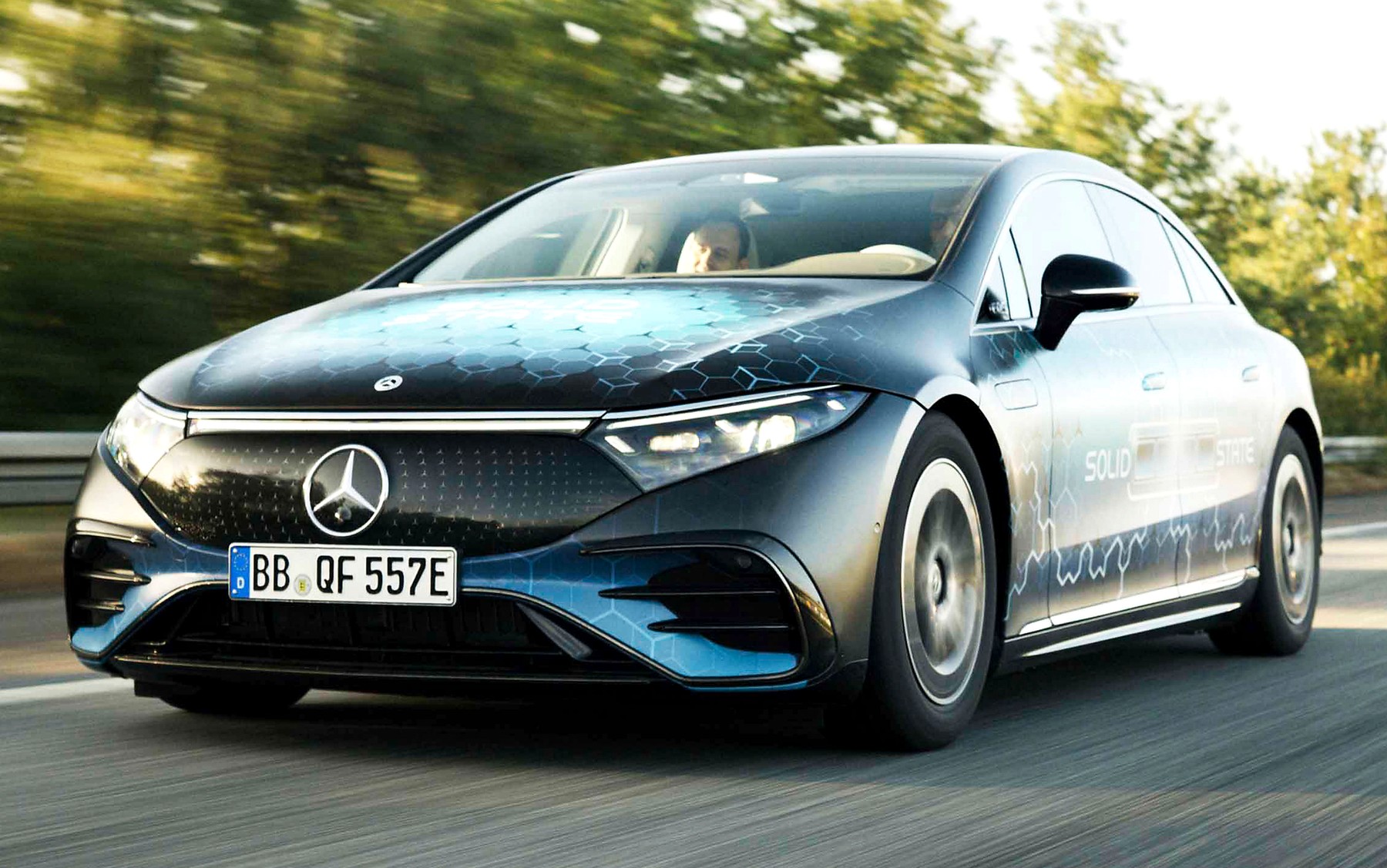
| 🚀 Key Takeaways: • Mercedes-Benz Solid-State Battery Technology is now entering advanced testing phases with ProLogium and Factorial Energy. • Prototypes equipped with these solid-state cells have already demonstrated a staggering 748.8 miles of range on a single charge. • Mass-market integration aims to replace traditional lithium-ion electrolytes with non-flammable ceramic separators for improved energy density. |
The transition to electric mobility has reached a pivotal bottleneck: the energy density limit of legacy liquid-electrolyte lithium-ion cells. Addressing this, Mercedes-Benz Solid-State Battery Technology is emerging as the critical hardware leap required to push the industry past current range anxiety limitations and charging plateaus.


Revolutionizing Mercedes-Benz Solid-State Battery Technology
For over a decade, Stuttgart has quietly funneled capital into advanced chemical research. Furthermore, their deepened partnership with Taiwanese firm ProLogium marks a strategic pivot toward commercialization. By utilizing Gen4 lithium ceramic cells, the brand intends to drastically reduce thermal runaway risks. Consequently, these batteries offer superior stability compared to the volatile solvents found in modern packs.
Beyond simple safety gains, the mechanical architecture of these cells allows for faster electron flow during high-voltage DC charging. In fact, the thermodynamic efficiency of this solid-state approach should allow for shorter dwell times at charging stations. Meanwhile, the integration of an inorganic, non-flammable electrolyte simplifies cooling loop requirements, potentially shaving crucial weight off the chassis.
| ⚙️Engine / Powertrain | Solid-State Li-Ceramic Cells |
| 🐎Power Output | 400-600 HP (Projected) |
| ⚡Peak Torque | 700+ Nm |
| ⏱️0-60 mph (0-100 km/h) | 0-60 mph in 3.0s |
| 🚀Top Speed | 155 mph (Electronic) |
| 🔄Drivetrain / Gearbox | Dual-Motor AWD |
| 💰Starting Price / Est. | $120,000 (est.) |
Competitor Analysis: The Solid-State Arms Race
When comparing this initiative to the wider industry, we see a clear divide in development strategies. Specifically, Toyota remains heavily focused on patents for high-output solid-state modules, while Volkswagen Group continues to leverage its QuantumScape investment. Conversely, Mercedes-Benz is hedging its bets by running parallel testing with both ProLogium and the American startup Factorial Energy.
Performance benchmarks reveal the severity of this competition. While mainstream liquid-cooled architectures struggle to exceed 400 miles of real-world driving, a test mule equipped with Factorial Energy cells successfully conquered a 748.8-mile distance. This data proves that solid-state density is no longer a laboratory pipe dream; it is becoming a viable powertrain reality.
Pricing, Available Trims, and Ownership Value
While official retail pricing for these specific battery-integrated vehicles remains unannounced, we can infer the financial trajectory. Expect the initial Starting MSRP for these flagship luxury platforms to reside in the $120,000 to $160,000 segment. Moreover, Estimated Monthly Lease figures will likely hover near the $1,800/mo mark due to early-adopter premiums.
Regarding long-term value, these vehicles will likely carry a 10-Year/100,000-Mile Battery Warranty to combat depreciation concerns. Ultimately, owners should anticipate higher Insurance Considerations, as the high-tech silicon-carbide inverters and specialized cell chemistry remain expensive to repair in the event of a structural collision. To learn more about current EV standards, see Auto News Magazine.
The Future Outlook
I predict that Mercedes-Benz Solid-State Battery Technology will eventually define the ‘Platinum’ tier of the luxury market. By 2027, vehicles utilizing these packs will likely command 20% higher resale value than their liquid-ion counterparts. Despite the current manufacturing hurdles, the shift is inevitable. According to Mercedes-Benz, the future of engineering relies on this molecular-level precision.
Ultimately, the manufacturers who master the delicate balance of solid-state thermal management will rule the next decade of luxury mobility. If you prioritize technological foresight, watch Stuttgart’s progress closely. The era of the 800-mile electric tourer is finally within our grasp.
Julian Hayes
Future Mobility & Technology Editor at Auto News Magazine. Covering the next frontier of electric powertrains, 800V architectures, solid-state battery chemistry, and autonomous vehicle platforms.
View all articles by Julian Hayes →