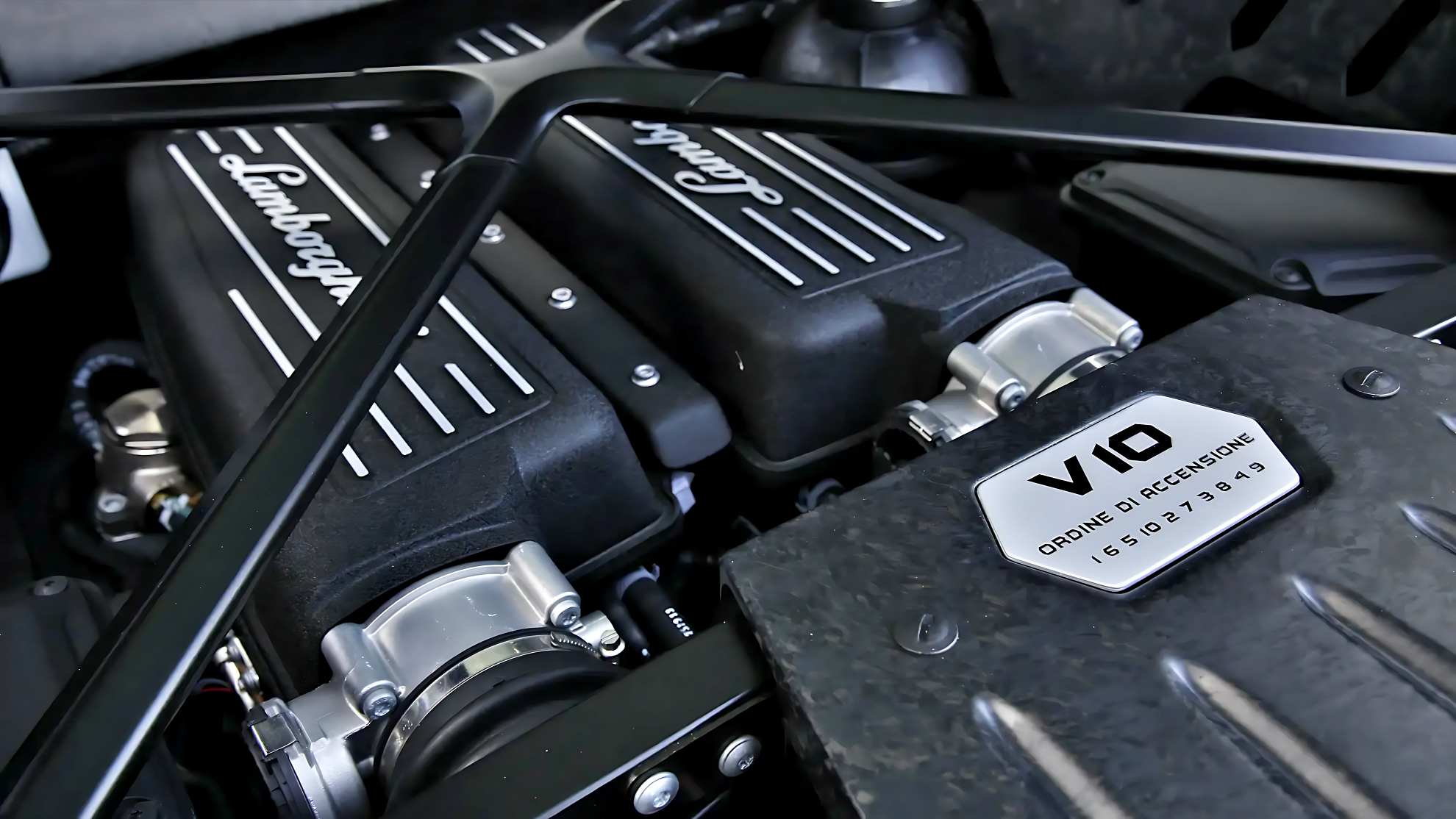
In the Hungarian town of Győr, Audi once built one of the most visceral naturally aspirated engines ever to grace a supercar: the Lamborghini V10 Engine. This wasn’t some sterile, computer-optimized mill stamped out on an assembly line. No—each 5.2-liter V10 demanded six hours of skilled hand labor, 250 precision components, and an engineer’s unwavering commitment to mechanical purity. The result? A naturally aspirated powerplant that delivered 630 horsepower and screamed to 8,700 RPM with zero turbo lag and unfiltered throttle response.
Hand-Built Exotica Meets Mass Production
Here’s where the engineering paradox becomes fascinating. The Győr facility could churn out roughly 19 engines per shift—a respectable production rate for a supercar powerplant. However, each individual engine still required approximately six hours of meticulous hand assembly. Therefore, Audi achieved something remarkable: semi-mass-production of an exotic, naturally aspirated V10 without sacrificing the artisanal craftsmanship that made it legendary.
The Lamborghini V10 Engine featured 40 valves and 4 camshafts, along with an uncommon 54/90-degree firing interval that gave it a signature mechanical symphony. Furthermore, the cylinder heads incorporated titanium valves and CNC-machined intake ports—components typically reserved for race engines, not road cars. Each piston traveled at roughly 88 feet per second at maximum RPM, placing extreme stress on every rotating component.
| ⚙️Engine / Powertrain | 5.2L Naturally Aspirated V10 |
| 🐎Power Output | 630 HP (factory-rated) |
| ⚡Peak Torque | 442 lb-ft (est.) |
| ⏱️0-60 mph (0-100 km/h) | 0-60 mph in 3.2s (Huracán) |
| 🚀Top Speed | 202 mph (Huracán) |
The Naturally Aspirated Advantage
Without a turbocharger, the Lamborghini V10 Engine delivered power with visceral immediacy. There was no lag, no artificial boost curve—just linear, throttle-responsive acceleration that rewarded precision and punished hesitation. In addition, the engine’s breathing characteristics demanded meticulous tuning; each unit underwent approximately 90 minutes of hard bench testing immediately after assembly.
The 5.2-liter displacement combined with a 3.65-inch piston stroke and 3.33-inch bore created an engine that could sustain extreme RPMs without forced induction. Consequently, Audi engineers had to engineer every bearing, every connecting rod, and every valve spring to withstand relentless mechanical stress. According to Lamborghini, this engine represented the pinnacle of naturally aspirated supercar engineering.
A Legacy That Won’t Return
The Lamborghini V10 Engine has since been discontinued, replaced by turbocharged and electrified alternatives. Yet its six-hour assembly process and 250-part complexity remain a testament to an era when mechanical soul trumped efficiency metrics. In fact, roughly 75% of internal components were shared with the Audi R8, yet Audi tuned each engine distinctly—the Lamborghini version sounded and felt entirely different from its Audi counterpart.
Today, hand-built naturally aspirated V10s are extinct in the supercar world. The Lamborghini V10 Engine stands as the final masterpiece of that golden age—a mechanical symphony that required six hours of skilled labor, 250 precision parts, and an engineer’s refusal to compromise. That’s not just an engine. That’s automotive poetry.

Marcus Vance
Senior Track & Performance Editor at Auto News Magazine. Veteran automotive journalist specializing in chassis dynamics, apex telemetry, track-day specials, and high-revving mechanical purity.
View all articles by Marcus Vance →