Ferrari 12Cilindri: Mansory Attacks the Maranello Masterpiece with Carbon Fiber
 Marcus Vance
3 minutes read
Marcus Vance
3 minutes read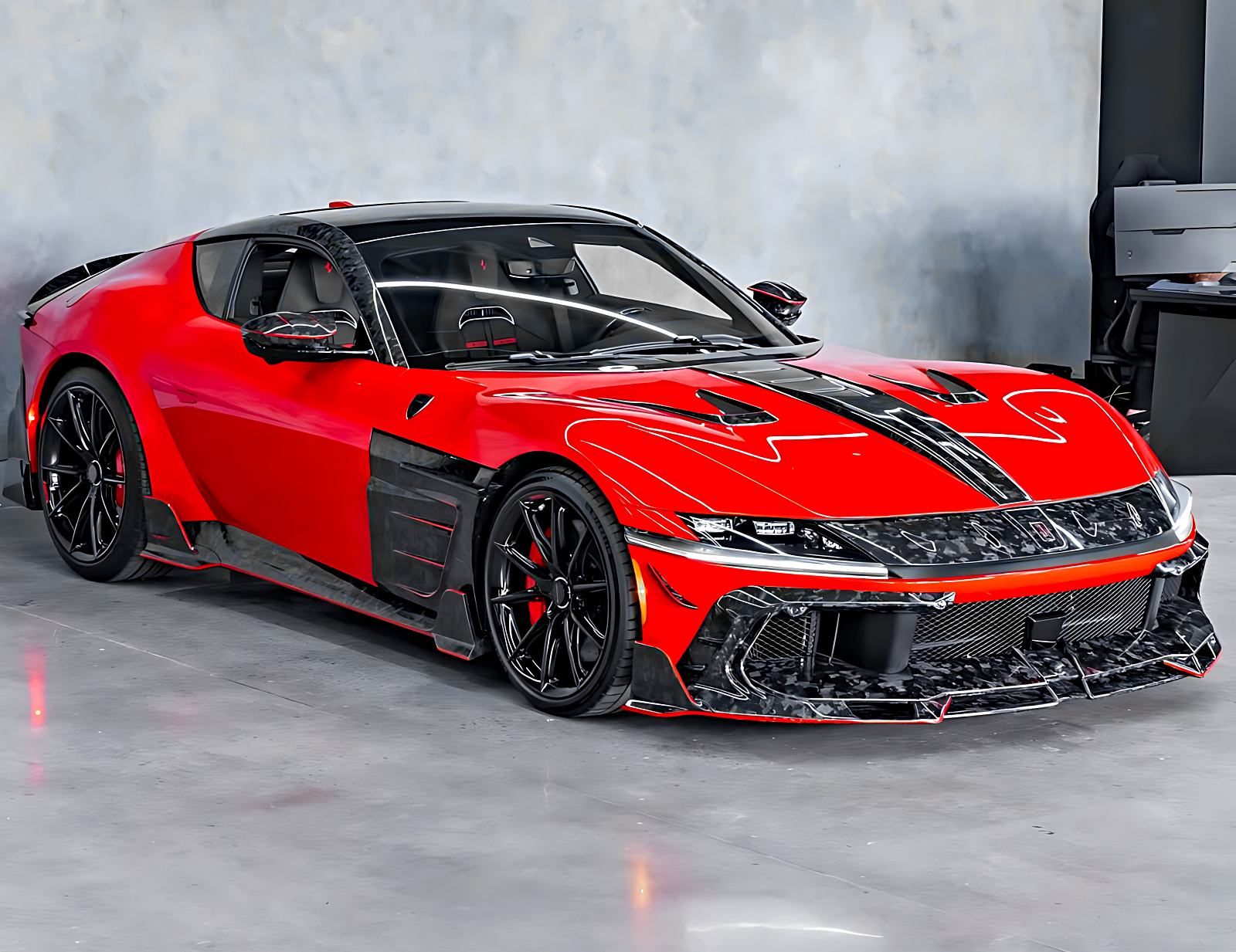
| 🚀 Key Takeaways: • The Ferrari 12Cilindri receives a polarizing, ultra-aggressive wide-body makeover from Mansory. • Engineered with a 6.5-liter naturally aspirated V12, the base car produces 819 horsepower. • Featuring extensive exposed carbon fiber throughout, this conversion targets the absolute zenith of exotic automotive customization. |
Driving a stock Ferrari 12Cilindri is an exercise in pure, high-revving theater. However, the tuners at Mansory clearly felt that Maranello’s masterpiece needed more visual drama. They have now draped this V12 beast in an aggressive, full-carbon armor kit that demands attention from every angle.


📸 Photo Credit: @mansory.usa on Instagram
The Ferrari 12Cilindri Reimagined
Engineered for the absolute purist, the Ferrari 12Cilindri remains one of the few bastions of the naturally aspirated era. According to Ferrari, this machine captures the spirit of the iconic front-engine GT cars of the 1960s. Meanwhile, the Mansory conversion seeks to modernize that aesthetic with unapologetic, track-inspired aero elements.
Fast Specs
| ⚙️Engine / Powertrain | 6.5L Naturally Aspirated V12 |
| 🐎Power Output | 819 HP |
| ⚡Peak Torque | 678 Nm (500 lb-ft) |
| ⏱️0-60 mph (0-100 km/h) | 0-60 mph in 2.9s |
| 🚀Top Speed | 211 mph (340 km/h) |
| 🔄Drivetrain / Gearbox | 8-Speed Dual-Clutch / RWD |
| 💰Starting Price / Est. | $420,000 (Base MSRP) |
Featuring lightweight forged wheels, the car sits with a menacing, planted stance that hints at superior lateral grip. Furthermore, the exposed weave across the bodywork isn’t just for show; it serves to optimize airflow across the chassis. In fact, the aggressive splitter and diffuser setup aim to translate that visual aggression into functional downforce for high-speed stability.
Competitor Analysis
Comparing this build to the Lamborghini Revuelto reveals a clash of philosophies. Specifically, the Revuelto relies on complex hybrid-electric assistance for its massive 1,001 horsepower output. Conversely, the Ferrari 12Cilindri keeps it analog and tactile, offering a connection to the road that few modern platforms can replicate.
Alternatively, the Aston Martin DBS offers a more refined, gentlemanly approach to grand touring. Although the DBS is undeniably elegant, it lacks the raw, biting front-end responsiveness of the Maranello machine. Ultimately, the Mansory conversion pushes the Ferrari further into the realm of hyper-exclusive, track-focused art.
Pricing, Available Trims, and Ownership Value
Determining the true cost of a Mansory conversion requires a deep dive into bespoke pricing. While a factory Ferrari 12Cilindri starts at approximately $420,000, the added carbon package pushes the entry point significantly higher. In fact, most clients should expect an investment exceeding $600,000 once customization is complete.
Maintaining such a machine demands specialized care. Therefore, owners should budget for $5,000 to $8,000 annually in specialized service costs. Furthermore, the standard 3-Year Unlimited-Mileage Warranty provided by Ferrari may be impacted by extensive aftermarket modifications. Insurance for these carbon-heavy builds often commands a premium, specifically reflecting the exotic nature of the body panels.
Future Speculation
Collecting these hyper-modified Ferraris is a high-stakes game of market trends. Specifically, the 12Cilindri will likely become a future classic due to its pure internal combustion powertrain. Because of this, the Mansory version may either skyrocket in value as a one-of-one rarity or sit as a polarizing piece of automotive history. Ultimately, those who value analog engagement will continue to hunt for these V12 legends regardless of market fluctuations.
Refining the driving experience, Auto News Magazine believes that the soul of the Ferrari 12Cilindri lies in the mechanical symphony of its twelve cylinders. Despite the flash of the carbon body, the chassis integrity remains true to its racing heritage. Therefore, it remains a visceral experience that defines the modern supercar segment.
Marcus Vance
Senior Track & Performance Editor at Auto News Magazine. Veteran automotive journalist specializing in chassis dynamics, apex telemetry, track-day specials, and high-revving mechanical purity.
View all articles by Marcus Vance →