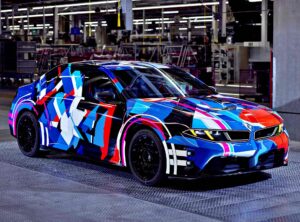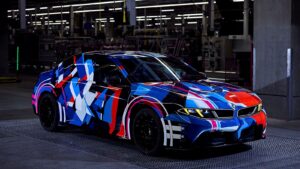
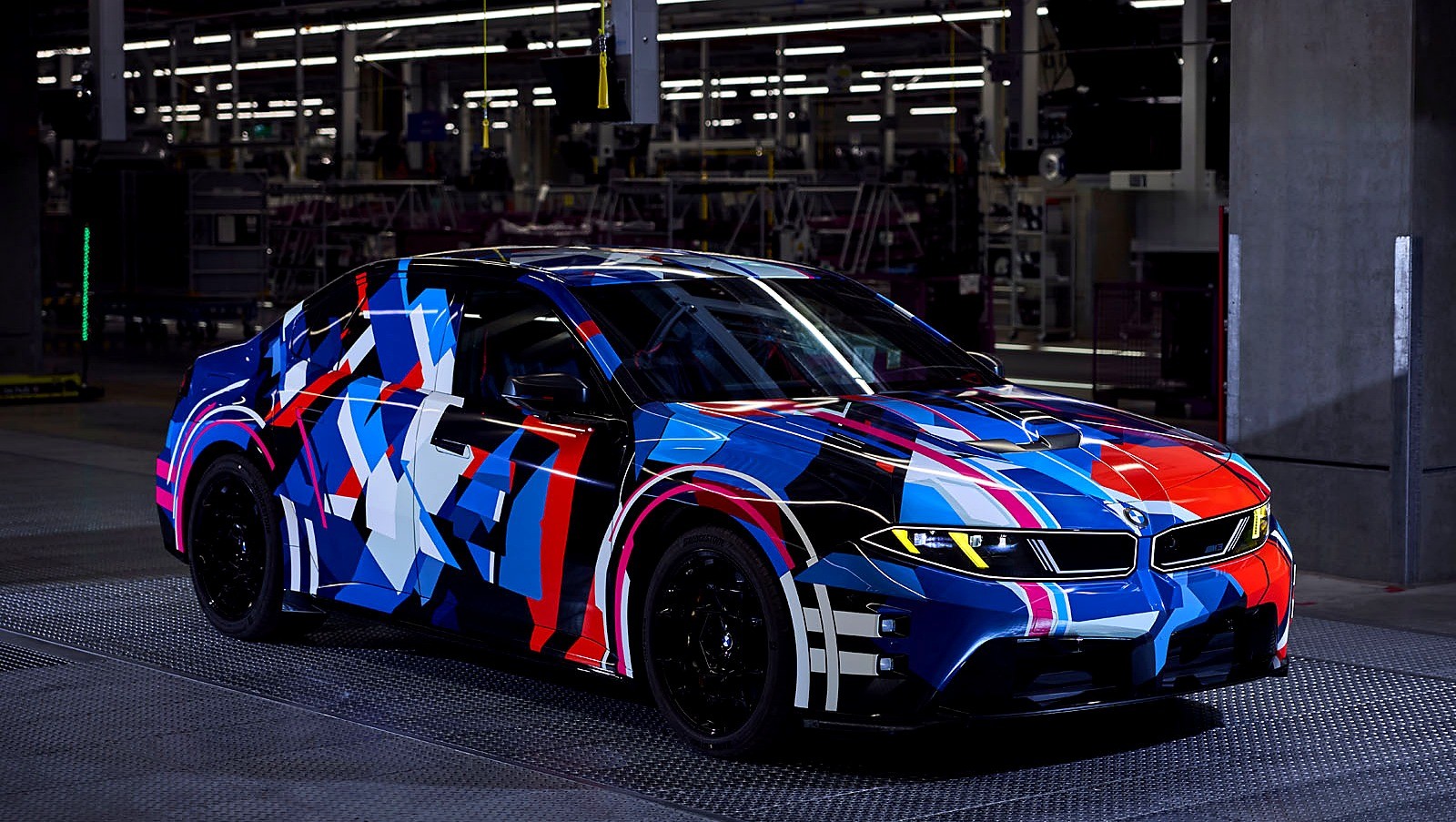
BMW has just weaponized the future. According to a recent report by AUTOCAR.CO.UK, the BMW M3 EV is no longer theoretical—it’s nearly production-ready, and it’s engineered to cannibalize its own petrol sibling. The lightly camouflaged prototype images reveal a machine that borrows Le Mans-inspired auxiliary lights and sailboat-inspired split bumpers from the M Concept Neue Klasse, but with surgical restraint: smaller front splitter, refined rear diffuser, and a silhouette that screams understated aggression.


Quad-Motor Architecture Redefines M Performance
Here’s where the BMW M3 EV diverges from conventional EV thinking. Rather than stacking kilowatts for bragging rights, BMW’s M division has engineered four independent electric motors—one per wheel—to orchestrate a symphony of torque vectoring that traditional combustion engines simply cannot match. Therefore, each motor operates independently, allowing for microsecond-level power distribution that fundamentally transforms how the chassis responds to driver input.
Frank van Meel, M division boss, was refreshingly candid during his Goodwood Festival of Speed interview: “It’s not about having even more power. At the end of the day, you can’t put that down to the road anyway.” This philosophy represents a seismic shift in performance engineering. Instead of chasing headline horsepower, the M3 EV prioritizes poise, agility, and driver engagement through computational horsepower—the silicon-carbide inverters and thermal management loops that orchestrate real-time power distribution.
| ⚙️Engine / Powertrain | Quad-Motor Electric Powertrain (4x Independent Motors) |
| 🐎Power Output | ~600+ HP (est., distributed across 4 motors) |
| ⚡Peak Torque | ~700+ Nm (est., vectored torque distribution) |
| ⏱️0-60 mph (0-100 km/h) | 0-60 mph in ~3.5s (est.) |
| 🚀Top Speed | 155+ mph (est., electronically limited) |
| 🔄Drivetrain / Gearbox | All-Wheel Drive / Quad-Motor Independent Control |
| 💰Starting Price / Est. | $95,000 – $130,000 (est.) |
The Internal War: EV Versus ICE
BMW is producing its own natural enemy. Simultaneously, the company is developing a new petrol M3 with a turbocharged 3.0-liter straight-six engine maintaining 503 horsepower to meet Euro 7 emissions standards. However, van Meel’s candid admission reveals the existential tension: “Now we are fighting against ourselves, because with the all-electric M3 we are attacking our best-selling product.”
This internal competition is precisely what drives innovation. The BMW M3 EV launches in 2025 from Munich production facilities, positioned to seduce buyers through superior dynamics rather than raw acceleration. Furthermore, the design language—refined from the M Concept Neue Klasse—signals that BMW isn’t abandoning M heritage; it’s evolving it through electrification.
Why This Matters for the Super-Saloon Segment
The BMW M3 EV represents a watershed moment. Consequently, every traditional performance sedan manufacturer must now confront an uncomfortable truth: electric powertrains, when engineered with precision, deliver superior handling characteristics through instantaneous torque vectoring and lower center-of-gravity architecture. The M3 EV‘s quad-motor setup eliminates the weight penalty of mechanical differentials, freeing engineers to optimize suspension geometry and aerodynamic efficiency.
Production details remain sparse, but Munich manufacturing ensures heritage continuity. The 2025 launch window positions the BMW M3 EV as a direct competitor to the Tesla Model S Plaid and emerging Chinese EV performance sedans. Ultimately, this machine will define whether enthusiasts embrace electrification or cling to combustion nostalgia. Based on van Meel’s engineering philosophy, the answer is clear: the future belongs to those who master torque distribution, not displacement.
For more insights on electric performance architecture, explore Auto News Magazine‘s coverage of next-generation EV powertrains and thermal management systems.

Julian Hayes
Future Mobility & Technology Editor at Auto News Magazine. Covering the next frontier of electric powertrains, 800V architectures, solid-state battery chemistry, and autonomous vehicle platforms.
View all articles by Julian Hayes →