Mercedes Vision EQXX Shows Why Range Anxiety Is Fading Fast Across Luxury EVs
 Julian Hayes
2 minutes read
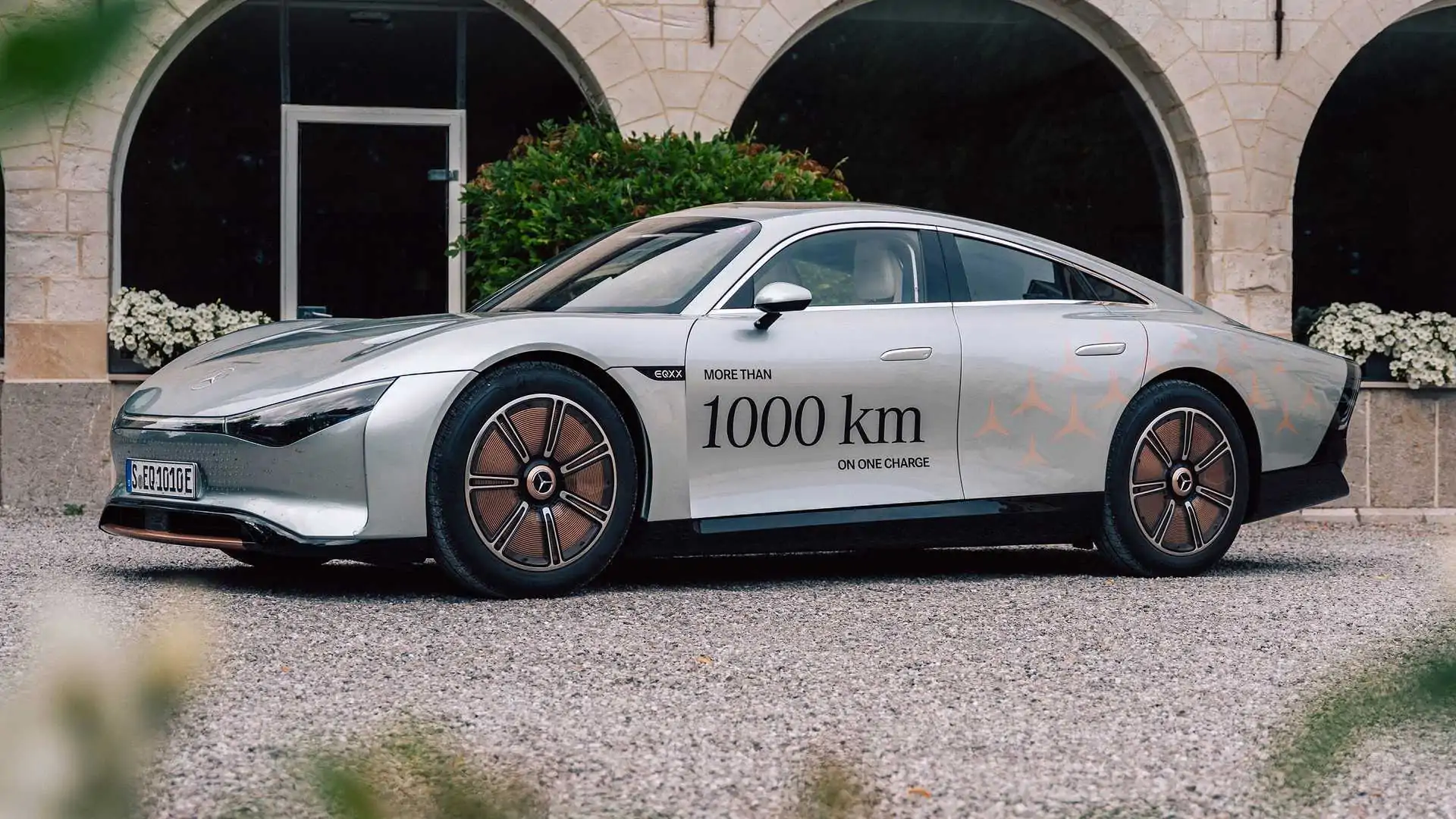
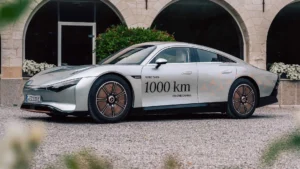
The Mercedes Vision EQXX was engineered to rewrite the rulebook on electric efficiency. Now a fresh Edmunds test of the 2027 EQS 450+ suggests those lessons have reached the showroom. Range anxiety, it seems, is losing its grip.


Why Mercedes Vision EQXX Still Matters
Edmunds recorded 539 miles from the EQS 450+, outpacing its 467-mile EPA rating by 72 miles. Its 122 kWh battery, up from 118 kWh, and a two-speed rear motor do much of the heavy lifting. Meanwhile, the sedan’s 800-volt platform gives the powertrain a cleaner thermodynamic profile. Even so, Aston Martin Valkyrie owners would never trade their weight-obsessed hypercar for a limousine.
The Mercedes Vision EQXX was a research prototype, not a production car, but its fingerprints are everywhere. Its aerodynamic slipstream was sculpted for a drag coefficient near 0.17, and its thermal management was obsessively tuned. On paper, those were lab experiments. In reality, they became the efficiency foundation that Mercedes now applies to showroom sedans.
| ⚙️Engine / Powertrain | Single rear-mounted permanent-magnet electric motor (est.) |
| 🐎Power Output | 204 HP (est.) |
| ⚡Peak Torque | Not disclosed |
| ⏱️0-60 mph (0-100 km/h) | Not disclosed |
| 🚀Top Speed | Not disclosed |
| 🔄Drivetrain / Gearbox | RWD (est.) |
| 💰Starting Price / Est. | Not for sale (prototype) |
Charging Curves Tell the Real Story
Edmunds ranks the EQS 450+ as the third-fastest charging EV it has tested. Adding 100 miles in just 7 minutes places it behind only the Hyundai Ioniq 6 and the new CLA 250+. Those figures depend on silicon-carbide inverters and a stable peak charging plateau, which the EQXX pioneered at a smaller scale.
The Price of Progress Stays Steep
Still, Edmunds’ test example stickered near $122,000, which keeps it far from mainstream reach. Ultimately, the technology will trickle down. Expect future Mercedes volume models to borrow the EQXX’s aero and thermal logic, and expect them to cost far less.
For more context on Mercedes electric engineering, visit the official Mercedes-Benz website. For additional coverage of luxury EV efficiency, explore Auto News Magazine.
Julian Hayes
Future Mobility & Technology Editor at Auto News Magazine. Covering the next frontier of electric powertrains, 800V architectures, solid-state battery chemistry, and autonomous vehicle platforms.
View all articles by Julian Hayes →