Stellantis BOW Concept: Redefining Logistics Through Minimalist Autonomy
 Julian Hayes
3 minutes read
Julian Hayes
3 minutes read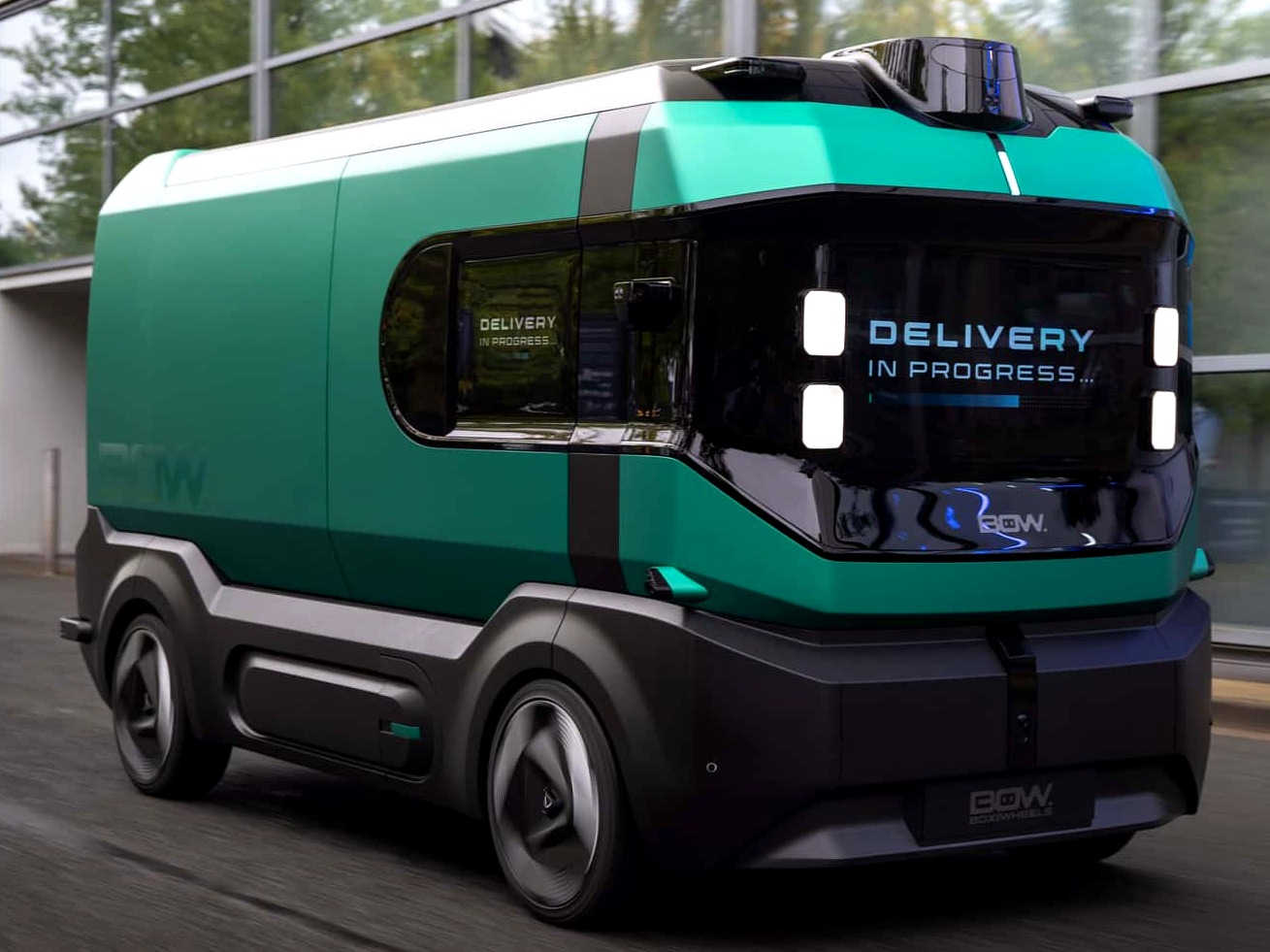
| 🚀 Key Takeaways: • The Stellantis BOW Concept represents a radical pivot toward driverless, cab-less urban parcel logistics. • Designed in partnership with UQI Robotics, the platform discards traditional automotive interfaces for pure utility. • While currently a concept-only platform, it signals a shift toward autonomous last-mile ecosystem integration. |
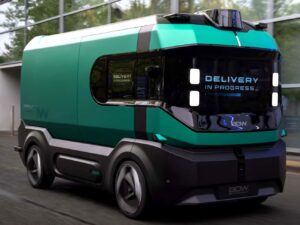
Stellantis has finally unveiled its vision for the future of urban parcel logistics with the Stellantis BOW Concept. Unveiled at the IAA Transportation show in Hannover, this modular platform strips away the windshield, dashboard, and driver seat to focus entirely on cargo efficiency. By removing the human element, Stellantis is exploring what true low-emission, autonomous urban distribution looks like in modern cities.


The Engineering Philosophy of the Stellantis BOW Concept
Engineered as a Box On Wheels, the vehicle abandons legacy automotive paradigms in favor of pure computational horsepower and volumetric efficiency. Furthermore, the Stellantis BOW Concept is not intended for the chaos of the open highway. Instead, it targets controlled environments like airport tarmacs, factory floors, and hyper-local low-emission zones where navigation can be managed with predictable algorithms.
Interestingly, the lack of traditional driver-centric controls suggests a deep integration with over-the-air architecture and high-bandwidth telemetry. Without a cabin to manage, the engineers have shifted their focus toward thermal cooling loops for high-density battery arrays. Consequently, the chassis serves as a silent, electrified courier that prioritizes package throughput over human comfort or performance.
| ⚙️Engine / Powertrain | Full Electric Battery-Electric Platform |
| 🐎Power Output | TBD |
| ⚡Peak Torque | TBD |
| 🚀Top Speed | Limited for Urban Environments |
| 🔄Drivetrain / Gearbox | Autonomous Electric Drive |
| 💰Starting Price / Est. | Concept Only |
Regarding the lack of detailed performance specifications, it appears Stellantis is keeping the secret sauce behind a curtain of industrial mystery. However, observers suspect the integration of Stellantis Pro One software will be the true differentiator. This operating system likely manages the kilowatt discharge rates necessary for constant, high-uptime urban cycles while optimizing the vehicle’s drag coefficient.
Competitor Analysis: Autonomous Logistics Platforms
Specifically, the Stellantis BOW Concept faces stiff competition from established players like the Mercedes-Benz Sustaineer and the Ford Pro autonomous initiatives. While Mercedes leans heavily into sophisticated sensor fusion, Stellantis seems to be prioritizing modular manufacturing scale. Therefore, the battleground here is not just sensor latency, but the ability to integrate into existing dealer networks.
Moreover, comparing these systems reveals two distinct schools of thought. Some competitors prefer retrofitting existing van architectures with LIDAR suites. Conversely, the Stellantis BOW Concept represents a clean-sheet approach, proving that the future of last-mile mobility may involve fewer human-centric compromises. In fact, this divergence in design strategy highlights the industry’s struggle to balance cost-effective autonomy with the harsh realities of urban navigation.
Pricing, Available Trims, and Ownership Value
Predicting the market impact of such a platform is complex, as it is currently a non-commercial concept. Consequently, there is no official Starting MSRP or consumer-facing Estimated Monthly Lease. However, fleet operators should anticipate a service-as-a-software model rather than traditional unit sales.
Specifically, the Ownership Value for such a unit will likely be calculated via cost-per-parcel-delivered metrics rather than traditional residual value depreciation. Maintenance will center on silicon-carbide inverter health and battery state-of-health monitoring. Furthermore, insurance providers will need to transition from liability-based policies to algorithmic risk management frameworks as the platform matures.
Future Speculation: The Autonomous Pivot
Ultimately, the Stellantis BOW Concept will be defined by its ability to navigate the legal and technical hurdles of Level 4 autonomy in urban centers. As software complexity increases, the ability to maintain these units via over-the-air updates will become the defining feature of any successful fleet. For more insights on the shifting landscape of commercial vehicles, check out our report on emerging transport tech.
If Stellantis successfully scales this modular architecture, it could set a new standard for urban logistics efficiency. However, the true test will be its performance in high-density, unpredictable traffic. I anticipate that for the next three years, we will see these “boxes” confined to private campus testing before they ever see a public curb.
In conclusion, the Stellantis BOW Concept is a daring, if technically opaque, entry into the future of mobility. It signals a clear intent: the driver is no longer the priority in the urban logistics chain. Therefore, the future belongs to the most efficient algorithm on the road.
Julian Hayes
Future Mobility & Technology Editor at Auto News Magazine. Covering the next frontier of electric powertrains, 800V architectures, solid-state battery chemistry, and autonomous vehicle platforms.
View all articles by Julian Hayes →