
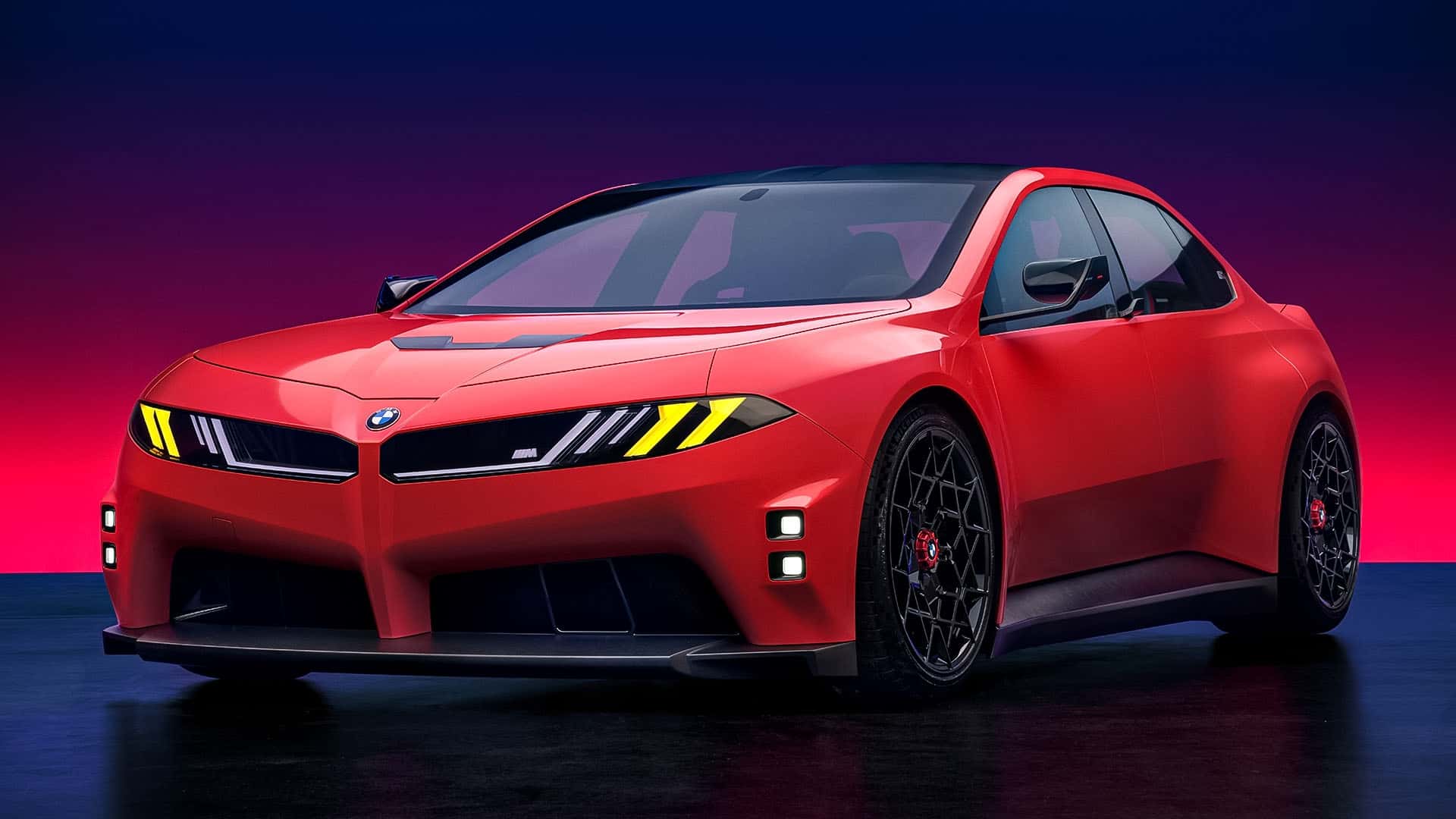
Photo Credit: BMW Group / BMW M
BMW M is preparing to cross the most scrutinized threshold in its half-century history. After years of camouflaged prototype runs and the head-turning BMW M Concept Neue Klasse, Munich’s performance division has locked in the roadmap for the first all-electric BMW M3 (codename ZA0): a world premiere at CES Las Vegas in January 2027, followed by series production at the Munich plant in March 2027.
Rather than simply bolting bigger dual motors into a regular electric 3 Series, BMW M engineered the ZA0 from the floorpan up around a quad-motor architecture and a centralized supercomputer designed to make an 850-horsepower EV dance like a classic rear-driven M car.
Quad-Motor M eDrive: 850 HP, One Motor Per Wheel
The centerpiece of the electric M3 is BMW’s new M eDrive layout. Instead of traditional front and rear axles tied together by mechanical limited-slip differentials, the ZA0 places one independent electric motor at each of the four wheels. Combined system output is targeted around 838 to 850 horsepower (625 kW) and up to 1,200 Nm (roughly 885–900 lb-ft) of torque—enough to launch the four-door sports sedan from 0 to 100 km/h (62 mph) in under 3.0 seconds.
Preliminary axle figures underline BMW M’s commitment to rear-biased dynamics: the rear drive unit is rated near 560 kW and 1,000 Nm, outmuscling the front axle’s 480 kW and 540 Nm capability. On highway cruises, the front axle can fully decouple to maximize efficiency, while on corner exit the system vectors positive and negative torque across all four contact patches within milliseconds.
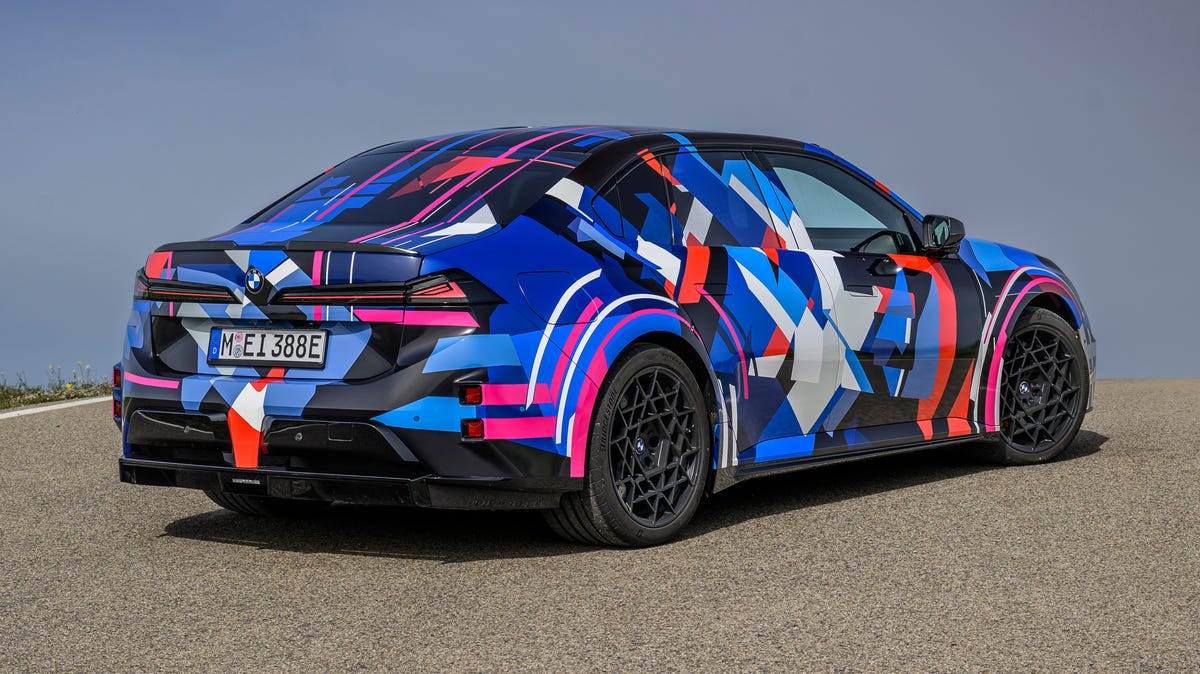
Heart of Joy, Simulated Shifts, and 540 kW Track Regen
Orchestrating four individual motors requires processing speeds far beyond legacy stability-control modules. Enter BMW’s “Heart of Joy”—a high-speed central vehicle dynamics controller that merges powertrain, braking, steering, and energy recuperation into a single millisecond decision loop. Drivers can dial in dedicated Track modes, adjust slip angles with surgical precision, and engage paddle-shifted simulated gear changes paired with bespoke M eSound audio feedback.
Under the floor sits BMW’s sixth-generation 800-volt cylindrical-cell battery exceeding 100 kWh. Because the pack doubles as a structural shear-plate component bolted directly into the chassis, torsional rigidity takes a major leap forward. Dual-sided cell cooling keeps temperatures stable during hot laps, while up to 540 kW of regenerative braking recovers massive energy entering hairpins and reduces wear on the physical brake rotors. When it is time to top up, 420 kW DC fast charging can add over 200 miles of range in roughly 10 minutes, with overall efficiency targeting up to 650 km (~404 miles) WLTP.
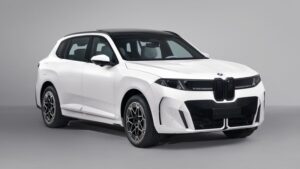
Full Gallery: Concept Stance Meets Production Prototype


Yes, a Gas-Powered M3 Is Still Coming
BMW M knows its global fanbase isn’t universally ready to leave straight-six combustion behind—just look at the collector frenzy surrounding limited-run models like the manual-transmission BMW M3 CS or the upcoming BMW M350 xDrive. That is why the electric ZA0 will not replace the gas M3 outright. Instead, BMW plans to offer a separate mild-hybrid internal-combustion M3 (codename G84) alongside it beginning around mid-2028.
With CES 2027 now just weeks away, BMW M is about to prove whether four motors, 850 horsepower, and millisecond torque vectoring can redefine the world’s benchmark sports sedan for the electric decade.