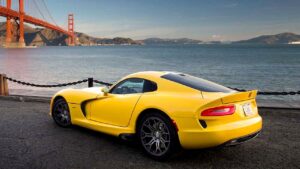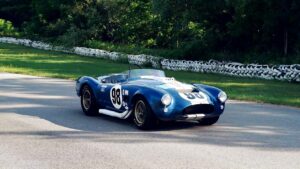
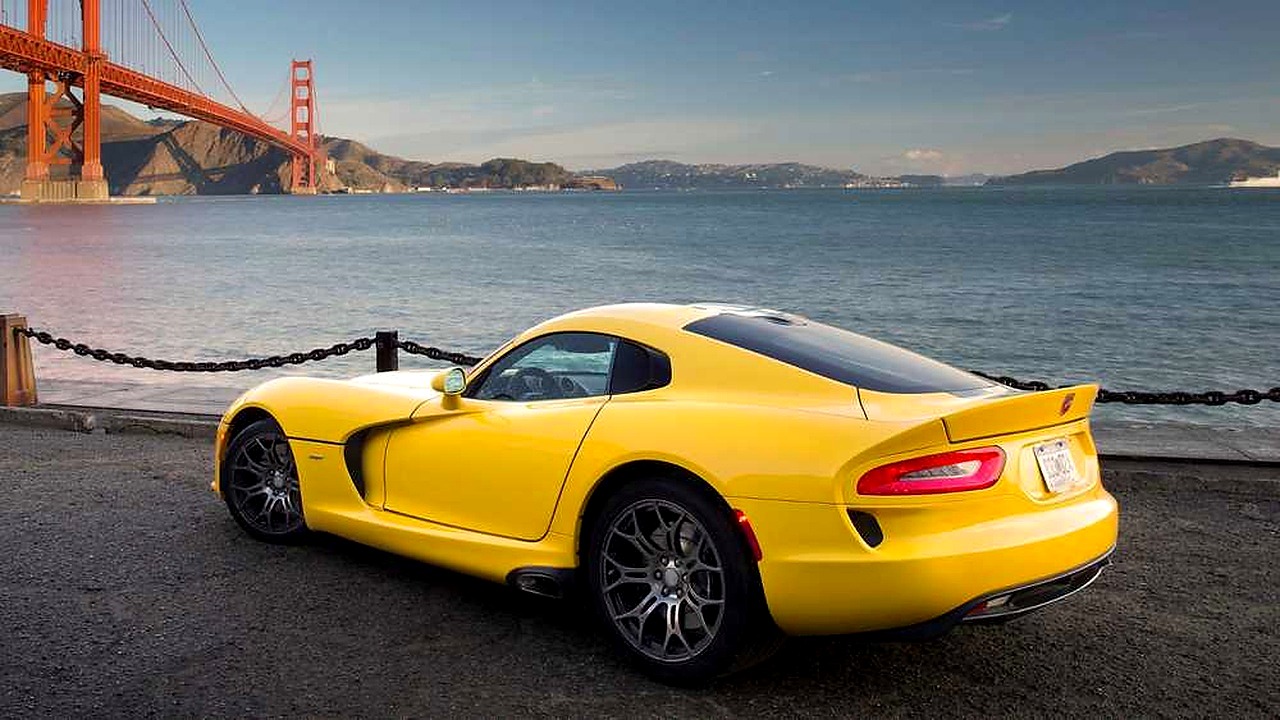
The Dodge Viper V10 was supposed to be a straightforward homage to the Shelby Cobra. Instead, it became a masterclass in automotive problem-solving. When Chrysler’s initial engine choice proved catastrophically heavy, an unlikely savior emerged from within the corporate family tree: Lamborghini. The result was an aluminum V10 that transformed a wild concept into an uncompromising American icon.


The Cobra Dream That Nearly Died
In 1988, Chrysler president Bob Lutz championed a radical vision: a modern interpretation of the legendary Shelby Cobra. The concept that debuted at the 1989 Detroit Auto Show was unmistakable. Enormous hood. Tiny cabin pushed rearward. Side-exit exhausts. Pure, unapologetic front-engine roadster proportions.
The reaction was electric. Chrysler greenlit production, assembling Team Viper, a lean engineering group tasked with moving from concept to customer cars in roughly three years. The philosophy was brutally clear: massive displacement, rear-wheel drive, manual transmission, and absolutely no frills. No power steering. No traction control. No anti-lock brakes. Initially, not even air conditioning.
| ⚙️Engine / Powertrain | 8.0L Aluminum V10, Single Cam, 2-Valve |
| 🐎Power Output | 400 HP @ 4,600 RPM |
| ⚡Peak Torque | 465 lb-ft @ 3,600 RPM |
| ⏱️0-60 mph (0-100 km/h) | 0-60 mph in 3.9s (est.) |
| 🚀Top Speed | 180 mph (est.) |
| 🔄Drivetrain / Gearbox | 6-Speed Manual / RWD |
| 💰Starting Price / Est. | $50,000 – $65,000 (1992-1997) |
Still, there was a critical problem lurking beneath the surface. Chrysler needed an engine with personality, one that delivered power through raw displacement and torque rather than turbocharging complexity. The team initially looked to the truck division’s new 8.0-liter V10 for the upcoming Dodge Ram.
When Cast Iron Became The Enemy
Early development mules used a 360 cubic-inch V8 to approximate mass. Later prototypes ran the iron-block truck V10. Both helped engineers calibrate the chassis for the final powertrain.
But iron wouldn’t work. A cast-iron block suitable for heavy-duty pickup duty would be catastrophically heavy in a car targeting 3,400 pounds. For sharp, responsive road manners, the Dodge Viper V10 desperately needed aluminum.
The answer came from an unexpected corner. Chrysler had acquired Lamborghini in 1987, and for a brief window, the Italian supercar maker shared corporate DNA with minivans and pickups. Lamborghini engineers possessed deep expertise in casting large aluminum engines. When Team Viper came calling, they delivered.
Lamborghini’s Aluminum Alchemy
Converting a truck engine to aluminum wasn’t simply swapping materials. Aluminum behaves differently under heat expansion and structural stress. The team redesigned reinforcement, cooling passages, and casting geometry from the ground up.
The finished engine remained refreshingly simple: a 90-degree pushrod V10 with a single camshaft and two valves per cylinder. No dual overhead cams. No exotic redline chasing. Just 400 horsepower at 4,600 rpm and 465 lb-ft of torque at 3,600 rpm, mated to a six-speed manual and rear-wheel drive.
Powertrain engineer Dick Winkles later emphasized that the production V10 shared remarkably little with its truck ancestor. It was a substantially different animal, refined through collaboration between American muscle and Italian precision. The result launched in 1992 as one of the most uncompromising roadsters ever built, reminiscent of the Shelby’s original big-block philosophy.
Today, the Dodge Viper V10 stands as proof that great cars emerge from desperation and brilliant engineering. When one path closed, another opened. Chrysler’s willingness to collaborate across its corporate empire created something neither division could have achieved alone: a raw, honest, utterly fearless American roadster that still commands respect decades later.

Dominic Cross
Luxury & 4x4 Correspondent at Auto News Magazine. Authoritative reviewer of ultra-luxury flagships, bespoke coachbuilding, aftermarket tuning houses, and heavy-duty overland vehicles.
View all articles by Dominic Cross →