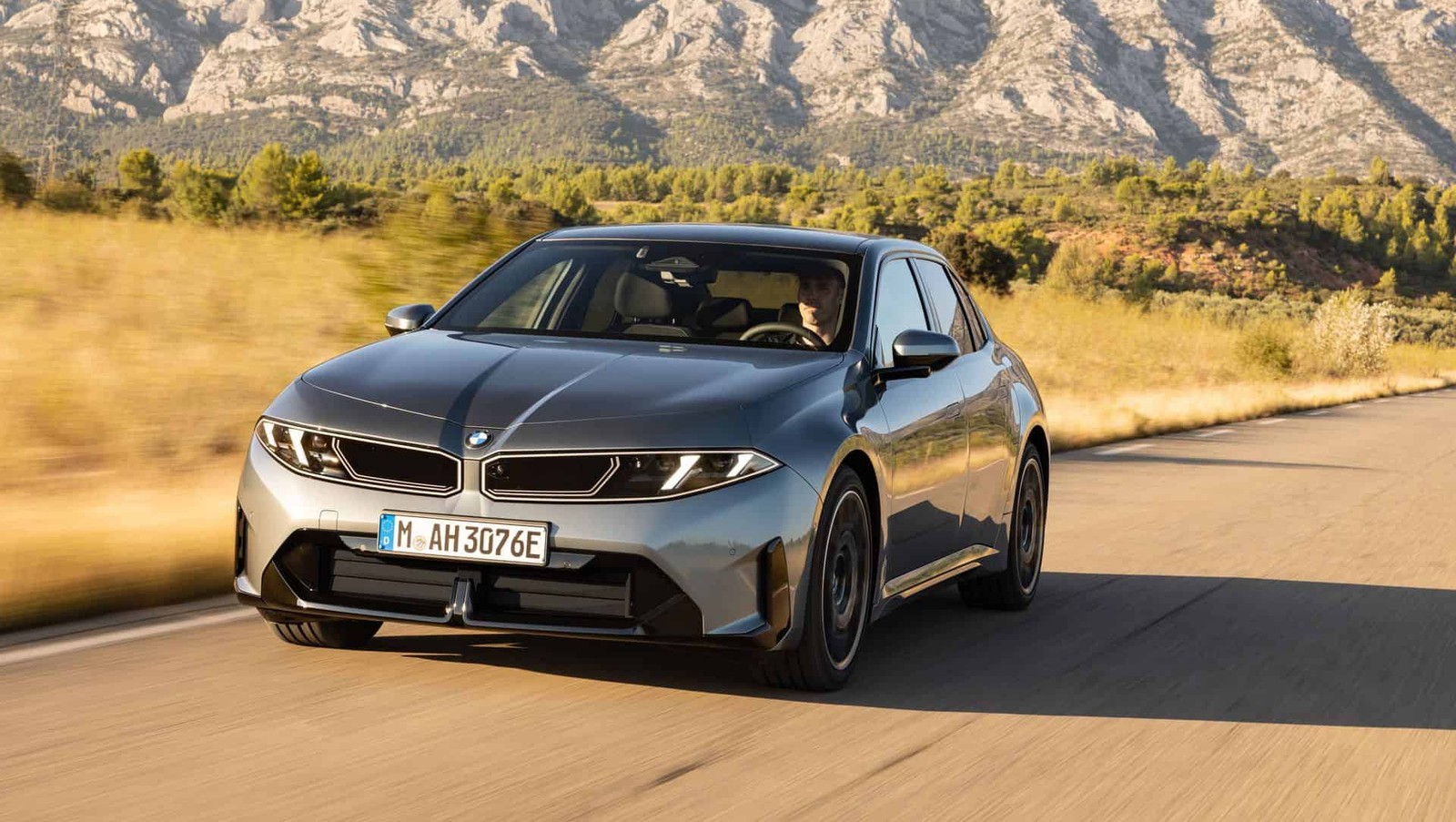
This BMW i3 review pits the electric sedan against the car that started it all, the 1975 E21. Can the 3 Series legend survive the jump to batteries? Car Magazine set out to find out, and the answer is more nuanced than BMW would like.
Where the E21 Still Earns Its Keep
On paper, the original 323i looks modest. Its 2.3-liter naturally aspirated inline-six produces 141 horsepower and 190 Nm, yet the car’s 1.1 metric ton curb weight gets it to 60 mph in about nine seconds. Journalist Ben Barry praises its low seating position, thin steering wheel and clearly laid-out instruments.
The four-speed manual demands deliberate effort, but the steering rewards it with plenty of feedback through corners. Thanks to a compliant suspension and modest weight, the E21 feels nimble and predictable. Its bloodline lives on in the 2026 BMW 3 Series, though the approach has changed dramatically.
| ⚙️Engine / Powertrain | Dual-motor electric, 108.7 kWh battery |
| 🐎Power Output | 463 HP |
| ⚡Peak Torque | 645 Nm (476 lb-ft) |
| ⏱️0-60 mph (0-100 km/h) | 0-60 mph in 3.9s (est.) |
| 🚀Top Speed | 124 mph (200 km/h) (est.) |
| 🔄Drivetrain / Gearbox | AWD Electric (50 xDrive) |
| 💰Starting Price / Est. | $80,000 (est.) |
BMW i3 review: Speed, Not Soul
Sitting higher, the i3 makes the traditional 3 Series seating position difficult to replicate. The 108.7 kWh battery pack beneath the floor raises the cabin, and that changes how the car feels before it even moves. Quieter power delivery and more isolated steering add to the sense of distance.
A Dedicated Platform Rewrites the Rulebook
Built on the dedicated Neue Klasse architecture, the BMW i3 is no longer a rebadged combustion car. A rear electrically excited synchronous motor pairs with a front asynchronous unit, delivering 463 horsepower in the 50 xDrive. An 800-volt system accepts DC charging at up to 400 kW.
Still, the sedan remains impressively quick and composed. In reality

Liam Campbell
Industry Intelligence & News Editor at Auto News Magazine. Tracking prototype spy shots, Nürburgring development mules, automaker corporate moves, and breaking global automotive scoops.
View all articles by Liam Campbell →