

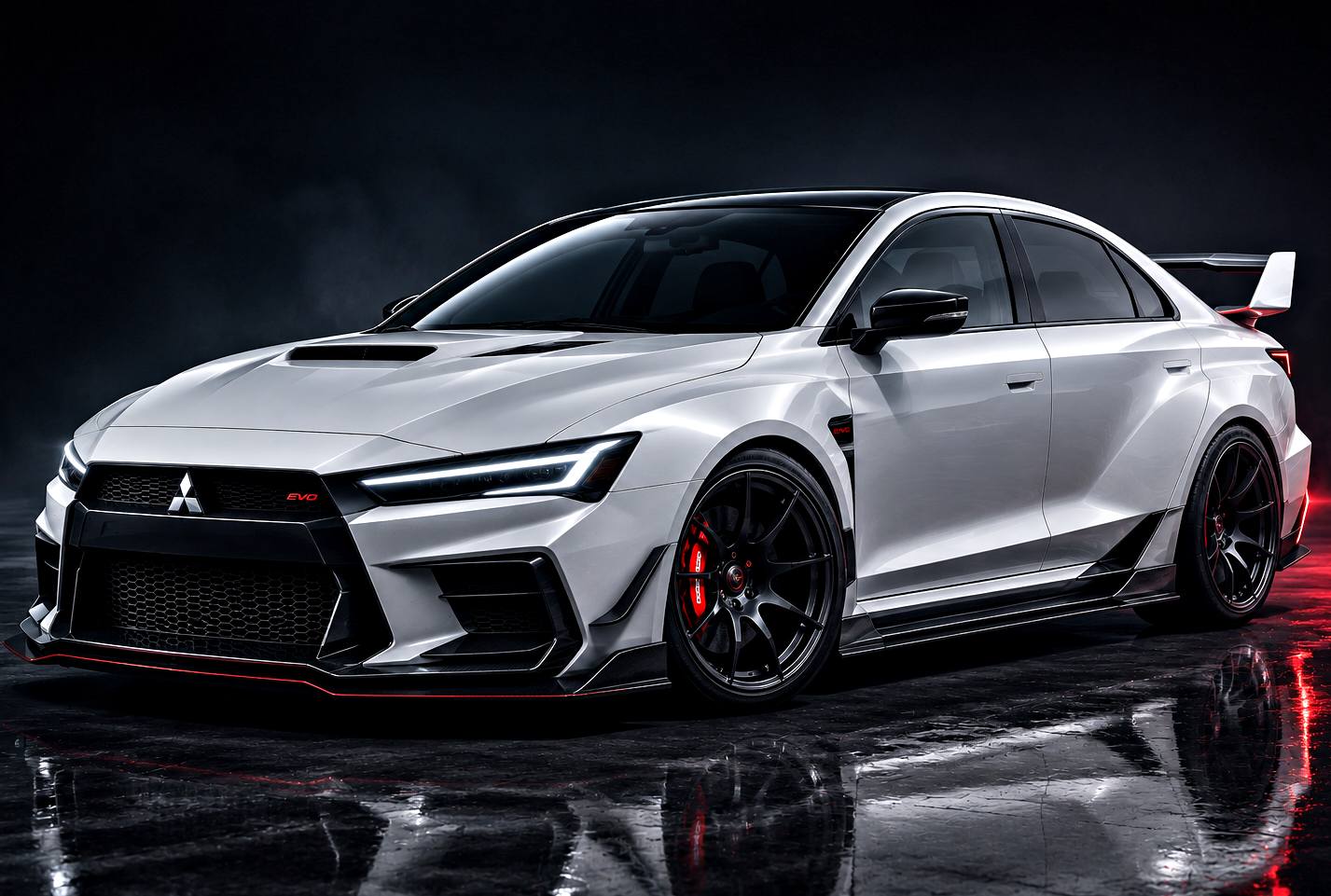
| 🚀 Key Takeaways: • Mitsubishi’s new president hints at reviving performance icons like the Lancer Evo. • No concrete plans exist; current strategy focuses on SUVs, electrification, and alliances. • Enthusiasts are cautiously optimistic, seeing this as a positive shift in company dialogue. |
The automotive world constantly buzzes with rumors. However, few stir the soul quite like the mention of a reborn legend. For years, the Mitsubishi Lancer Evo has been a ghost of rally past. Now, new Mitsubishi president Keisuke Kishiura has opened the door, ever so slightly, to its potential return. His recent comments ignite a spark of hope among a loyal, long-suffering fanbase.
Dominating the World Rally Championship for years, the Lancer Evo carved an indelible mark on motorsport. Its potent blend of all-wheel drive, turbocharged power, and rally-bred dynamics captivated enthusiasts globally. Indeed, the legend became synonymous with accessible, extreme performance, challenging established sports car hierarchies.


The Enduring Legacy of the Lancer Evo
During a recent shareholder meeting, Kishiura acknowledged the Lancer Evo and other performance nameplates as “treasures.” Expressing a personal passion for driving, he even hinted at a dream of returning to WRC. Consequently, these statements, while non-committal, mark a significant shift from Mitsubishi’s recent silence on performance.
However, the company’s official strategy paints a different picture. Mitsubishi is currently prioritizing SUVs, electrified models, and strengthening its position in ASEAN markets. Leveraging alliances with Nissan and Renault also aims to reduce development costs. Clearly, a new, expensive performance model like the Lancer Evo doesn’t fit this immediate blueprint. Visit the official Mitsubishi Motors website for their current global strategy.
Challenging the Current Crop: A Hypothetical Evo
If a new Lancer Evo were to materialize, it would immediately re-enter a fiercely competitive segment. Its spiritual rival, the Subaru WRX STI, offers a similar all-wheel-drive, turbocharged experience. Furthermore, modern hot hatches like the Honda Civic Type R (with its 315 hp turbo four) deliver staggering track performance for significantly less money. An Evo would need to blend historical aggression with modern refinement, a challenging tightrope walk. Its engineering would demand nothing less than class-leading agility and driver engagement to justify a premium price point.
Consequently, if Mitsubishi ever greenlights a next-generation Lancer Evo, its collector status would be assured. Existing Evo models already command strong resale values, particularly the rare and pristine examples. A future iteration, especially one marking a true return to form, would undoubtedly become an instant classic, cherished by enthusiasts and collectors alike. It would stand as a monument to a storied past.
Ultimately, the future of the Lancer Evo remains shrouded in uncertainty. While Kishiura’s words offer a tantalizing glimpse into a potential future, the road is long and fraught with corporate strategy. Nevertheless, hearing an executive speak with such passion about these legends is undeniably a positive development. We can only hope this dream eventually translates into metal. Until then, we’ll continue to celebrate the legacy while keeping a keen eye on Auto News Magazine for any whisper of a true comeback. This sentiment echoes the anticipation around other performance concepts like the 2026 Golf GTI Edition 50.

Sebastian Sterling
Editor-in-Chief & Hypercar Specialist at Auto Lux. Two decades covering the pinnacle of automotive engineering, bespoke coachbuilding, and limited-series hypercars.
View all articles by Sebastian Sterling →