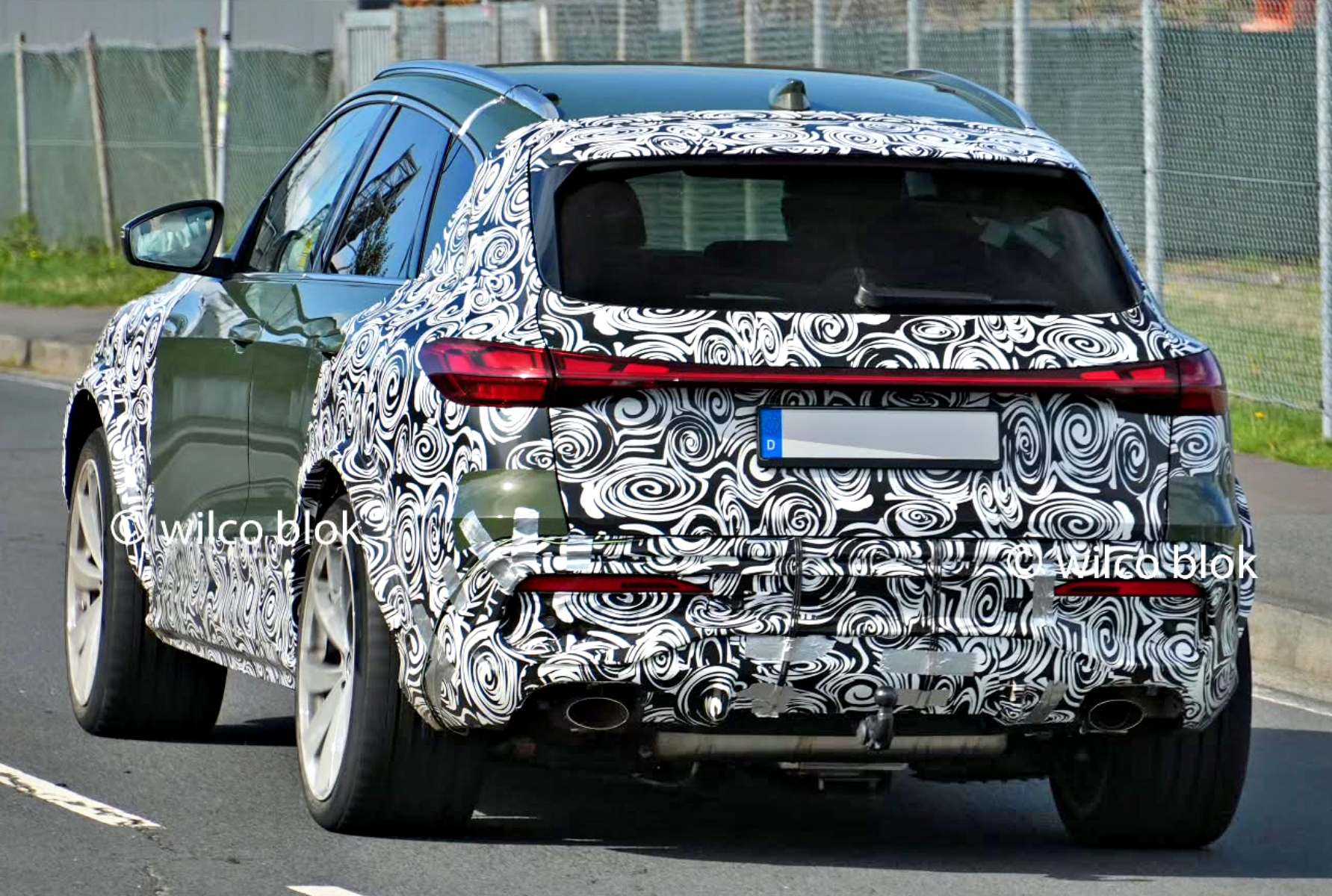
📸 Photo Credit: @wilcoblok on Instagram
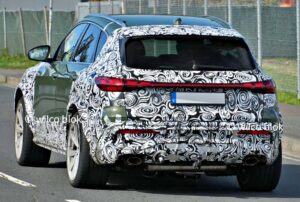
The Audi RSQ5 Hybrid has been officially spotted undergoing rigorous development testing at the Nürburgring, confirming Audi’s aggressive push toward electrified performance across its RS lineup. Captured by @wilcoblok, this prototype reveals a compact performance SUV that marries silicon-carbide inverter technology with traditional combustion firepower. The hybrid architecture mirrors the proven dual-motor setup found in the RS5 and RS6, suggesting Audi has cracked the code on seamless power delivery across its performance portfolio.
Beneath the aggressive bodywork sits a 3.0L twin-turbo V6 paired with an integrated electric motor, generating a combined system output of 592 horsepower and 553 lb-ft of torque. The eight-speed Tiptronic transmission channels power through Quattro all-wheel drive, enabling an estimated 0-60 mph sprint in just 3.8 seconds. On paper, these figures position the RSQ5 Hybrid as a formidable competitor to the BMW X5 M50i and Mercedes-AMG GLE 53, yet with a critical advantage: a 53 kWh battery pack enabling pure electric driving for urban commutes.
What makes this prototype particularly intriguing is Audi’s thermal management strategy. The hybrid system relies on advanced cooling loops to regulate the electric motor’s peak discharge rates during sustained track work. Meanwhile, regenerative braking transitions are being refined to eliminate the jarring friction-to-regen handoff that plagues lesser hybrids. The RSQ5 Hybrid’s over-the-air architecture will enable continuous software optimization, allowing Audi to fine-tune throttle mapping and energy recovery algorithms post-launch.
| ⚙️Engine / Powertrain | 3.0L Twin-Turbo V6 + Electric Motor (Plug-In Hybrid) |
| 🐎Power Output | 592 HP (combined system output) |
| ⚡Peak Torque | 553 lb-ft (750 Nm) |
| ⏱️0-60 mph (0-100 km/h) | 0-60 mph in 3.8s (est.) |
| 🚀Top Speed | 155 mph (250 km/h) |
| 🔄Drivetrain / Gearbox | 8-Speed Tiptronic / Quattro AWD |
| 💰Starting Price / Est. | $82,000 (est.) |
Pricing is estimated around $82,000, positioning the RSQ5 Hybrid as a premium alternative within the compact performance SUV segment. Audi’s commitment to 800V charging infrastructure means 10-80% battery replenishment in under 30 minutes at compatible DC fast-chargers. In reality, this is Audi’s answer to the electrification mandate without sacrificing the visceral engagement that RS buyers demand. Expect the production model to debut within 18-24 months, with deliveries commencing in late 2026. For enthusiasts seeking a high-performance SUV that doesn’t compromise on efficiency, the RSQ5 Hybrid represents a watershed moment in the brand’s evolution. Similar to how the 1500HP Audi RS6 Chiron Edition pushed boundaries, this hybrid variant redefines what performance electrification can achieve.
Ultimately, the RSQ5 Hybrid signals Audi’s refusal to abandon performance in the EV transition. This is computational horsepower meeting traditional engineering excellence. The Nürburgring testing confirms that Ingolstadt is serious about delivering a hybrid SUV that accelerates like a sports car, charges like a Tesla, and handles like it’s on rails. Resale value projections suggest strong retention, particularly among tech-forward enthusiasts who value efficiency without sacrificing thrills. According to Audi’s official roadmap, the RSQ5 Hybrid is merely the opening salvo in a broader electrification strategy targeting every RS model by 2030.

Julian Hayes
Future Mobility & Technology Editor at Auto News Magazine. Covering the next frontier of electric powertrains, 800V architectures, solid-state battery chemistry, and autonomous vehicle platforms.
View all articles by Julian Hayes →