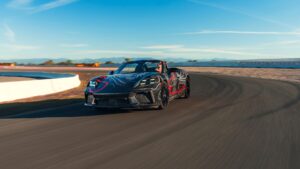
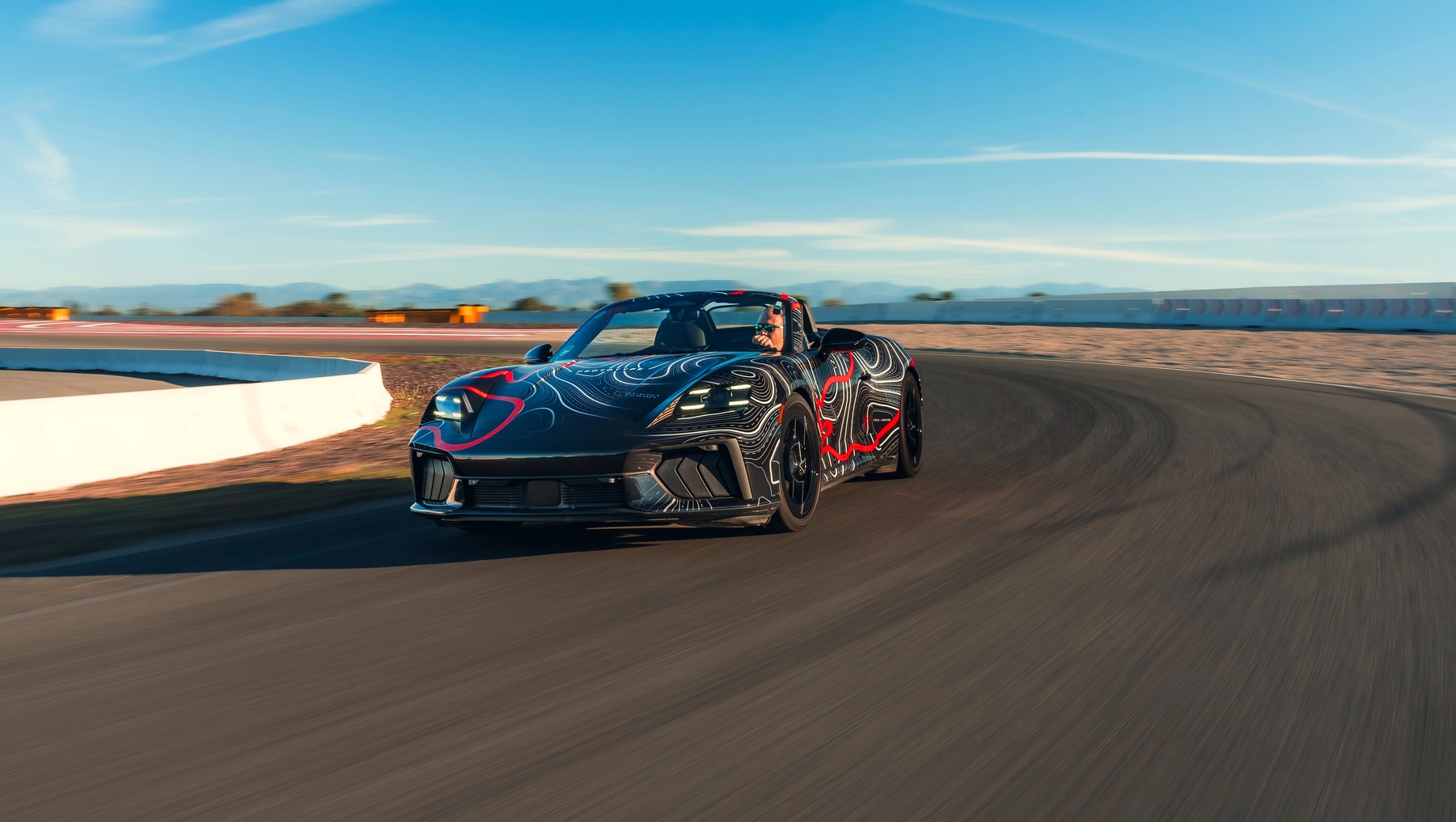
Porsche 718 Boxster fans, the electric roadster you have been waiting for is closer than ever. This prototype gallery offers the cleanest look yet at Stuttgart’s battery-powered open-top sports car. Porsche has clearly chosen aerodynamic restraint over theatrical styling, and the details tell a compelling story.


Silent Power, Serious Thermal Discipline
Losing the flat-four changes the Boxster’s character completely. With no combustion engine behind the seats, engineers can place the battery low and chase near-perfect weight distribution. Instant torque will do the rest.
Porsche’s engineers reportedly lean on the same 800V platform found in the Porsche Cayenne Electric, which should keep the peak charging plateau high for longer. Thermal loops matter here too, because repeated high-speed sprints heat cells quickly. Good cooling keeps charging curves flat.
| ⚙️Engine / Powertrain | Dual-motor electric powertrain (est.) |
| 🐎Power Output | ~400 HP (est.) |
| ⚡Peak Torque | Instant torque, figure unconfirmed (est.) |
| ⏱️0-60 mph (0-100 km/h) | 0 to 60 mph in ~3.5s (est.) |
| 🚀Top Speed | ~160 mph (est.) |
| 🔄Drivetrain / Gearbox | Single-speed reduction / AWD (est.) |
| 💰Starting Price / Est. | ~$90,000 starting (est.) |
Why the Porsche 718 Boxster Looks Right
Aerodynamics for the Porsche 718 Boxster will be unforgiving. A roadster lives or dies by its drag coefficient, since open-air turbulence drives wind noise and drains range. The prototype’s smooth nose and tight rear deck hint at a Cd figure that could beat its combustion predecessor. Even so, roof-down calm will be the real test.
Software Elegance Over Screen Clutter
Software will decide whether this roadster feels premium. Over-the-air architecture should let owners refine throttle mapping and regen blending long after delivery. Meanwhile, infotainment latency is my pet peeve. Porsche must avoid the sluggish menus that plague too many electric rivals.
On paper, a dual-motor setup could deliver roughly 400 horsepower (est.) and a 0 to 60 mph sprint near 3.5 seconds. The original 1996 Boxster 986 introduced a water-cooled flat-six and a lightweight ethos. This electric successor must honor that heritage.
Will the Electric Boxster Age Well?
Ultimately, early examples should trade at a premium if the chassis dynamics hold. My prediction:as electric Boxsters become common, well-kept prototypes and first-year cars will likely hold value better than expected, especially in enthusiast circles where the mid-engine roadster heritage still carries real weight.
The conclusion is simple. Porsche has built a clean, purposeful roadster design that respects its history while embracing a battery-electric future. The real verdict will arrive with the production car, once the charging curves, thermal discipline and software polish are proven on the road.
Photos courtesy of Porsche and the original Road & Track gallery. Specifications marked (est.) are speculative estimates based on the prototype and related Porsche EV platforms.

Julian Hayes
Future Mobility & Technology Editor at Auto News Magazine. Covering the next frontier of electric powertrains, 800V architectures, solid-state battery chemistry, and autonomous vehicle platforms.
View all articles by Julian Hayes →