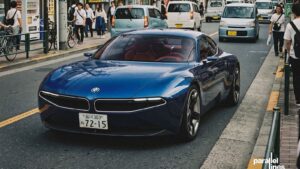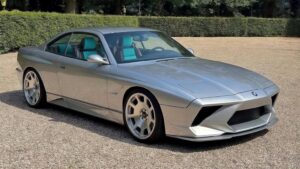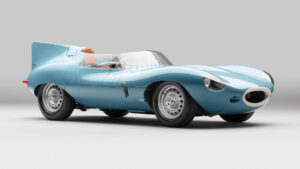
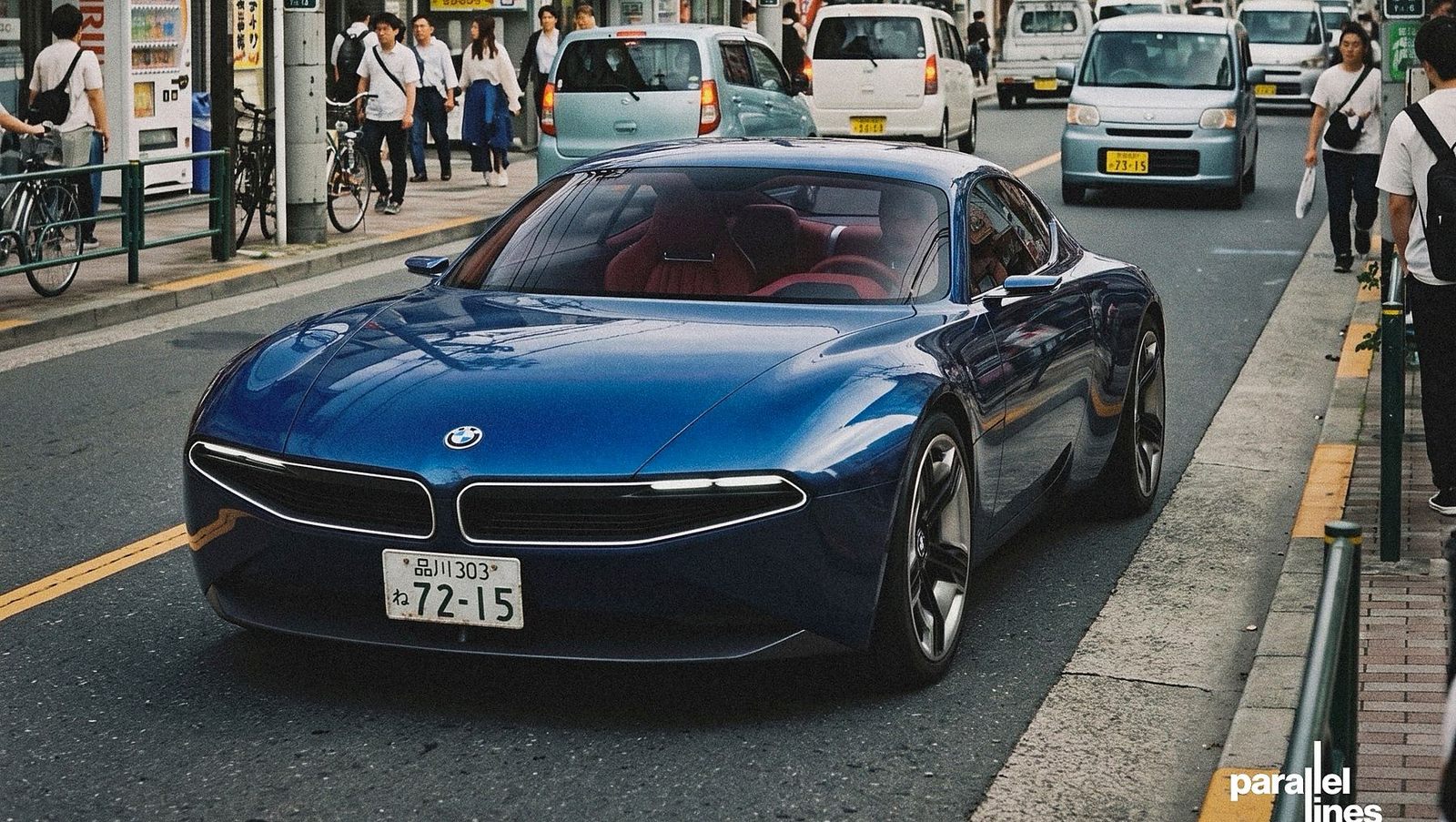
BMW Vision Freccia is the rare digital concept that rewrites Italian coachbuilding history without sounding like a nostalgia act. Barthly Design, working through its Parallel Lines series, has produced a tribute to Bertone’s 1966 Freccia that treats surfacing as a serious engineering discipline. Digital renders rarely earn this kind of scrutiny, but this one does.
BMW Vision Freccia Rewrites 1960s Italian Form
The silhouette is pure 1960s Italian theater, with soft-form panels that flow from nose to tail without a single hard crease. Airflow channels begin below the headlights and thread through the side body structures, a clever slipstream management trick that keeps the flanks clean. Anyone who values analog intent will recognize the philosophy, much like the Last Manual M3 that proves three pedals still matter.
Around the back, the circular rear window conceals a BMW logo, a playful nod to the marque’s identity. The integrated taillights serve as functional air extractors, a thermodynamic efficiency detail that keeps the bodywork honest. Still, the real achievement lies in how little the concept shouts. Ultimately, BMW Vision Freccia reads as a study in restraint.
| ⚙️Engine / Powertrain | 3.0L twin-turbo S58 inline-six (est.) |
| 🐎Power Output | 473 HP (est.) |
| ⚡Peak Torque | 550 Nm (406 lb-ft) (est.) |
| ⏱️0-60 mph (0-100 km/h) | 0-60 mph in 4.1s (est.) |
| 🚀Top Speed | 155 mph (est., limited) |
| 🔄Drivetrain / Gearbox | 6-Speed Manual / RWD |
| 💰Starting Price / Est. | Not disclosed (speculative concept) |
Tech Restraint Meets Manual Mechanicals
On paper, the concept sits on the G87 M2 platform, pairing a 3.0-liter S58 straight-six with a six-speed manual. Limiting tech integration is a bold move in an era of over-the-air architecture, and I applaud it. Speculatively, output lands near 473 hp (est.), though this remains a render rather than a rolling prototype.
In reality, a manual-only coupe with this pedigree would enjoy strong collector appeal. Speculatively, it could command a premium on the used market for years, because enthusiasts still crave unfiltered throttle response. Official specifications from BMW remain nonexistent for this study.
Still, Barthly Design has delivered a sharp, disciplined study. It proves Italian sculpture and German precision can share a single surface, and that is a conversation worth continuing. Read more at Auto News Magazine.
Disclaimer: This article features an independent digital design study created by Barthly Design and is neither officially affiliated with, endorsed by, nor produced by BMW.
Photo Credit: @barthly_design.psd on Instagram

Julian Hayes
Future Mobility & Technology Editor at Auto News Magazine. Covering the next frontier of electric powertrains, 800V architectures, solid-state battery chemistry, and autonomous vehicle platforms.
View all articles by Julian Hayes →